
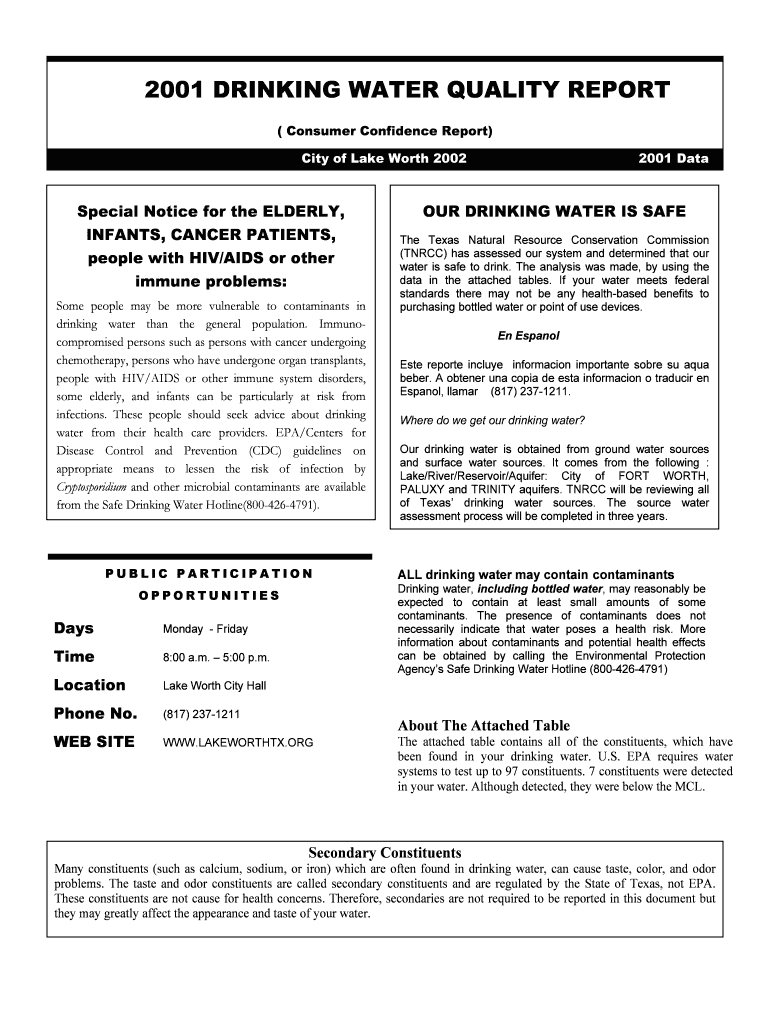







Definition and Meaning of the 2000 Drinking Water Quality Report for the City of Lake Worth
The 2000 Drinking Water Quality Report for the City of Lake Worth provides detailed information about the safety and quality of drinking water provided to the residents of Lake Worth, Texas. This report captures data on water sources, treatment processes, compliance with federal safety standards, and potential contaminants. By delivering a yearly snapshot, it helps residents stay informed about the water they consume and understand related health implications.
How to Obtain the Report
Residents and interested parties can obtain the 2000 Drinking Water Quality Report in multiple ways. Typically, the City of Lake Worth Water Department distributes copies directly to residents through mail or at designated public places, such as the city hall or public libraries. Additionally, it may be available online on the city's official website, providing easy access for those preferring digital formats.
Steps to Interpret the Report
-
Identify Water Sources: Understand where the drinking water originates, such as rivers, lakes, or underground aquifers.
-
Review Contaminant Levels: Examine reported contaminants, comparing them with federal standards to assess safety.
-
Understand Treatment Methods: Learn about the processes used to treat the water and eliminate or reduce contaminants.
-
Note Compliance Status: Check for any violations of drinking water standards and actions taken to address them.
-
Read Special Notifications: Focus on notices meant for vulnerable populations, such as individuals with compromised immune systems.
Importance of the Report
The report plays a crucial role in ensuring transparency about the quality of drinking water. It offers residents assurances about safety standards being met and educates them about potential health risks. Understanding these reports empowers consumers to make informed decisions concerning their water use and health precautions.
Typical Users of the Report
- Residents: Primarily use the report to ensure their drinking water meets safety standards.
- Healthcare Professionals: Use the information to advise patients with specific health concerns.
- Environmental Researchers: Analyze data for studies on public health or environmental impacts.
- Policy Makers: Evaluate information for planning and improving water treatment facilities.
Key Elements Included in the Report
- Source Water Information: Descriptions of the natural sources of drinking water.
- Treatment Techniques: Details of the processes used to make water safe.
- Detected Contaminants: Lists and concentrations of any substances found in the water.
- Health Guidelines: Information regarding health impacts associated with these contaminants.
- Compliance Status: Indications of whether or not all legal standards were met.
State-Specific Regulations
Texas has specific regulations overseeing the quality of drinking water, adhering to federal laws under the Safe Drinking Water Act. The Texas Commission on Environmental Quality (TCEQ) monitors these regulations, ensuring that water suppliers maintain high safety standards and regularly update consumers through annual water quality reports.
Examples of Utilizing the Report
- A family with young children might use the report to check fluoride levels and ensure optimal dental health.
- A local business may assess the report to decide if installing additional water filtration systems is necessary for their operations.
- Environmental advocacy groups might analyze these reports for advocacy, urging improvements in water management strategies.
Differences Between Digital and Paper Versions
Both digital and paper versions of the report contain the same essential information. However, the digital version might offer interactive elements, such as hyperlinks to detailed studies or sections for easier navigation. The paper version provides a tangible, easily shareable option, especially useful for those without internet access or who prefer physical documents.
Maintaining clear and structured access to such crucial information in both formats ensures all residents can benefit, regardless of their technical proficiency or access to technology.




