
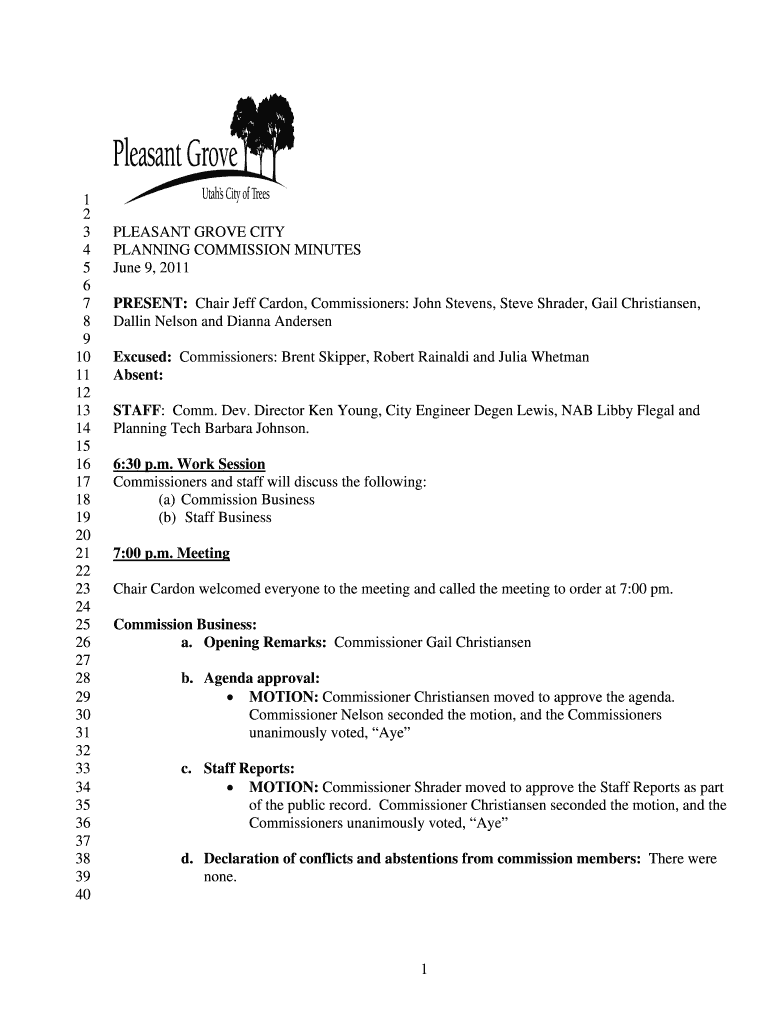







Definition and Meaning of the Form
The "Director Ken Young, City Engineer Degen Lewis, NAB Libby Flegal, and Planning Tech Barbara Johnson" form is a structured document likely utilized within municipal meetings or planning contexts. It involves participation and input from key city officials for planning and regulatory activities. This form captures approvals, compliance checks, and notes about urban planning decisions.
Key Elements of the Form
- Roles of Participants: The inclusion of specific roles such as Director, City Engineer, and Planning Technician suggests a collaborative framework that addresses varied facets of city planning.
- Approval Sections: Captures decision-making on development proposals, zoning changes, and infrastructure projects.
- Documentation of Public Input: May contain sections for recording public opinions and concerns during planning sessions.
How to Use the Form
This form is typically employed during city council meetings, planning commission gatherings, or other municipal regulatory sessions. It serves to:
- Document official decisions and recommendations made by the city planning officials.
- Highlight areas of public interest and integrate feedback into planning outcomes.
- Facilitate communication between city departments for coordinated development efforts.
Step-by-Step Instructions
- Pre-Meeting Preparation: Gather relevant documents, previous meeting minutes, and proposals to be discussed.
- Form Completion During Meetings: Assign a person responsible for filling out the form with real-time documentation.
- Post-Meeting Review: Validate entries by involved parties for accuracy before filing or publishing.
Steps to Complete the Form
Completing the "Director Ken Young, City Engineer Degen Lewis, NAB Libby Flegal, and Planning Tech Barbara Johnson" form requires attention to detail to ensure comprehensive record-keeping:
- Identify Agenda Items: Ensure every item on the meeting agenda is addressed with outcomes documented.
- Record Decisions: Note whether each proposal or request has been approved, denied, or tabled for further consideration.
- Document Attendance: List all attendees, including any citizens providing public comment.
- Summarize Discussions: Provide concise summaries of any debates or discussions held around agenda items.
Legal Use of the Form
The form is a critical tool for maintaining the procedural legality of planning decisions. Use it to:
- Ensure Transparency: Documenting public meetings aligns with open government laws and promotes transparency in decision-making.
- Maintain Accountability: Provides a formal record that holds participants accountable for decisions and discussions.
- Compliance with Local Ordinances: Ensures that city planning complies with existing legal and regulatory frameworks.
Important Terms Related to the Form
Familiarize yourself with these terms to facilitate accurate completion and comprehension of the form's content:
- Subdivision Request: A proposal to divide a larger parcel of land into smaller, buildable lots.
- Zoning Changes: Modifications to the land-use regulations for a particular section of the city.
- General Plan Amendment: A revision to the city’s long-term strategic framework guiding growth and development.
Examples of Using the Form
- Subdivision Approval: Documenting approvals for new residential subdivisions ensures accurate urban growth mapping.
- Zoning Variances: Detailing decisions on zoning variance requests impacts future development and land use in local areas.
- Infrastructure Projects: Capturing consensus on public infrastructure projects supports effective budget and resources planning.
Who Typically Uses the Form
This form is predominantly used by city planners, engineers, and officials involved in urban development and governance:
- City Planners and Engineers: Responsible for drafting and approving urban policies, infrastructure projects, and community plans.
- Municipal Secretaries: Tasked with compiling and filing documentation from public meetings.
- Citizens: Indirectly involved as contributors through public input sessions.


Filing Deadlines and Important Dates
- Submission Deadlines: Ensure that all relevant documentation is submitted prior to regularly scheduled city council or planning commission meetings.
- Review Timelines: Allocate time for internal reviews by city departments before public dissemination.
Required Documents
- Meeting Agendas and Minutes: Provide a structured overview for discussion.
- Project Proposals and Plans: Ensure detailed examination and decision-making.
- Public Feedback Documentation: Incorporate community input accurately.
Form Submission Methods
- Online Submission: Cities adopting digital document management can facilitate online submission through municipal portals.
- Mail or In-Person Submission: Required in jurisdictions steeped in traditional documentation practices, ensuring physical records are maintained.
State-Specific Rules for the Form
Each state in the U.S. might have its own regulations surrounding urban planning documentation:
- State Regulations: Understand regional mandates impacting the use and structuring of planning forms.
- Local Ordinances: Adhere to city-specific planning requirements or restrictions when completing forms.




