
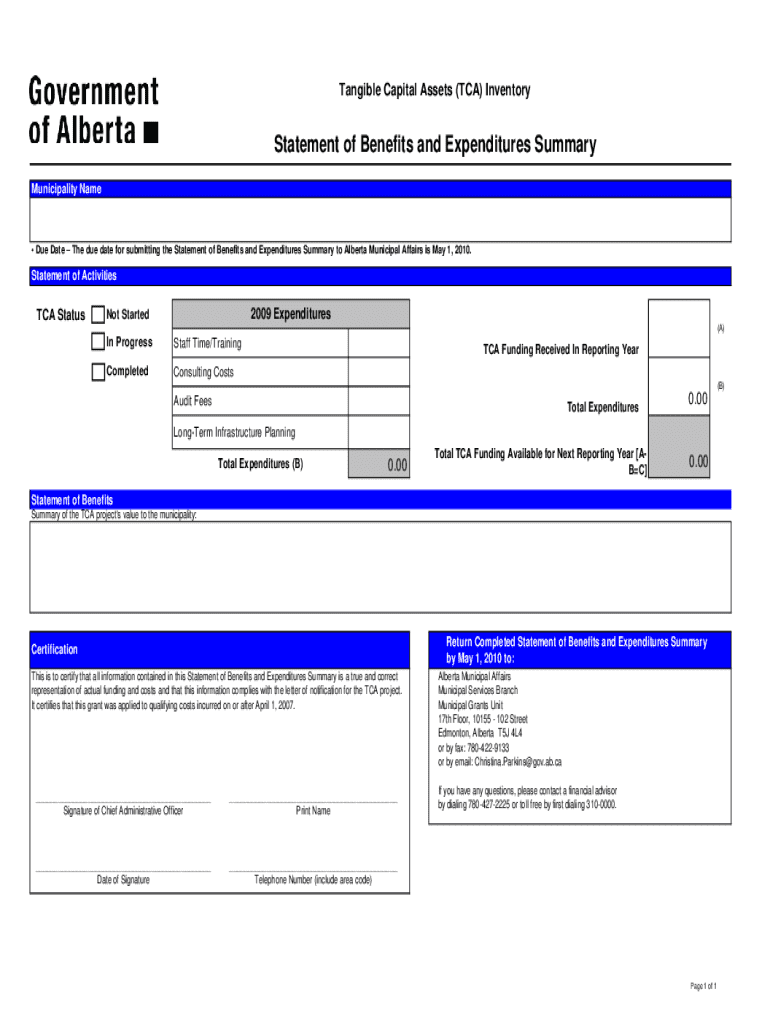







Definition & Meaning
The "PS 3150 Tangible Capital Assets: Summary of Key" refers to a document or form that provides a structured overview of tangible capital assets, particularly in the context of governmental and public sector accounting. It summarizes the core information, guidelines, and considerations surrounding the management and reporting of tangible capital assets as defined under PS 3150 standards. Tangible capital assets generally include physical items such as buildings, equipment, and infrastructure that have a long useful life and are used in delivering services. Understanding the definition and core concept of this summary helps municipalities and other public entities maintain compliance with accounting standards.
Importance of Tangible Capital Assets
- Long-term Utility: These assets are instrumental in service delivery and community infrastructure.
- Financial Reporting: Proper accounting ensures accurate representation of an entity’s financial position.
- Budgeting and Planning: Understanding asset life cycles aids in strategic planning and resource allocation.
Key Elements of the PS 3150 Tangible Capital Assets: Summary of Key
The form includes several vital elements that guide users in recording and managing tangible capital assets in accordance with PS 3150 standards. These elements ensure comprehensive capture and accurate reporting.
Core Components
- Asset Description: Details about the asset type, model, and physical characteristics.
- Financial Details: Acquisition cost, accumulated amortization, and net book value.
- Amortization Method: Depreciation technique used for asset allocation over its useful life.
- Date Information: Information on acquisition date and expected useful life duration.
- Location: Physical site of the asset, essential for accountability and management.
Example
A municipality might record a new fire truck under this document, capturing its purchase price, expected service duration, amortization, and the fire station it is assigned to.
Steps to Complete the PS 3150 Tangible Capital Assets: Summary of Key
Completing the form accurately is crucial for aligning with accounting and reporting standards. Here are the steps to follow:
- Gather Asset Information: Collect relevant data on assets such as purchase documents and maintenance records.
- Enter Basic Details: Fill in name, description, and identification numbers.
- Financial Data Entry: Add figures for acquisition cost and amortization details.
- Choose Amortization Method: Select appropriate depreciation technique based on asset type.
- Validation & Review: Double-check information for accuracy before submission.
How to Use the PS 3150 Tangible Capital Assets: Summary of Key
Using the form effectively ensures proper asset management and compliance. This is especially important for municipalities and public service organizations.
Strategic Use
- Asset Tracking: Keep up-to-date records of all assets for maintenance and audits.
- Financial Strategy: Use data for preparing financial statements and audit readiness.
- Cost Analysis: Evaluate asset value against community benefit and operational costs.
Practical Scenarios
A municipality uses the form annually for budgeting, ensuring that all capital assets like bridges, roads, and public buildings are accounted for, assessments needed for repairs are scheduled, and necessary funds are allocated.
Who Typically Uses the PS 3150 Tangible Capital Assets: Summary of Key
This document is primarily used by public sector entities in Canada, particularly municipalities and governmental departments, due to its relevance in public accounting standards defined by the Public Sector Accounting Board (PSAB).

Typical Users
- Municipal Financial Officers: Responsible for the financial management and reporting of city-owned assets.
- Government Auditors: Use the form data for compliance checks.
- Infrastructure Managers: Utilize details for lifecycle management and budgeting.
Example Usage
A financial officer in Edmonton compiles this document annually to report on infrastructure assets, ensuring strategic decisions align with the latest capital asset performance data.
Legal Use of the PS 3150 Tangible Capital Assets: Summary of Key
Adhering to legal guidelines when using this form is essential. Non-compliance can result in inaccuracies and legal consequences.
Compliance Overview
- Reporting Accuracy: Ensures truthful representation in financial statements.
- Standard Adherence: Meets PSAB requirements for asset management.
- Audit Readiness: Facilitates transparent and efficient auditing processes.
Legal Implications
Filing incorrect information can lead to potential audits and financial discrepancies, impacting municipal planning and federal funding eligibility.
State-Specific Rules for the PS 3150 Tangible Capital Assets: Summary of Key
While the overarching principles follow PSAB standards within Canada, variations may exist at the provincial level.
Example Variations
- Province-Specific Guidelines: Provinces might have additional reporting requirements or specific formatting rules tailored to local governance needs.
Scenario
In Alberta, unique provincial guidelines might necessitate additional disclosure on certain asset types to ensure alignment with local environmental policies or budgetary procedures.
Software Compatibility (TurboTax, QuickBooks, etc.)
To streamline the completion and management of the PS 3150, compatibility with accounting software can be beneficial, ensuring efficient data handling and ease of integration.
Supportive Software
- QuickBooks: Provides functionality for journal entries aligning with form data.
- Customized Municipal Software: Tailored solutions for specific municipal requirements.
Benefits
Using compatible software reduces manual errors, accelerates data entry, and ensures synchronization with broader municipal financial systems for improved accuracy and reporting efficiency.




