







Definition & Meaning
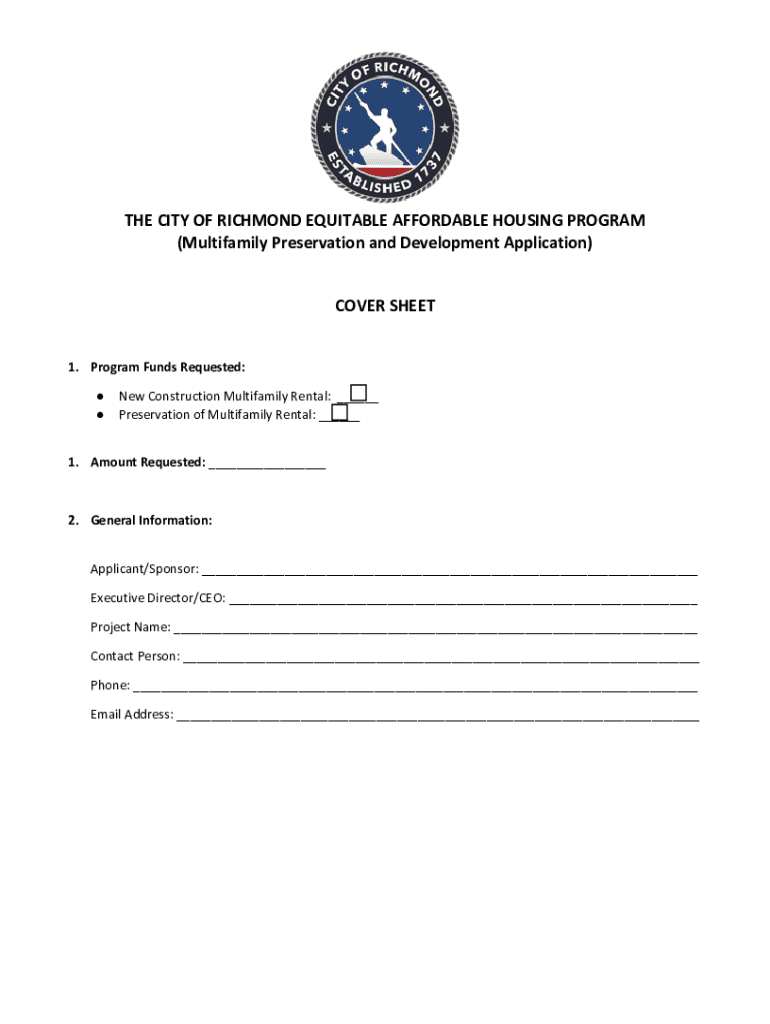
The Multifamily Preservation and Development Application is a structured document used primarily by developers and investors aiming to secure funding for multifamily housing projects that emphasize preservation and development. This application is a critical step in the process of engaging with programs like the City of Richmond's Equitable Affordable Housing Program. It aims to facilitate the advancement of housing projects that are sustainable, economically empowering, and beneficial to local communities. The application typically requires detailed submissions about the project goals, plans, and potential impacts.
Key Elements of the Multifamily Preservation and Development Application
Understanding the key elements of the application is crucial for successful submission. These elements include:
- Project Description: Applicants must provide a comprehensive overview of their proposed project, including the type of development, location, and the communities it will serve.
- Funding Request: A detailed breakdown of the funds requested, along with justification for the amounts, is required. Applicants must also outline the intended use of funds.
- Community Impact: Information on how the project plans to enhance community well-being through affordable housing, economic growth, and sustainability initiatives.
- Economic Empowerment and Sustainability: Projects need to demonstrate how they incorporate energy conservation measures and empower local economies.
- Financial Projections: Submission of financial data that supports the viability and sustainability of the project, including anticipated costs and revenue streams.
Steps to Complete the Multifamily Preservation and Development Application
Completing the application involves several steps:
- Research and Preparation: Gather all relevant project information, including market analysis, community needs assessment, and partnership details.
- Document Assembly: Prepare the required documents like architectural plans, financial statements, and partnership agreements.
- Application Form Completion: Carefully fill out each section of the application, ensuring all details align with the project's objectives and compliance requirements.
- Review and Edit: Double-check all entries for accuracy and completeness. It may be beneficial to have a peer or stakeholder review the application.
- Submission: Submit the completed application through the required channel, whether online, by mail, or in person.
Required Documents
Applicants must gather and submit several essential documents as part of the application process:
- Project Plans: Detailed architectural designs and timelines.
- Financial Statements: Up-to-date records that reflect the project's financial state, cash flow projections, and budgeting plans.
- Community Impact Statements: Documents that outline the anticipated social, economic, and environmental impacts.
- Partnership Agreements: Contracts or MOUs with partners involved in the project, highlighting roles and responsibilities.
Eligibility Criteria
Projects seeking funding must meet specific eligibility criteria to qualify for the program:
- Location Requirements: The project must be situated in designated areas specified by the funding program.
- Project Type: Must align with multifamily preservation or development objectives, as defined by the applicable funding body.
- Community Benefit: The initiative should provide measurable benefits to the community, such as affordable housing or economic development.
- Sustainability: Incorporation of environmentally friendly practices and designs is often a mandatory criterion.


Examples of Using the Multifamily Preservation and Development Application
Real-world applications can vary:
- Affordable Housing: Developers might use the form to apply for funding to renovate affordable housing units in economically distressed neighborhoods.
- Green Initiatives: Projects that include eco-friendly construction methods and energy-efficient systems can apply to enhance sustainability ratings.
- Economic Revitalization: Initiatives aiming to renew underdeveloped urban areas into vibrant residential communities.
Application Process & Approval Time
The typical process and timeline for application approval:
- Initial Review: Submitted applications go through an initial review to ensure all documentation is complete.
- Evaluation Phase: Applications are evaluated on criteria like community impact, project feasibility, and alignment with program goals.
- Feedback and Adjustments: Applicants may be required to make adjustments based on feedback from evaluators.
- Decision: Approval or denial notifications are usually issued within a specified timeframe, often spanning several weeks to a few months.
Software Compatibility
Users can manage and edit the Multifamily Preservation and Development Application effectively with software tools:
- DocHub Integration: Directly import and modify form documents from cloud services, facilitating easy collaboration and submission.
- Compatibility: Supports a range of file formats including PDF, DOC, and XLS, making it versatile for various document types.
- Electronic Signatures: Use legally binding e-signatures to finalize documents securely within the platform.
Legal Use of the Multifamily Preservation and Development Application
Legal compliance is a critical aspect of submitting this application:
- Regulatory Adherence: Ensure submission adheres to all applicable housing regulations and legal standards.
- Privacy Compliance: Securely handle sensitive information within the application process, employing necessary data protection measures.
- Contractual Obligations: Abide by all terms set forth by funding agencies, ensuring all provided information is accurate and truthful.
State-specific Rules for the Multifamily Preservation and Development Application
The application may be subject to specific state regulations:
- Variation in Criteria: States may have unique eligibility criteria based on local housing needs and legislative mandates.
- State Funding Programs: Different states may offer varied funding opportunities aimed at multifamily housing projects, influencing how applications are tailored.
- Compliance and Reporting: State laws might require specific reporting standards and compliance checks that need addressing during the application process.
These sections provide a comprehensive understanding of the Multifamily Preservation and Development Application, equipping applicants with the necessary knowledge to navigate the process effectively.




