







Definition & Meaning of Issued Building Permit Stats - Projects Greater Than $500,000
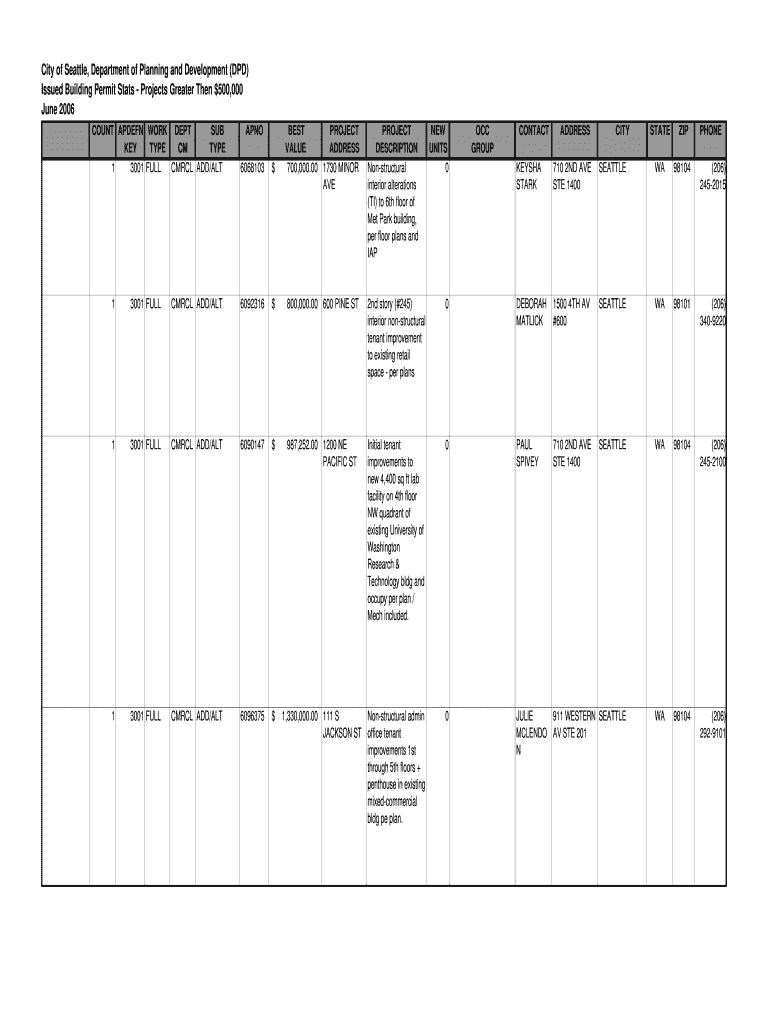
The "Issued Building Permit Stats - Projects Greater Than $500,000" refers to a dataset detailing permits granted for construction projects that exceed half a million dollars in value. This data provides insights into the types of large-scale developments occurring within a specific jurisdiction, such as commercial buildings, residential complexes, and other significant infrastructure projects. By analyzing these statistics, stakeholders can understand local investment trends, economic growth, and the development priorities of a region. The information typically includes project descriptions, values, locations, and the number of new units created.
How to Use the Issued Building Permit Stats - Projects Greater Than $500,000
To effectively utilize the building permit statistics, it is essential to identify the specific insights required for your analysis.
- Market Analysis: Use the data to gauge market activity by identifying areas with high construction volumes, indicating potential growth zones.
- Investment Decisions: Investors can leverage these statistics to understand where substantial developments are occurring, which may signal lucrative investment opportunities.
- Urban Planning: Urban planners and policymakers can assess how well the construction projects align with developmental goals, such as increasing housing availability or infrastructure improvements.
Understanding the intricacies of this dataset helps align organizational activities with broader market and regional trends.
How to Obtain the Issued Building Permit Stats - Projects Greater Than $500,000
Accessing these statistics usually involves interacting with the relevant city or county planning department. Here are typical steps to follow:
- Visit the Official Website: Start by checking the appropriate local government website. Many departments offer downloadable permit data directly on their platforms.
- Request Data: If the data is not publicly available, contact the department via email or phone to request the statistics.
- Check Public Repositories: Some municipalities use public repositories or open data platforms to share large datasets, including building permits.
Depending on the region, the process might vary slightly. Always ensure you comply with any specified use terms or data fees.
Important Terms Related to Issued Building Permit Stats - Projects Greater Than $500,000
Understanding the terminology within the permit statistics is crucial:
- Permit Number: A unique identifier for each permit, used for tracking and reference.
- Valuation: The assessed monetary value of the construction project.
- Project Description: A concise overview of the project's objectives and scope.
- New Units: The number of new residential or commercial units created by the project.
- Permit Issuance Date: The date when the permit was officially granted.
Familiarity with these terms facilitates better interpretation and utilization of the data.
Key Elements of the Issued Building Permit Stats - Projects Greater Than $500,000
When examining these statistics, several critical elements provide deeper insights:
- Project Value: Reflects economic investment and potential impact on the local economy.
- Construction Type: Indicates if the project is for commercial, residential, or mixed-use purposes.
- Location: Provides spatial insights, helping identify regional development patterns.
- Contact Details: Includes information for reaching out to project representatives for inquiries or collaboration.
This blend of elements offers a comprehensive view of the regional construction landscape.
Examples of Using the Issued Building Permit Stats - Projects Greater Than $500,000
These statistics have wide-ranging applications across various scenarios:
- Real Estate Development: A developer can use the data to identify competitive markets or gaps in housing supply.
- Economic Research: Economists might analyze the statistics to forecast economic trends based on construction activity levels.
- Public Policy: By examining the permits, policymakers can prioritize infrastructure development or assess regulatory impacts on construction activity.
Real-world examples highlight the dataset's versatility and strategic importance.
Who Typically Uses the Issued Building Permit Stats - Projects Greater Than $500,000
Several stakeholders benefit from accessing and analyzing these statistics:
- Real Estate Developers who evaluate market saturation and demand.
- Local Governments and Planners monitoring regional growth and infrastructure needs.
- Investors exploring potential high-yield locations for investment.
- Economic Analysts assessing the impact of construction on regional economies.
These diverse users rely on the data for informed decision-making in various fields.


State-Specific Rules for Issued Building Permit Stats - Projects Greater Than $500,000
Each state in the U.S. may have unique regulations affecting building permits:
- Permit Requirements: The level of documentation or approvals required can differ.
- Valuation Thresholds: Definitions of what constitutes a large project can vary by state.
- Regulatory Compliance: States might have distinct building codes or environmental regulations to adhere to.
Understanding these nuances ensures compliance and accurate data interpretation across different regions.
Penalties for Non-Compliance with Building Permit Requirements
Failure to adhere to building permit regulations can lead to significant penalties:
- Fines and Fees: Monetary penalties for starting construction without the necessary permits.
- Forced Halts: Projects might be delayed or halted by authorities until compliance is ensured.
- Legal Action: Severe non-compliance can result in legal proceedings or mandatory project modifications.
Maintaining adherence to all regulatory requirements is critical to avoid potential setbacks or increased costs.




