






Definition and Meaning
The "Transition: First Steps to Early Childhood Special Education" is a formal process designed to assist children in shifting from Part C services under the Individuals with Disabilities Education Act (IDEA) to preschool programs. This movement involves a comprehensive transfer of educational and developmental support tailored towards children with special needs. The transition process is integral in ensuring that children continue to receive the necessary services without interruption.
Key Objectives
- Ensure continuity of services for children with special needs.
- Facilitate communication between Part C service providers and preschool educators.
- Educate and involve parents in their child's transition process.
Importance
The transition is not just a procedural formality but a critical step that impacts a child’s developmental milestones. By maintaining consistency in support, children can achieve better outcomes in their educational journey.
Key Elements of the Transition Form
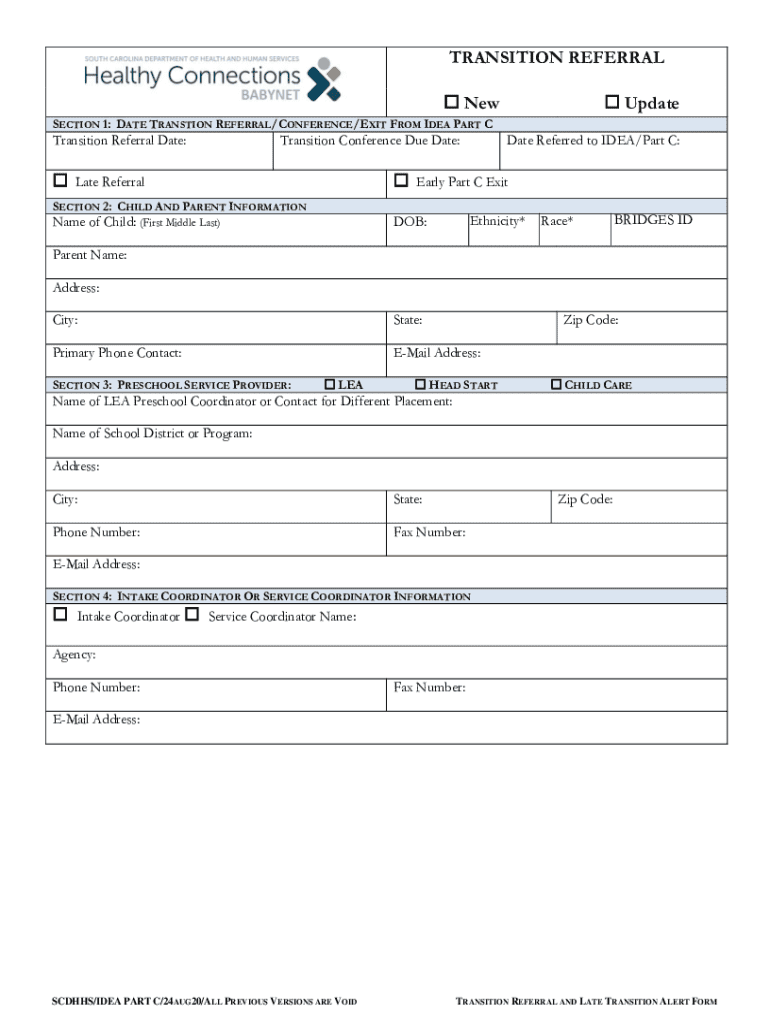
The Transition form is structured to gather comprehensive details required to facilitate a smooth transition. Key elements include:
- Child and Parent Information: Captures essential information such as names, birth dates, and contact details.
- Preschool Service Provider Details: Information about the educational service provider receiving the child.
- Intake or Service Coordinator Information: Identifies the liaison responsible for managing the transition process.
- Consent Sections: Obtains necessary permissions related to preschool services and participation in transition meetings.
Additional Components
- Signature Requirements: Ensures parent or guardian acknowledgment of the transition process details and consents.
- Confidentiality Agreements: Ensures data privacy for the child and family.
Steps to Complete the Transition Form
Completing this form requires attention to detail and understanding the entire process. Here are the detailed steps:
- Gather Required Information: Begin by assembling all necessary personal and contact information for the child and parents.
- Coordinate with Providers: Liaise with existing IDEA Part C providers and preschool service providers to collate necessary data.
- Complete Consent Sections: Ensure each relevant consent section is answered and signed where applicable.
- Review and Validate Information: Double-check all entered data for accuracy to prevent errors in transition.
Potential Challenges
- Coordination: Ensuring all parties are aligned for a smooth transition.
- Timeliness: Completing the form within designated timelines to avoid service gaps.
How to Use the Transition Form
The form serves as a step-by-step guide for parents and educators to transition children seamlessly into preschool education services. Follow these uses effectively:
- Inform Decision-Making: Use the form to make data-driven decisions about service continuity.
- Track Progress: Document the child’s transition milestones and service adjustments.
- Engage Stakeholders: Involve all parties, including educators and healthcare providers, through shared access to the completed form.
Practical Scenarios
- Educational Planning: The form can be used in meetings to discuss and finalize the Individualized Education Program (IEP).
- Service Adjustment: Allows for seamless adjustments in service plans based on new educational settings.
Legal Use of the Transition Form
Adhering to legal protocols is crucial when using the transition form. Key legal aspects include:
- Data Privacy Compliance: Ensures compliance with the Family Educational Rights and Privacy Act (FERPA) by protecting student-specific data.
- Consent for Information Sharing: Legally mandates consent from parents or guardians before sharing child-specific information.
Repercussions for Non-Compliance
- Service Interruptions: Failure to comply can result in delays or disruptions in services provided to the child.
- Legal Addendums: May require additional legal documentation if non-compliance is identified.
Required Documents for Transition
Acquiring the correct documentation is critical for completing the transition form. These can include:
- Medical Reports: Documenting any medical conditions that affect educational needs.
- Evaluation Reports: Prior assessments from IDEA Part C services.
- Consent Forms: Specific to data sharing and participation in transition meetings.
Document Checklist
- Child’s birth certificate
- Previous educational assessments
- Signed consent forms
Why is Transition Important?
Transition plays a vital role in ensuring that children with special needs continuously receive the support they require. Here’s why it matters:
- Educational Continuity: Promotes smooth academic and developmental progress.
- Parental Involvement: Engages parents in their child’s educational journey, ensuring that they are aware and supportive of the services provided.
Impact on Long-Term Development
- Stability: Offers a stable learning environment conducive to growth.
- Progress Tracking: Facilitates ongoing tracking of a child’s developmental progress.
Examples of Using the Transition Form
Consider these real-world applications of the transition form:
- Case Study: Emily’s Transition: Details Emily’s journey from early childhood services to a structured preschool program. Through the transition form, her educational needs were seamlessly transferred, preventing service gaps.
- Scenario: Coordinating Team Support: Use this form to schedule and coordinate cross-functional team meetings, ensuring all educators and service providers are on the same page.
Application Variations
- Forms can be adapted for different states, each aligning with specific regulations and educational service structures.