




01. Edit your form online
Type text, add images, blackout confidential details, add comments, highlights and more.

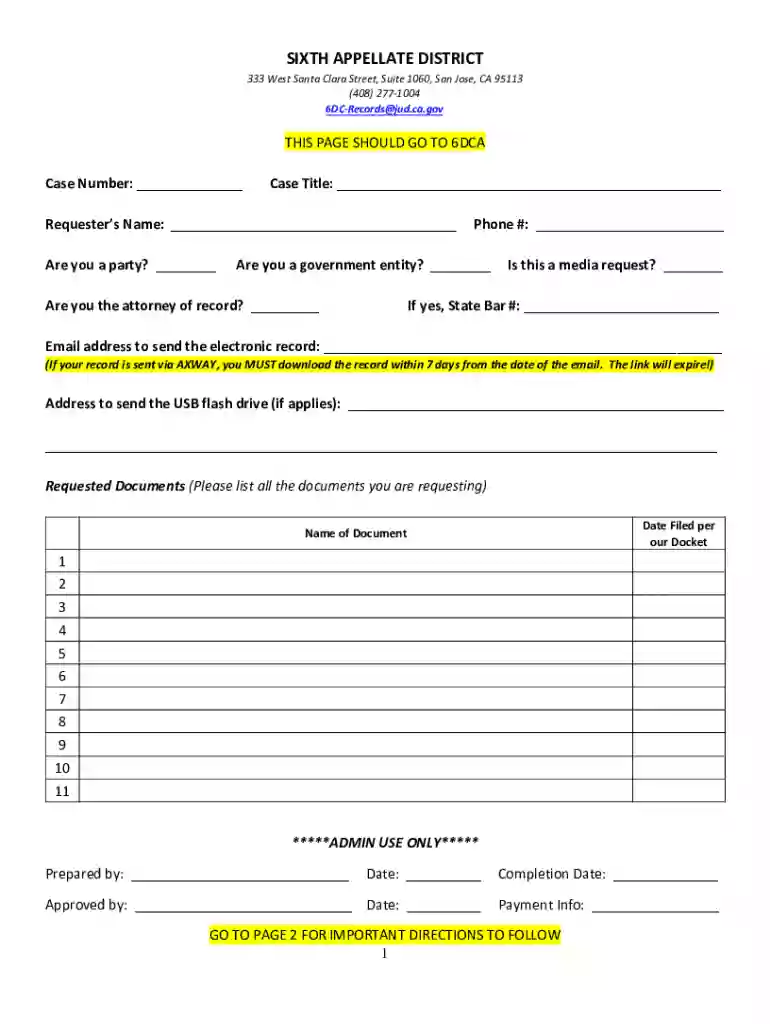
Type text, add images, blackout confidential details, add comments, highlights and more.

Draw your signature, type it, upload its image, or use your mobile device as a signature pad.

Send it via email, link, or fax. You can also download it, export it or print it out.
The Sixth Appellate District is one of the six appellate court districts in California, situated in San Jose. As part of the California Courts of Appeal, it handles cases primarily from Santa Clara, San Benito, Santa Cruz, and Monterey Counties. Its primary function is to review decisions made by trial courts within these jurisdictions. This court plays a crucial role in interpreting state laws and ensuring justice by providing appellate review in civil, criminal, and administrative cases. Understanding its role and functions is essential for those seeking to appeal lower court decisions within the relevant geographical area.
Utilizing the Sixth Appellate District effectively involves several essential steps. Parties interested in appealing a decision must first determine the eligibility and grounds for appeal. The process includes filing a notice of appeal within strict timelines, usually 60 days from the judgment or order being challenged. It is critical to ensure that all required documents are duly completed and submitted. Legal representation is highly encouraged due to the complexity of appellate procedures. The appellant must provide written briefs outlining legal arguments, which the court will review alongside trial court records. Oral arguments may also be scheduled where both parties can present their cases.
Notice of Appeal: File this document to initiate the appeal within the deadline specified post-judgment.
Preparation of the Record: Arrange for trial court transcripts and relevant documents to be supplied to the appellate court.
Filing Briefs: The appellant must submit an opening brief, which details the errors allegedly made by the trial court. The respondent, typically the winner in the lower court, will then file a response brief.
Oral Argument: Request if desired, although not mandatory, to provide a verbal summary of arguments.
Decision: The appellate court will issue a written decision after considering the arguments and documents presented.
Legal utilization of the Sixth Appellate District extends to various types of cases, including civil disputes, criminal appeals, family law matters, and administrative appeals. Parties use this court to argue that a legal error affected the trial court's decision, necessitating a review under appellate standards. Legal practitioners must follow stringent procedural rules, ensuring documents and briefs conform to the court's guidelines. The court's opinions can influence California law significantly, hence its pivotal role in shaping legal precedents.
These components are critical in ensuring that the appellate process is conducted effectively and in accordance with legal standards. Understanding and correctly implementing each step can significantly influence the success of an appeal in the Sixth Appellate District.
At DocHub, your data security is our priority. We follow HIPAA, SOC2, GDPR, and other standards, so you can work on your documents with confidence.


There are 7 justices in the Sixth District who decide over 900 appeals annually. In addition, the Sixth District disposes of 500 writ petitions annually.
by RJ Hanlon 1991 Cited by 1 Russell J. Hanlon, California Court of Appeal for the Sixth Appellate District: A Review of the Courts Opinions in Civil Cases Decided in 1988 through 1990,
District courts are vested with broad discretion to pragmatically evaluate the economic consequences of a class action and to deny class certification when they


