







Definition and Meaning
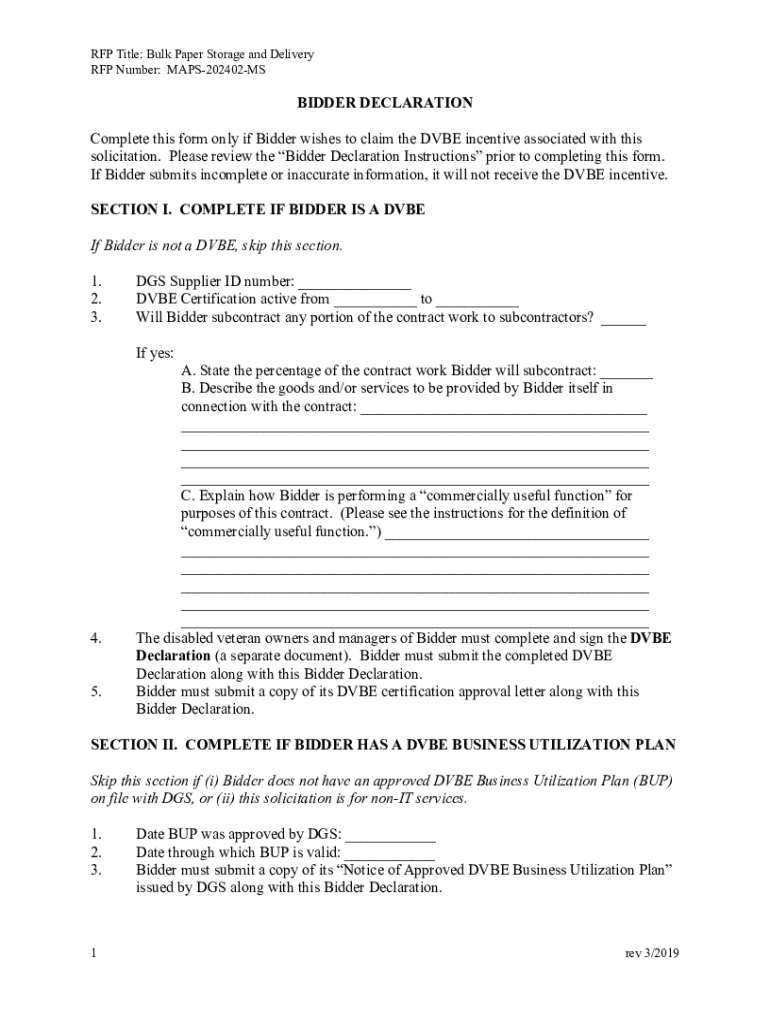
The Bidder Declaration Form - California Courts is an official document used primarily by individuals or entities interested in participating in contract opportunities with the California Courts system. This form is essential for bidders to declare their business information, particularly in relation to the Disabled Veteran Business Enterprise (DVBE) incentive program. The form's purpose is to ensure that the bidding process is transparent and that businesses claiming certain incentives meet specific qualifications.
Purpose and Importance
- Transparency: Ensures all bidders disclose relevant business information.
- Eligibility Verification: Confirms if a bidder qualifies for state-specific programs like DVBE.
- Compliance with State Requirements: Facilitates adherence to California's legal and procedural standards for public contracts.
Steps to Complete the Bidder Declaration Form - California Courts
Completing the Bidder Declaration Form accurately is crucial for bidders. Below is a comprehensive guide on how to fill out the form:
- Retrieve Necessary Information: Gather your company’s details, including legal name, address, and contact information.
- Outline DVBE Participation: Clearly state whether your business qualifies for the DVBE program and provide relevant certification documents.
- Detail Subcontracting Plans: If applicable, indicate any subcontractors involved in fulfilling the contract, emphasizing their roles.
- Certify Information: Officially verify that the information provided is accurate to the best of your knowledge, usually with a signature.
Practical Examples
- Example 1: A small veteran-owned business must outline its veteran status and intended subcontracting actions in compliance with DVBE prerequisites.
- Example 2: A larger corporation participating in multiple contract biddings needs to distinguish its roles in each bid strategically.
Important Terms Related to Bidder Declaration Form - California Courts
Understanding the language used in the form is vital for accurate completion:
- DVBE Incentive: Encourages state contracts with businesses owned by disabled veterans.
- Subcontractor: A secondary company hired to conduct business functions under the primary contract.
- Commercially Useful Function: Relates to a business executing work vital to fulfilling its contractual obligations.
Detailed Explanations
- DVBE Certification: Required documentation to prove a bidder’s veteran status and eligibility for related incentives.
- Business Entity Information: Information about the company's IRS-recognized business structure (e.g., LLC, Corporation).
How to Obtain the Bidder Declaration Form - California Courts
Obtaining the form is straightforward, but essential for timely participation:
- Online Access: Available on the official California Courts website for easy download.
- In-Person Requests: Obtainable at designated government offices if online access is not feasible.
Steps for Obtaining
- Visit the Official Website: Navigate to the procurement or bidding section.
- Download the Form: Ensure the document is in the correct format, typically PDF.
- Request Physical Copies if Necessary: Contact local offices for hard copies.
State-Specific Rules for the Bidder Declaration Form - California Courts
California has unique rules governing the use of the Bidder Declaration Form:
Compliance Requirements
- State Compliance: Adherence to California-specific laws and regulations during the bidding process.
- Mandatory Disclosures: Requires detailed descriptions of business operations and any DVBE participation.
Regional Variations
- Incentive Programs: California offers distinctive incentives for veteran-owned businesses, which can impact eligibility and budgeting for potential contracts.
Key Elements of the Bidder Declaration Form - California Courts
Critical sections of the form must be completed with care to ensure compliance and eligibility:
- Business Information: Includes official name, mailing address, and contact data.
- DVBE Participation: Details the extent of veteran involvement in the business.
- Subcontracting Details: Lists any relationships with other entities involved in the contract.
Essential Components
- Verification Statement: A legally binding section affirming the truthfulness of provided information.
- Signature Line: Confirms the form is completed and reviewed by an authorized representative of the bidding company.
Penalties for Non-Compliance
Failing to complete the Bidder Declaration Form correctly or omitting necessary information can lead to significant consequences:
Potential Consequences
- Disqualification from Bidding: Incomplete or inaccurate forms may lead to immediate rejection.
- Fines and Legal Action: Misrepresentation can attract penalties under California law, potentially including fines or further legal repercussions.
Examples of Non-Compliance
- Example 1: Failure to disclose a subcontractor could void the bid.
- Example 2: Incorrect information regarding DVBE status may result in liability for fraudulent claims.
Examples of Using the Bidder Declaration Form - California Courts
Utilizing the form correctly can facilitate seamless engagement in the contracting process with California Courts:
Scenario-Based Examples
- Construction Contract: A construction firm needs to declare all subcontractors to showcase adherence to the principal contract’s requirements.
- IT Services Bid: An IT company must illustrate its DVBE participation to benefit from state incentives, impacting its bid competitiveness positively.
Filing Deadlines and Important Dates
Adhering to specific timelines ensures proper participation in the bidding process:
Typical Deadlines
- Submission Due Dates: Ensure all documents, including the Bidder Declaration Form, are submitted before the designated deadline.
Importance of Timeliness
- Bid Acceptance: Late submissions are often disqualified, eliminating any chance of selection for the contract.
- Contractual Opportunities: Time management in submission can differentiate successful contenders from unsuccessful ones.




