
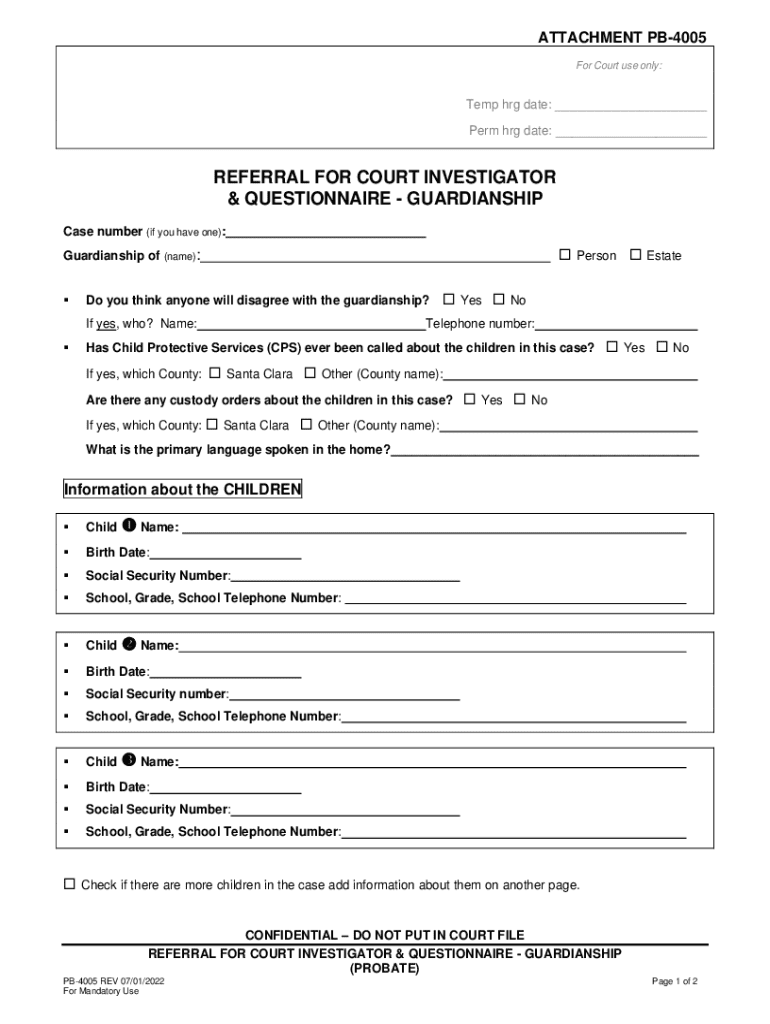







Definition and Purpose of Guardianship Forms
Guardianship forms are essential legal documents used to request the appointment of a guardian by a court. These forms are typically required when an individual, often a minor or someone unable to manage their own affairs, needs legal protection and representation. The forms are designed to gather comprehensive information about the proposed guardian, the person needing guardianship, and any other relevant parties involved. Ensuring accurate and complete data is crucial, as these details influence the court's decision regarding the suitability of the guardian.
Steps to Complete Guardianship Forms
-
Gather Required Information: Collect information about the proposed guardian, the ward (the person needing guardianship), and any other related individuals. This includes full names, addresses, contact information, and birth dates.
-
Understand Legal Terminology: Familiarize yourself with terms like "ward," "guardian," and "conservator" as they might vary from state to state.
-
Fill Out Personal Details: Complete sections detailing the personal and contact information of all parties involved.
-
Describe the Relationship: Clearly outline the connection between the proposed guardian and the ward, as well as the reasons guardianship is requested.
-
Provide Legal History: Document any legal proceedings the proposed guardian or ward has been involved in, including criminal records or previous guardianship arrangements.
-
Identify Current Custody Arrangements: If applicable, provide details on any existing custody or guardianship orders.
-
Review and Submit: Thoroughly review the completed forms for accuracy and ensure all required sections are filled. Submit the forms to the relevant court.
Required Documents for Submission
-
Birth Certificates: Provide copies for both the ward and the proposed guardian.
-
Identification: Submit government-issued IDs for all involved parties.
-
Legal Documentation: Include previous custody or guardianship orders if they exist.
-
Financial Statements: Supply documentation demonstrating the guardian's ability to provide for the ward’s needs.
-
Affidavit of Consent: If applicable, include signed consent from the ward (commonly required for older minors or adults who understand the proceedings).
Legal Use of Guardianship Forms
Guardianship forms serve the legal purpose of:
-
Establishing Accountability: They ensure that the proposed guardian is fit to undertake responsibilities for the ward’s well-being.
-
Protecting Interests: The forms secure the interests of the ward by outlining care and management expectations, thus providing a reference in case disputes arise.
-
Court Review: Forms allow the court to assess the necessity and propriety of the guardianship before making a legally binding decision.
State-Specific Considerations
Each U.S. state may have unique rules regarding guardianship processes. Critical state-specific considerations include:
-
Terminology Differences: Names of forms and proceedings can vary (e.g., "conservatorship" might replace "guardianship" in some regions).
-
Residency Requirements: Verify the residency requirements for both the guardian and the ward.
-
Form Variations: Ensure you're using the correct form version tailored to your state’s regulations.
-
Court Procedures: Familiarize yourself with the specific court procedures for submitting and reviewing guardianship applications in your state.
Important Terms and Their Meanings
- Ward: The individual for whom guardianship is sought.
- Guardian: The person appointed to care for and make decisions on behalf of the ward.
- Conservator: An alternative term used in some jurisdictions synonymous with guardianship or specifically referring to financial/legal responsibility.
- Affidavit: A written statement used as evidence in court proceedings.
Who Typically Uses Guardianship Forms
- Family Members: Relatives often use these forms to request guardianship to provide care for minors or incapacitated family members.
- Legal Practitioners: Attorneys assist clients in filling out these forms to ensure legal compliance.
- Social Services: Agencies might use these forms in cases where a child's safety or well-being is at risk and necessitates a change in guardianship.
Examples and Case Studies
- In one case, a grandmother filled out guardianship forms to become the legal guardian of her grandchild after obtaining consent from the child's parents who were unable to provide care due to financial difficulties.
- Another instance involved an adult child becoming a guardian for their elderly parent who was incapacitated due to Alzheimer's, documenting the parent's inability to manage personal affairs.
By understanding the purpose, steps, legal uses, and potential variations of guardianship forms, individuals and professionals can effectively navigate the process to ensure the best outcomes for those needing legal protection and care.




