







Definition and Purpose of ADHS Regulation
The Arizona Department of Health Services (ADHS) plays a critical role in regulating sober living and residential facilities within the state of Arizona. This regulation aims to ensure that such facilities operate in a manner that provides a safe and supportive environment for individuals recovering from substance abuse. ADHS establishes guidelines that address health, safety, and quality of life for residents, ensuring compliance with local zoning laws and public health standards.
How to Use the ADHS Guidelines
Understanding and utilizing the ADHS guidelines is crucial for operators of sober living homes and residential treatment facilities. These guidelines outline the necessary steps for compliance, including requirements for documentation, staffing, and facility operations. Operators must become familiar with these rules to maintain their licensing status and provide competent care.
Steps for Compliance
- Review ADHS Guidelines: Familiarize yourself with ADHS regulations pertaining to sober living and residential facilities.
- Assess Facility Requirements: Ensure your facility meets zoning, safety, and health standards outlined by the ADHS.
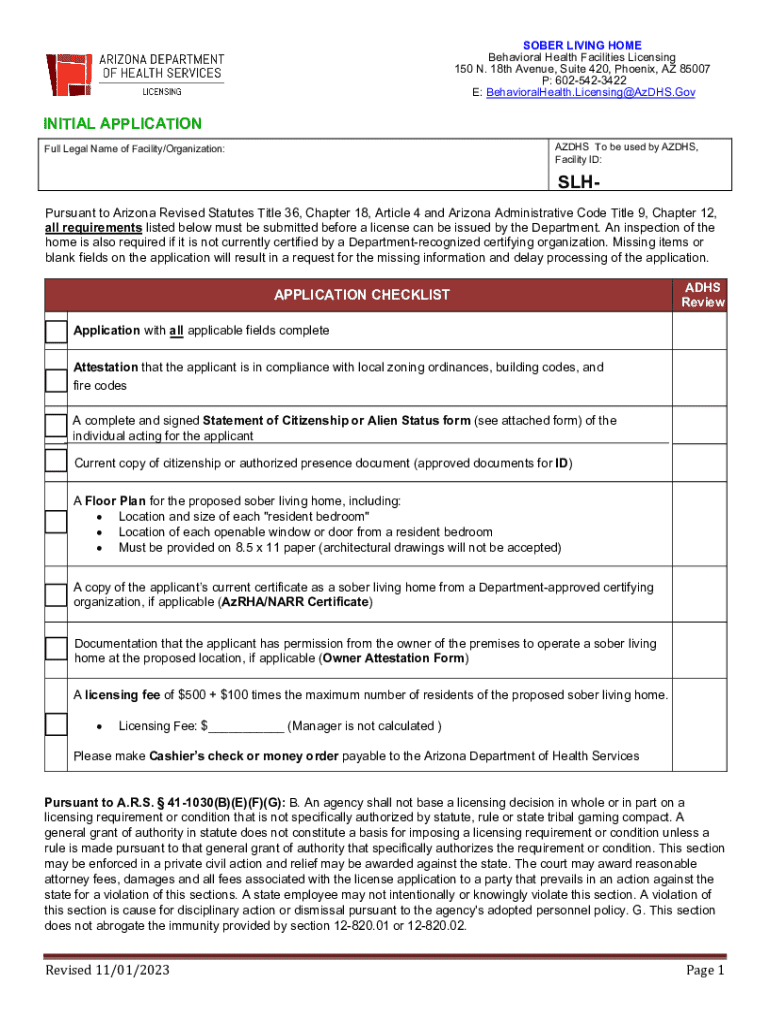
- Documentation: Prepare necessary application forms, including citizenship verification and facility floor plans.
- Licensing Fees: Ensure all application fees are submitted as required by ADHS.
- Regular Inspections: Schedule and conduct regular facility inspections to adhere to ADHS standards.
How to Obtain Licensing for Sober Living Homes
To operate a sober living home in Arizona legally, obtaining a license from ADHS is mandatory. The application process for such a license involves several key steps to ensure compliance and readiness to provide care.
Application Process
- Complete Application Form: Fill in the application form with all required information, ensuring accuracy to prevent processing delays.
- Submit Documentation: Include a comprehensive floor plan, proof of zoning compliance, and citizenship documentation.
- Pay Fees: Submit the necessary licensing fees alongside your application to complete the process.
- Await Approval: After submission, await confirmation and licensing approval from ADHS, which may include a facility inspection.
Key Elements of ADHS Regulation for Sober Living
Several critical elements define ADHS regulation for sober living facilities. Understanding these elements is important for maintaining a compliant and ethical facility.
Essential Elements
- Zoning Compliance: Facilities must meet local zoning regulations to operate legally.
- Health and Safety Standards: Adherence to public health standards, including cleanliness and fire safety, is required.
- Staff Training: Staff must be adequately trained to support residents in recovery.
- Resident Rights: Facilities must uphold the rights and dignity of residents, providing a safe and supportive environment.
Legal Use and Compliance
Operating a sober living home requires strict adherence to ADHS regulations to ensure legal compliance and the safety of residents. Non-compliance can result in penalties and revocation of the facility's license, making adherence to the rules a non-negotiable component of operation.
Legal Obligations
- Maintain Updated Licensing: Operators must keep their licensing current and comply with any renewal requirements.
- Conduct Regular Audits: Facilities should carry out regular audits to ensure adherence to ADHS standards.
- Report and Manage Incidents: Any incidents affecting resident safety must be reported and managed according to ADHS guidelines.
Who Issues and Oversees Compliance
The Arizona Department of Health Services is the primary authority that issues licenses for sober living homes and oversees ongoing compliance. This oversight includes regular facility inspections and reviews to ensure that operations meet established standards.
ADHS Responsibilities
- Issuance of Licenses: ADHS is responsible for approving applications and issuing licenses for sober living homes.
- Regular Inspections: Conducts routine inspections to ensure ongoing compliance with health and safety regulations.
- Guidance and Support: Provides resources and guidance to operators for maintaining compliance.
Eligibility Criteria for Sober Living Homes
Eligibility for obtaining a license to operate a sober living facility is determined by ADHS and includes several key criteria that prospective operators must meet.

Criteria Overview
- Facility Type and Size: Must meet the specified type and size requirements as per local zoning laws.
- Documentation and Proofs: Submission of all required documentation, including citizenship proof and facility plans.
- Compliance with Safety Standards: Facility must adhere to fire, health, and safety standards set by ADHS.
State-Specific Rules and Variations
While all facilities must comply with ADHS regulations, there can be state-specific variations in rules and standards, depending on location and local laws.
State and Local Considerations
- Zoning Laws: Different localities may have specific zoning laws affecting where sober living facilities can operate.
- Health Standards: Local health department regulations may impose additional requirements for operations.
- Public Hearings: In some areas, public hearings may be required as part of the licensing process.




