
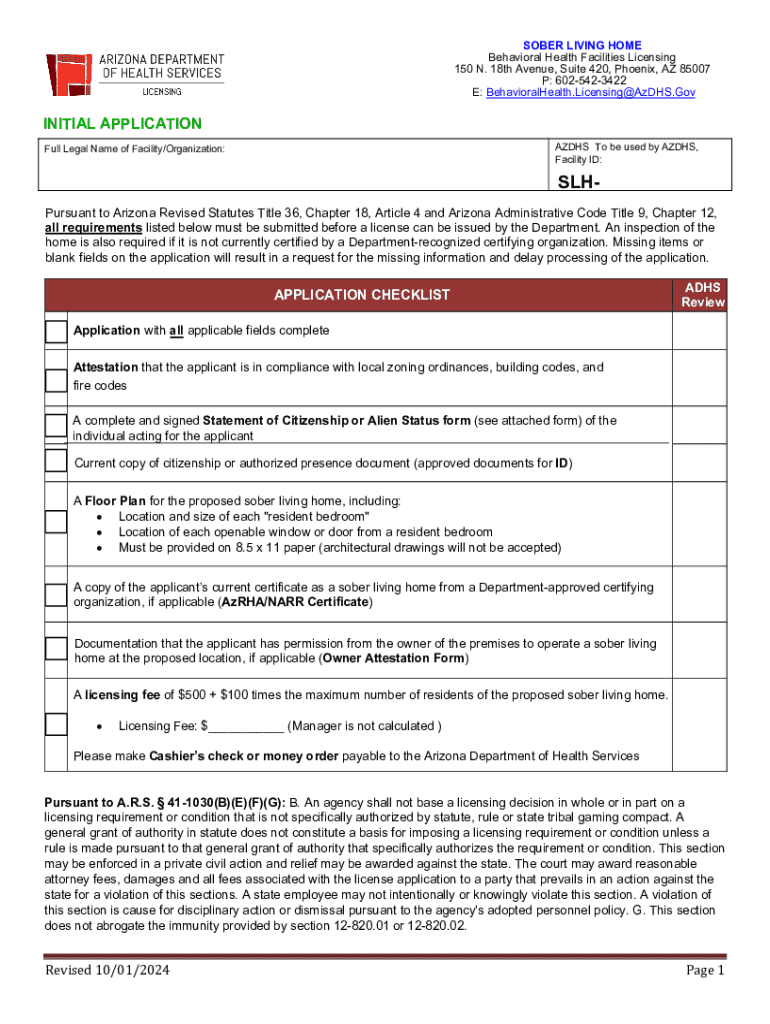







Definition & Importance of Sober Living Homes
Sober living homes serve as transitional residential environments for individuals recovering from substance abuse. These facilities offer a structured, supportive space that helps residents maintain their sobriety while gradually reintegrating into everyday life. It's important to recognize that sober living homes are not treatment facilities but rather provide an alcohol-free and drug-free environment. They emphasize peer support and routine living as key components of successful recovery. Typically, they impose rules such as attending peer support meetings and engaging in household responsibilities to foster accountability and community rebuilding. Understanding the role and purpose of these homes is crucial for ensuring they are utilized effectively within recovery programs.
Steps to Complete a Sober Living Home Application
-
Research Local Requirements: Each state may have different zoning laws and guidelines regarding sober living homes. Before applying, review the specific local regulations to ensure compliance.
-
Prepare Documentation: Collect necessary documents, including identification, proof of residency, treatment history, and any certifications required by the local jurisdiction.
-
Complete the Application Form: The application will require detailed information about the operator, the facility’s plan, and compliance with zoning laws. Accurately fill out each section, ensuring that all information aligns with legal and local requirements to prevent delays.
-
Submit the Application: Submit the completed application and accompanying documents as directed. Pay any associated fees required for processing.
-
Follow-up: After submission, stay in touch with local authorities to track the progress of your application and provide additional information if requested.
Legal Use and Compliance
Operating a sober living home requires adherence to specific legal standards to meet both state and federal regulations. Compliance often involves verifying zoning laws, property use regulations, and health and safety codes. Operators must also ensure that their practices do not violate Fair Housing Laws and the Americans with Disabilities Act, which protect individuals with disabilities from housing discrimination. Additionally, operators should maintain transparent and updated operational policies, and regularly train staff on legal obligations.
Required Documents for Sober Living Homes Licensing
The licensing process for a sober living home typically requires several key documents:
- Proof of Residency: Documentation that verifies the address of the proposed facility.
- Citizenship Documentation: Proof of citizenship or legal residency of the operator.
- Floor Plans: A detailed layout of the facility, showcasing sleeping arrangements, communal spaces, and safety exits.
- Operational Policies: A comprehensive outline of house rules, safety measures, and resident guidelines.
- Insurance Certificates: Proof of liability and property insurance.
Thorough preparation of these documents can expedite the application process and ensure compliance with local regulations.
Who Typically Lives in a Sober Living Home
Sober living homes are typically inhabited by individuals transitioning from intensive treatment programs back into regular daily life. These residents often include:
- Young Adults: Navigating the challenges of maintaining sobriety while establishing independence.
- Adults in Early Recovery: Individuals focusing on stabilizing their recovery through peer support.
- Professionals: Who need a structured environment to support their return to work and societal roles.
- Veterans: Utilizing sober living facilities as part of their rehabilitation from substance abuse disorders.
Each of these groups shares a common goal: maintaining sobriety in a supportive, structured environment.
Key Elements of Operating a Sober Living Home
Successfully operating a sober living home requires attention to several key elements:
- Structured Environment: Establish consistent rules, curfews, and chores to maintain order.
- Support Programs: Facilitate access to 12-step programs or other recovery support services.
- Trained Staff: Hire personnel knowledgeable in addiction recovery to provide guidance and support.
- Safety Measures: Implement robust safety protocols for emergencies and daily operations.
- Community Building: Foster a sense of community through group activities and meetings, promoting a sense of belonging and collective responsibility.
These elements contribute to a well-managed environment that supports residents through their recovery journey.
State-Specific Rules and Considerations
Each state may impose different rules when it comes to operating sober living homes. Variations can include zoning laws, licensing requirements, and the level of oversight by state agencies. For example, California has specific state licensing protocols and offers voluntary certification for higher standards. Arizona requires submission of detailed operational policies and proof of insurance. Understanding these state-specific regulations is crucial for remaining in compliance and promoting successful operation.
Examples and Scenarios in Sober Living Homes
Effective use of sober living homes can be illustrated through real-world scenarios and examples:
- Post-Treatment Transition: After completing a rehabilitation program, individuals move into sober living homes to establish routines and gradually resume employment and community interactions.
- Peer Support Importance: Residents often cite peer support as a critical element in maintaining their sobriety, engaging in shared activities and support meetings to build resilience.
- Preventing Relapse: The structured environment and accountability measures in sober living homes are instrumental in reducing the risk of relapse during early recovery stages.
These examples underscore the practical utility and impact of sober living homes on individuals recovering from substance abuse disorders.




