







Definition & Meaning
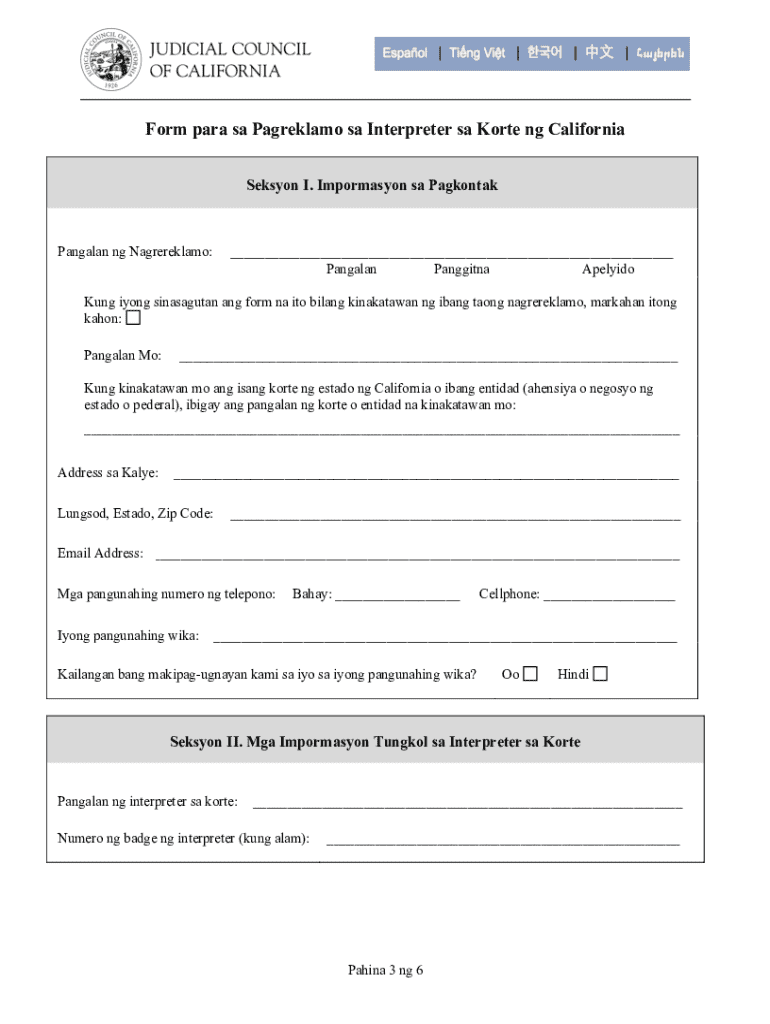
The "211386taCalifornia Court Interpreter Complaint Form and InstructionsTAGALOGa3zFORMATTED DR" is a specialized document used to file complaints against certified or registered court interpreters in California. This form serves as both an instrument for reporting grievances and a set of instructions guiding complainants through the complaint submission process. It's critical for ensuring accountability and maintaining ethical standards among court interpreters.
Steps to Complete the Form
-
Gather Information:
- Compile all relevant details related to the incident, including the interpreter’s name, the date of the occurrence, and specific examples of the alleged misconduct or ethical violation.
-
Detail the Incident:
- Provide a comprehensive account of the incident, ensuring clarity and precision. Include specific responses or actions by the interpreter that led to the complaint.
-
Include Supporting Documentation:
- Attach any documents, emails, or other evidence that corroborate your claims. This information bolsters the credibility and seriousness of your complaint.
-
Complete the Form:
- Fill out each section of the form accurately. Ensure all required fields are completed and that the information aligns with your gathered documentation.
-
Review and Submit:
- Double-check the entire form for accuracy before submission. Submit the form via the preferred method outlined in the instructions.
How to Obtain the Form
The form can be accessed through multiple channels. It is available for download from official California court websites or distributed upon request by contacting the court's administrative office. To simplify the process, some jurisdictions may also provide the form in a digital format, available through platforms that facilitate document management, such as DocHub.
Required Documents
When preparing to submit the complaint form, make sure to gather all necessary documents to support your claim. This includes:
- Incident reports.
- Correspondence with court authorities or interpreters.
- Witness statements if available.
Who Typically Uses This Form
Primarily, individuals who have interacted with court interpreters in legal settings in California are eligible to use this form. This includes lawyers, paralegals, defendants, plaintiffs, or any party involved in a court proceeding who believes the interpreter failed to meet ethical or professional standards.
Key Elements of the Form
- Complainant Details: Information about the person filing the complaint.
- Interpreter Information: Details about the interpreter, including their certification or registration number, if known.
- Incident Description: A thorough account of the alleged misconduct.
- Supporting Evidence: Sections dedicated to attaching additional documentation.
Legal Use of the Form
This form serves as an official channel for raising grievances regarding court interpreters, making it an essential tool for maintaining integrity within the judicial process. Legal protections ensure that complaints filed through this form are treated with confidentiality and seriousness by the relevant authorities.
Form Submission Methods
Depending on the court’s protocol, the form may be submitted through multiple methods:
- Online Submission: Via official court or document management websites.
- Mail: Sending the completed form to the designated court address.
- In-Person: Submitting directly at the courthouse or administrative office.
State-Specific Rules
California’s judicial system mandates specific guidelines for filing complaints against court interpreters. These rules are designed to ensure fairness and due process in handling complaints, requiring detailed documentation and clear evidence of misconduct. It’s important to follow these guidelines closely to ensure the validity and effectiveness of your complaint.
Examples of Using the Form
Consider hypothetical situations where this form might be necessary:
- A non-English speaking defendant feels their interpreter inaccurately translated crucial testimonies.
- An attorney observes an interpreter displaying partiality toward the opposing party.
These scenarios exemplify when it may be appropriate to use this form to report potential violations of interpreter standards.




