






Definition and Purpose of DV-310 Notice
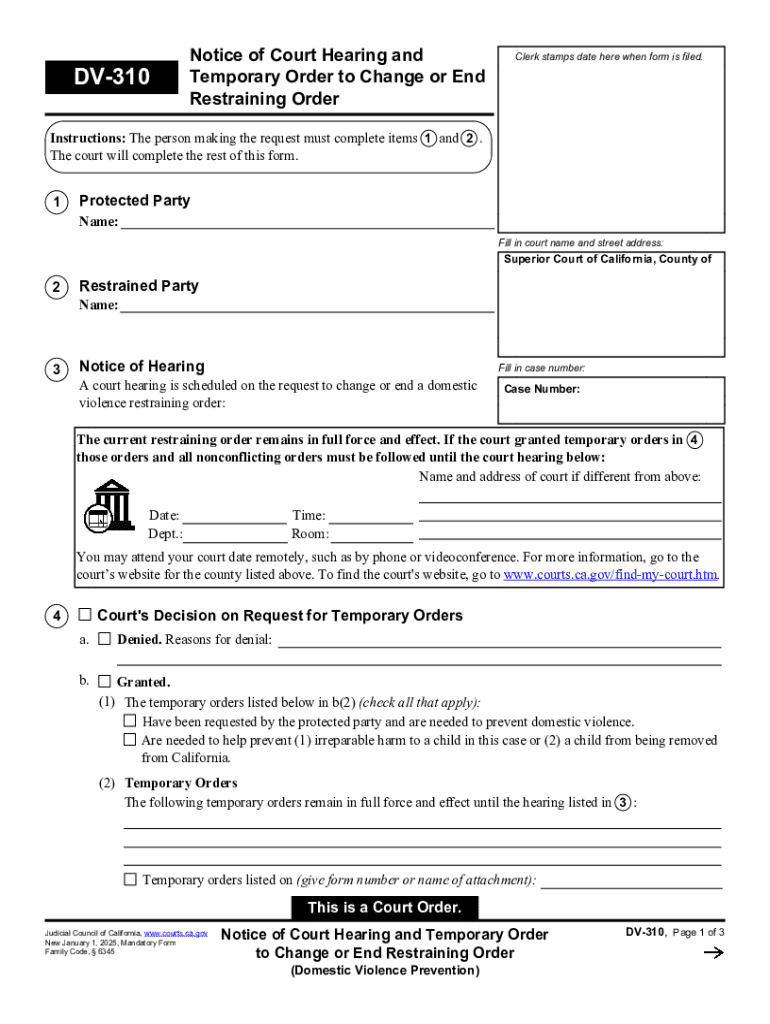
The DV-310 Notice of Court Hearing and Temporary Order to Change or End Restraining Order serves as a legal document in the United States, facilitating the modification or termination of a domestic violence restraining order. It informs both the protected and restrained parties about pivotal details of the hearing, such as date, time, and location, while addressing any temporary orders that remain in effect until the hearing. This document underscores the formal procedures necessary for compliance and communication between involved parties.
How to Use the DV-310 Notice Effectively
Using the DV-310 notice involves several crucial steps. Firstly, the applicant must accurately complete the form with the required personal and case-specific information. This includes detailing any changes or termination requests for the existing restraining order. The notice should then be filed with the appropriate court, ensuring it is served to the other party through legally recognized means. Proper use of the DV-310 guarantees adherence to legal protocols and fosters a clear communication channel between involved parties, contributing to the integrity of the legal process.
Obtaining the DV-310 Notice
To acquire the DV-310 Notice, individuals may either visit a local courthouse or download it from state-specific judicial websites. It is also advisable to consult with a court clerk or legal professional to ensure that the right forms are obtained and understood. Adequate guidance when obtaining and completing this form is critical, especially in navigating complex legal terminologies and requirements.
Steps for Completing the DV-310 Notice
- Personal and Case Information: Enter your full name, case number, and other identifying details for both parties.
- Detail Requested Changes: Clearly specify the changes you are seeking regarding the restraining order, providing context and any supporting evidence.
- Temporary Orders: Acknowledge any temporary orders that will remain in place until the court hearing.
- Submit and Serve: Submit the completed form to the court and ensure it is served to all involved parties according to legal requirements.
Each step requires precision to uphold the document’s validity, ensuring all legal standards are met.
Importance of the DV-310 Notice
The DV-310 Notice plays a vital role in safeguarding due process and upholding justice in domestic violence cases. It enables individuals to formally request a court to review and possibly amend current restraining orders. Through this process, the legal system provides both the petitioner and the restrained party an opportunity for their cases to be heard and adjudicated fairly and transparently, emphasizing the significance of judicial oversight in personal protection matters.
Typical Users of the DV-310 Notice
Typically, the DV-310 Notice is used by individuals involved in domestic violence restraining order cases. This can include:
- Petitioners: Individuals seeking to modify existing protection orders due to changed circumstances.
- Respondents: Parties subject to a restraining order who wish to contest or adjust it. Both groups must adhere to the procedural framework provided by this notice to ensure their case is adequately presented in court.
Key Elements of the DV-310 Notice
The DV-310 comprises several fundamental components:
- Hearing Information: Date, time, and venue of the scheduled court hearing.
- Parties Involved: Identification details of the petitioner and the respondent.
- Requested Changes: Specific modifications being sought to the current restraining order.
- Temporary Orders: Details of any temporary orders in effect leading up to the hearing.
Each element is crucial for ensuring the document's purpose is fulfilled and all parties remain well-informed.
Legal and Procedural Use of the DV-310 Notice
Understanding the legal context of the DV-310 is essential for its successful application. The document initiates a legal process that may result in altering the terms of a restraining order. Both parties must adhere to the outlined procedural steps, ensuring compliance with relevant state laws. Legal professionals often play a pivotal role in interpreting and implementing the implications of the DV-310, facilitating a fair and systematic approach towards resolving disputes related to domestic violence restraining orders.
State-Specific Considerations for the DV-310 Notice
While the DV-310 is used widely across the United States, state-specific regulations may influence its application. Differences might include unique filing procedures, deadlines, and required supplementary documents. For instance, some jurisdictions may mandate additional forms or legal documentation alongside the DV-310. Comprehensive understanding and compliance with these state-specific rules are imperative for the notice’s effective use in court proceedings.