







Definition & Meaning
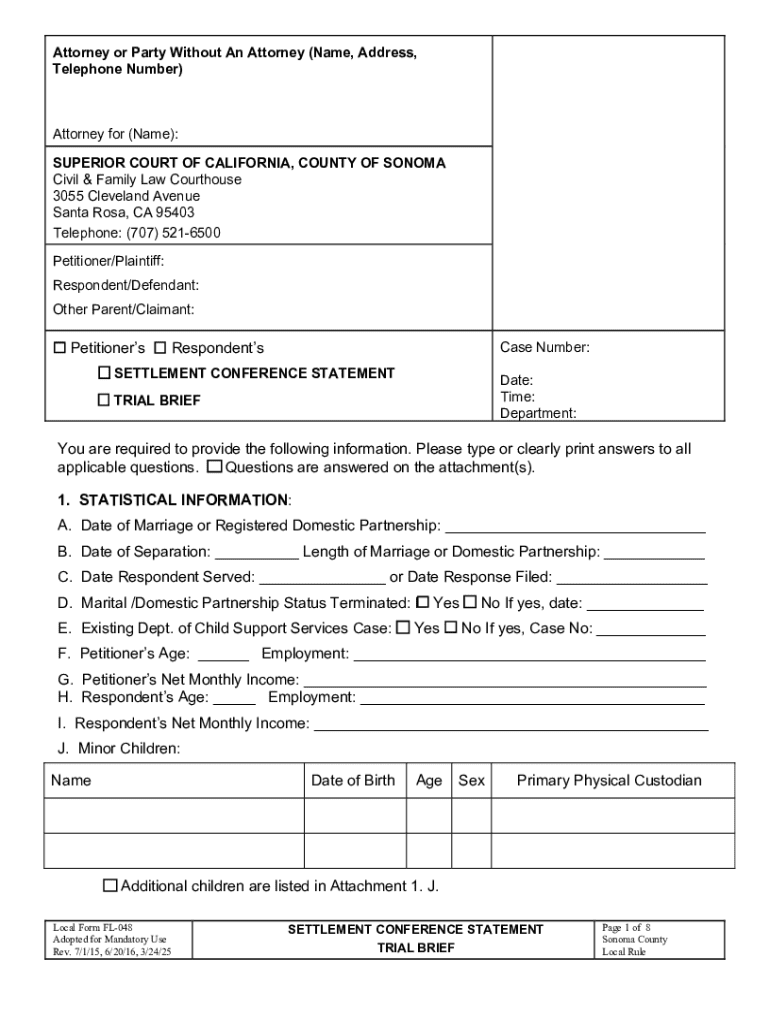
The "Settlement Conference Statement and Trial Brief" is a legal document employed in civil and family law cases within the Superior Court of California, particularly in Sonoma County. It serves a dual purpose: as a settlement conference statement and as a trial brief. This form is instrumental in providing critical statistical data about marriage or domestic partnerships, existing court orders, and outlining settled versus disputed matters. These matters may include aspects like child custody, support, and the division of property and debts. By carefully detailing these areas, it aids the court in understanding the nuances of the case and helps in facilitating a settlement wherever possible before going to trial.
How to Use the Settlement Conference Statement and Trial Brief
To effectively use the "Settlement Conference Statement and Trial Brief," parties involved in a case should first gather relevant information pertaining to their case. This may include financial records, custody agreements, and any prior court orders. Once the necessary data is collected, parties should complete the form by filling out each section with accurate and up-to-date information. It's essential to attach any supporting documents, such as income declarations or lists of witnesses and exhibits, as these can provide further context and strengthen your position. After completing the form, it is typically filed with the court and shared with the other parties involved, allowing for any disputes to be addressed prior to the settlement conference or trial.
Steps to Complete the Settlement Conference Statement and Trial Brief
- Gather Necessary Information: Collect all relevant documentation, including financial records, existing court orders, and custody agreements.
- Fill Out the Form: Input the statistical and factual information required in each section of the form, ensuring accuracy.
- Attach Supporting Documents: Include any necessary attachments such as income declarations, witness lists, and exhibits.
- Review and Finalize: Carefully review all entries for completeness and correctness. Have an attorney review it if possible.
- File with the Court: Submit the completed form to the appropriate court and provide copies to all involved parties.
- Prepare for Conference/Trial: Use the completed form as a reference during the settlement conference or trial.
Key Elements of the Settlement Conference Statement and Trial Brief
The "Settlement Conference Statement and Trial Brief" typically contains several key components:
- Statistical Information: Details about the marriage or domestic partnership, such as length and status.
- Existing Court Orders: Information concerning any prior orders related to custody, support, or property division.
- Settled Issues: Areas where both parties have reached an agreement, which may include child support arrangements and asset divisions.
- Disputed Issues: Sections dedicated to unresolved matters requiring court intervention, such as contested custody or support payments.
- Attachments and Exhibits: Supporting documents that can range from financial affidavits to lists of witnesses expected to testify at trial.
Who Typically Uses the Settlement Conference Statement and Trial Brief
This form is predominantly utilized by parties involved in civil and family law disputes within the state of California. This includes individuals undergoing divorce proceedings, resolving child custody and support issues, or parties involved in the division of marital property. Attorneys representing these individuals often assist in preparing the document to ensure all legal requirements and strategic elements are thoroughly addressed. The form is also frequently reviewed by judges and mediators to gain insight into the specific needs and positions of each party involved in a case.

Legal Use of the Settlement Conference Statement and Trial Brief
The "Settlement Conference Statement and Trial Brief" has a critical role within the legal framework of family and civil law proceedings. Its primary function is to facilitate pre-trial settlements by providing a structured medium for both parties to lay out their agreements and disputes. By clearly delineating settled versus disputed issues, it allows the court to focus on the specific points of contention that require rulings. The extensive use of factual data, attachments, and supportive documentation ensures that decisions are made based on complete and accurate information, aligning with legal standards and requirements.
State-Specific Rules for the Settlement Conference Statement and Trial Brief
While this form is heavily utilized in California, particularly in its superior courts like Sonoma County, there may be variations or additional requirements depending on specific state or even local court rules. Users of this form must be keenly aware of any such differences, as they may dictate specific filing procedures, deadlines, or content that must be included beyond the standard form. It is often advisable to consult with legal professionals familiar with local laws to ensure compliance with these requirements and avoid any procedural missteps.
Important Terms Related to Settlement Conference Statement and Trial Brief
- Settlement Conference: A meeting between parties involved in a legal dispute to try and resolve issues without going to trial.
- Trial Brief: A written argument submitted during a trial, outlining the issues at hand and the party's position.
- Custody and Support: Legal terms concerning the legal responsibility for children and the financial support provided for their well-being.
- Property Division: The legal process of determining how marital assets and debts are distributed between parties.
- Court Orders: Legal rulings issued by a judge that dictate the rights and responsibilities of the parties involved.
Examples of Using the Settlement Conference Statement and Trial Brief
Consider a couple undergoing a divorce with contested child custody issues. The "Settlement Conference Statement and Trial Brief" allows both parties to outline their preferred custody arrangements, supported by evidence and testimonies included as attachments. The document helps in facilitating discussions during the settlement conference, where the couple can potentially agree on a suitable arrangement, thereby averting a more prolonged trial. In another scenario, a party may use this form to demonstrate adherence to existing court orders related to alimony, which can have significant ramifications on the trial’s outcome by establishing compliance and good faith in meeting legal obligations.




