




01. Edit your form online
Type text, add images, blackout confidential details, add comments, highlights and more.

Type text, add images, blackout confidential details, add comments, highlights and more.

Draw your signature, type it, upload its image, or use your mobile device as a signature pad.

Send it via email, link, or fax. You can also download it, export it or print it out.
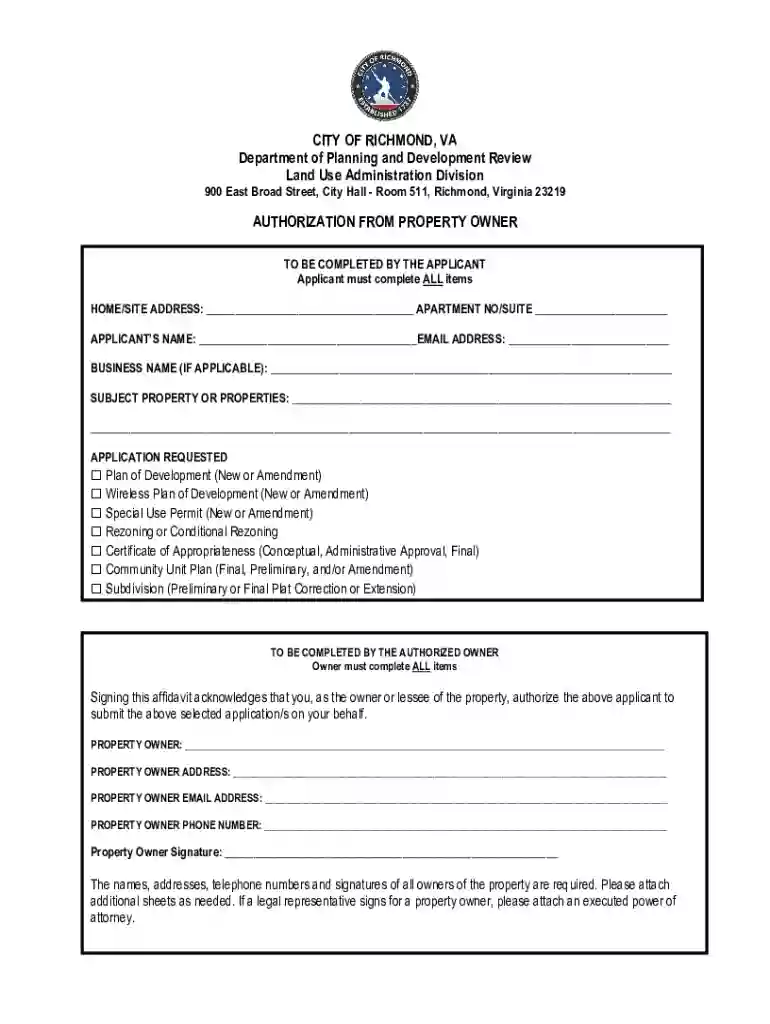
A Special Use Permit Application is typically required when a property owner or business wishes to use land or buildings in a way that deviates from zoning regulations. This application is essential for those intending to initiate a use that is not explicitly allowed in their area's zoning classification but can be permitted under specific conditions. Its acceptance implies that the proposed use is compatible with zoning goals and local development plans such as the Richmond 300 Master Plan.
Pre-Application Meeting: Before submitting the application, many localities, including Richmond, require a meeting with planning department officials to review the proposal's feasibility and necessary adjustments.
Gathering Required Documentation: Collect property owner authorization, site plans, impact studies, and any other relevant documents that support your case for the special use.
Filling Out the Application Form: Provide detailed information about the proposed use, ensuring all sections are thoroughly completed. Pay special attention to required fields marked as mandatory.
Submitting the Application: Submit the application along with all required documents and fees. Depending on the jurisdiction, this can be done online, by mail, or in person.
Public Notification: Applicants must notify neighboring property owners and possibly the general public about the proposed use to allow for community input during the review process.
Review and Approval: The application will go through a review process involving city agencies and potentially public hearings before a final decision is made.
Applicant Information: Contact details of the person or entity applying for the permit.
Property Details: Location, zoning classification, and current use of the property in question.
Proposed Use Explanation: A thorough description of the intended use and how it deviates from current zoning rules.
Site Plans and Impact Assessments: Visual and analytical materials that demonstrate how the proposed use affects the surrounding area, including traffic and environmental impacts.
Compliance with Local Plans: Explanation of how the proposed use aligns with master plans like the Richmond 300 Master Plan.
Property Owner Authorization: Written consent from the property owner if the applicant is different from the owner.
Zoning Compliance Statement: Certification from a qualified professional ensuring that the proposal meets zoning requirements.
Environmental Impact Assessment: If applicable, a report detailing the potential ecological effects of the proposed use.
Traffic Impact Study: Analysis of how the new use might affect local traffic patterns.
Public Notice Affidavit: Proof that all required public notifications have been completed.
This application typically supports uses like small businesses, churches, or multi-family housing developments in areas zoned for residential use only, provided they meet specific conditions. Obtaining this permit does not provide carte blanche to ignore zoning laws; it allows for use under strict conditions outlined during the application process, ensuring community interests are safeguarded.
Property Developers: Seeking to maximize the use of land holdings through development projects.
Small Business Owners: Interested in establishing a business in a non-commercially zoned area.
Non-Profit Organizations: Such as churches or community centers that wish to utilize residential zones for communal gatherings.
Educational Institutions: Planning expansions or new constructions in areas where their use might not be readily permitted under existing zoning laws.


The application process can vary in complexity based on the jurisdiction and specific use being requested. Most applications undergo a multi-step review involving site evaluations, neighborhood input, and compatibility checks with local development guidelines. The approval time can range from two to six months, depending on the complexity of the request, the completeness of the application, and the efficiency of the reviewing bodies.
Regulations can vary significantly across states due to differing zoning laws and development goals. It's essential to consult with local planning authorities to understand the specific rules and requirements in your area. For instance, in Richmond, VA, special use permits must align with the Richmond 300 Master Plan, which guides the city’s growth and development strategy.
By providing a detailed and transparent proposal through the Special Use Permit Application, applicants can facilitate informed decisions by local authorities, ensuring that special uses contribute positively to community development goals.
At DocHub, your data security is our priority. We follow HIPAA, SOC2, GDPR, and other standards, so you can work on your documents with confidence.


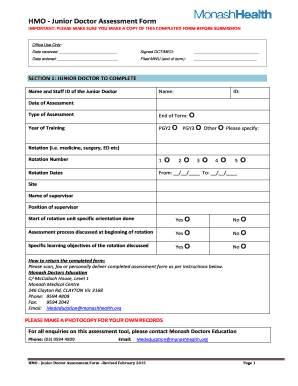

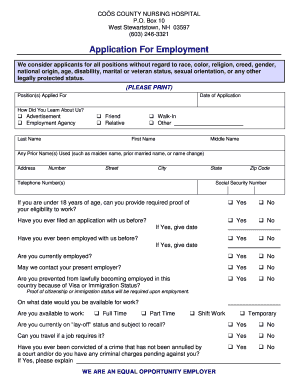
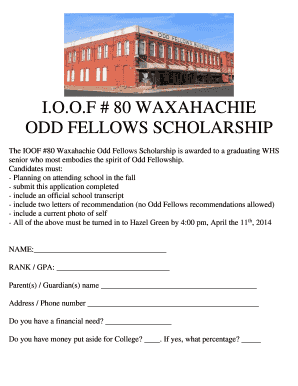
Special use permits are for uses like gas stations, dog kennels, drive-through windows, and development in environmentally sensitive zones.
Any person proposing to engage in an activity that would disturb, remove, or injure a non-historic sunken military craft must apply for a special use permit.
Are appropriate design, construction, and location of structures, buildings, and facilities needed in relation to property and limitations on the use due to


