TAX RELIEF FOR THE ELDERLY AND DISABLED 2026

Get Form
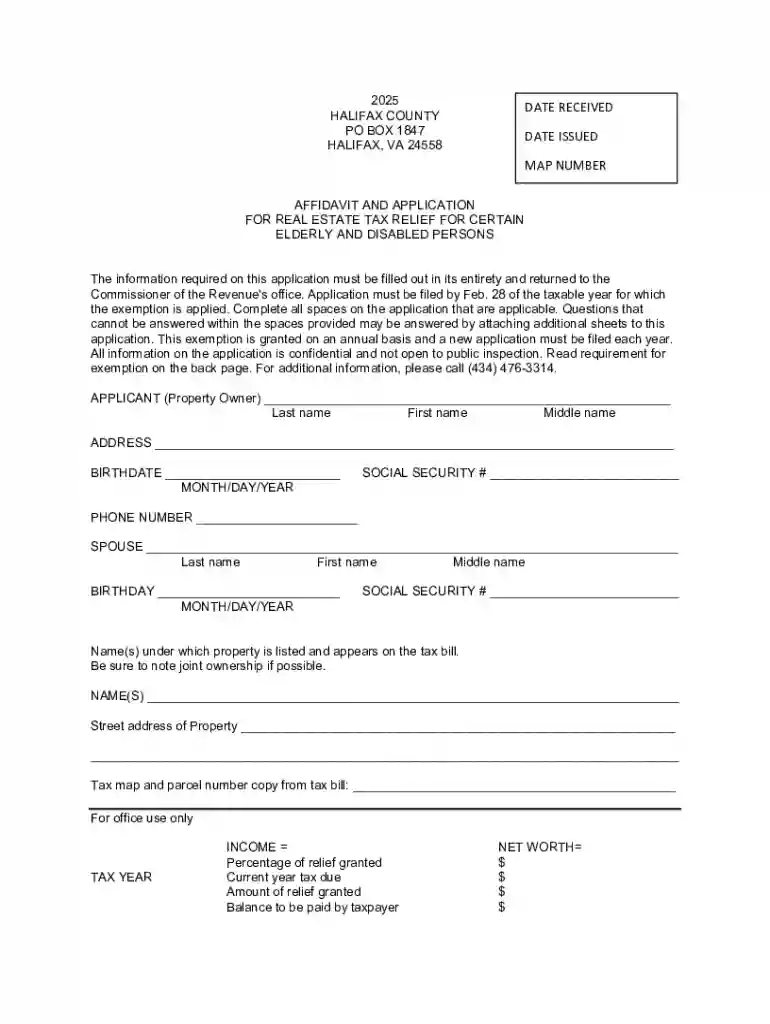
TAX RELIEF FOR THE ELDERLY AND DISABLED Preview on Page 1

Here's how it works

01. Edit your form online
Type text, add images, blackout confidential details, add comments, highlights and more.

02. Sign it in a few clicks
Draw your signature, type it, upload its image, or use your mobile device as a signature pad.

03. Share your form with others
Send it via email, link, or fax. You can also download it, export it or print it out.

Definition & Meaning

Tax relief for the elderly and disabled refers to reductions or exemptions in tax obligations granted by local or state governments to individuals who are either senior citizens or have disabilities. This form of relief is designed to alleviate the financial burden on these individuals by lowering their property taxes and providing other tax benefits. It often considers factors such as income level, age, and the extent of the disability.

Eligibility Criteria

To qualify for tax relief, applicants typically need to meet specific criteria, which can include:

  • Age requirement, often 65 years and older
  • Verification of permanent disability through medical documentation
  • Income limits, such as a household income of $22,000 or less
  • Net worth restrictions, which might not exceed a specified amount, like $60,000

Eligibility can vary by state or county, so applicants should consult local guidelines to determine if they qualify.


decoration image ratings of Dochub

How to Obtain the Tax Relief

Applicants should start by researching the specific criteria set by their local government to determine eligibility. The process generally involves:

  1. Gathering necessary documentation, such as proof of age, disability certification, and financial statements.
  2. Completing the appropriate application form from their county or local tax authority.
  3. Submitting the application and documents in person, via mail, or online before the deadline.

Steps to Complete the Tax Relief Application

  1. Gather Documentation: Obtain proof of age and disability, recent tax returns, and statements detailing income and assets.
  2. Complete the Application: Fill out the form, providing accurate and detailed information about financial and personal status.
  3. Submit the Application: Send the application through designated submission methods, ensuring it meets the submission deadline.
  4. Follow Up: After submission, keep track of the application status and respond to any requests for additional information.

Important Terms Related to Tax Relief

  • Exemption: A reduction in the assessed value of property, which in turn lowers the tax obligation.
  • Net Worth: The total value of all financial and personal assets minus any liabilities.
  • Household Income: Combined income of all individuals living in a single residence.

Understanding these terms can help applicants navigate the tax relief process more effectively.

Filing Deadlines / Important Dates

Each state or locality may have different deadlines for submitting tax relief applications. For example, some regions require annual submissions by a specific date, such as February 28. It is crucial for applicants to verify these dates with their local tax authorities to ensure timely submission and avoid any penalties for missing deadlines.

Required Documents

Applicants generally must provide several documents to verify eligibility, including:

  • Proof of age, such as a birth certificate or driver’s license
  • Certification of disability from a medical professional
  • Recent tax returns and income statements
  • Asset and liability documentation

These documents are crucial to substantiate claims made on the application about income, net worth, and disability status.

IRS Guidelines

The IRS provides a framework for tax relief applications and specifies how these should be reported on federal tax returns. Although specific relief is often governed at the state or local level, certain guidelines and benefits can be claimed under federal tax regulations, particularly about deductible medical expenses or tax credits that apply to elderly or disabled individuals.

Application Process & Approval Time

The complete application process typically involves:

  • Researching eligibility and preparing documentation
  • Filing the application through the appropriate channels
  • Waiting for a review period, which might take several weeks to months
  • Receiving notification of approval or denial

Understanding this timeline helps applicants plan their financial obligations accordingly, ensuring they manage their resources while awaiting relief approval.

State-by-State Differences

Tax relief provisions vary significantly across states and municipalities. Some states offer generous exemptions or credits, while others impose stringent eligibility criteria. It is essential for applicants to consult with their local tax offices or seek professional advice to understand the specific regulations that apply in their state or local jurisdiction.

Applicants should focus on understanding their region’s guidelines to maximize benefits effectively.

be ready to get more

Complete this form in 5 minutes or less

Get form

Got questions?

We have answers to the most popular questions from our customers. If you can't find an answer to your question, please contact us.
Contact us
On top of those increases to the standard deduction, H.R. 1 would add an additional $4,000 deduction (per individual) for taxpayers over the age of 65. The $4,000 deduction would phase out at a 4% rate for single taxpayers earning more than $75,000 and married taxpayers earning more than $150,000.
You may qualify for a minimum family tax credit if you get Working for Families, your family income is under the income limit, and you work a minimum number of hours every week.
Credit for the elderly or the disabled at a glance The credit ranges between $3,750 and $7,500.
Deduction for Seniors (Sec. 70103) New deduction: Effective for 2025 through 2028, individuals who are age 65 and older may claim an additional deduction of $6,000. This new deduction is in addition to the current additional standard deduction for seniors under existing law.
You may be eligible for the EITC if you have a low income. The amount of credit you get when you file your return can depend on whether you have children, dependents, or a disability. However, you may still be able to claim the EITC even if you do not have a qualifying child.

Security and compliance

At DocHub, your data security is our priority. We follow HIPAA, SOC2, GDPR, and other standards, so you can work on your documents with confidence.
Learn more
ccpa2
pci-dss
gdpr-compliance
hipaa
soc-compliance
be ready to get more

Complete this form in 5 minutes or less

Get form

People also ask

What is IRS Publication 524? IRS Publication 524 (Credit for the Elderly or the Disabled) is an Internal Revenue Service (IRS) document that details the eligibility requirements for a tax credit that is available to people who have a low income and are aged 65 and above or disabled.
Tax credits income thresholds and withdrawal rates Rates ( per year)2025 to 20262024 to 2025 Income threshold not applicable 7,955 Withdrawal threshold rate (%) not applicable 41% Threshold for those entitled to Child Tax Credit only not applicable 19,995 Income rise disregard not applicable 2,5001 more row Apr 6, 2025
You must have earned income of at least $2,500 for the tax year. This is key! If your earned income is below that threshold, you cant claim the ACTC (even if you have a qualifying dependent). You (OR your spouse, if filing jointly) and the child must have a Social Security number.

Related links