
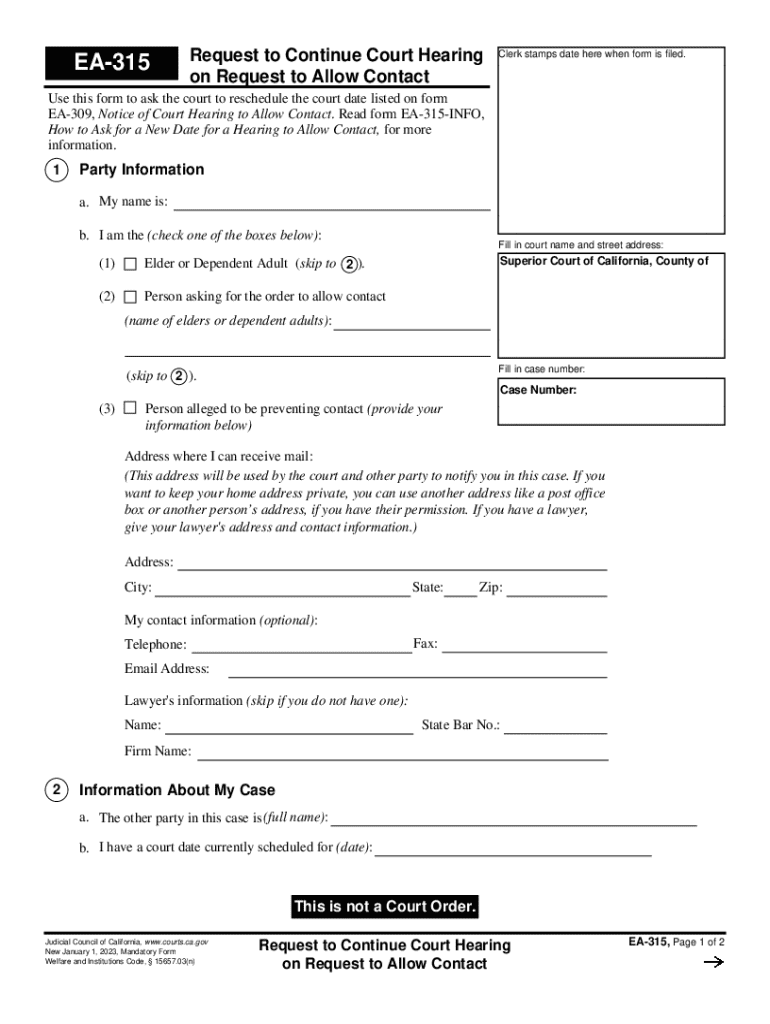







Definition and Purpose of the EA-315 Form
The EA-315 form serves a distinct legal function, specifically designed for individuals seeking to reschedule court hearings related to elder or dependent adult contact cases. This form includes essential sections that gather party information, case details, and the reasons necessitating a rescheduling. A clear understanding of its structure and purpose is crucial for anyone involved in such legal proceedings, as it ensures all necessary information is accurately conveyed to the Superior Court of California.
How to Use the EA-315 Form
To effectively utilize the EA-315, begin by gathering all relevant case documentation, including party details and existing court schedules. Carefully enter this information in the designated sections of the form, ensuring accuracy to avoid processing delays. Consider consulting a legal professional if you are unsure about any section. This form is a formal request, and errors can affect the outcome of your rescheduling request.
Steps to Complete the EA-315 Form
- Review the Form: Carefully read each section and gather all necessary details.
- Enter Party Information: Fill out the names, addresses, and contact information for each party involved.
- Detail Case Information: Include the case number, current hearing date, and details about the nature of the request.
- State Reasons for Rescheduling: Provide a clear and valid justification for requesting a new hearing date.
- Sign and Date: Ensure the form is signed by the appropriate party, confirming the accuracy of the information provided.
- Submit to the Court: Deliver the completed form to the Superior Court of California for processing.
Obtaining the EA-315 Form
The EA-315 form is accessible through the Superior Court of California's official website or by visiting the local court clerk's office. These methods ensure you receive the most current version, aligned with the latest legal requirements. Accessing the correct form is vital, as using outdated versions can lead to dismissal of your request.
Legal Use of the EA-315
Understanding the legal implications of the EA-315 is crucial for proper compliance. This form is legally binding and must be filed correctly with the court to ensure your rescheduling request is considered. Any misuse or inaccurate representations within the form can be grounds for legal ramifications, reinforcing the importance of precise completion.
Key Elements of the EA-315
- Party Information: Capture essential identification details for each involved party.
- Case Details: Include the case number and current scheduling details.
- Rescheduling Justification: Clearly articulate the reasons for needing a new court date.
- Signature Line: Confirm the accuracy of information with a formal signature.
These elements collectively ensure the form's integrity and the understanding of its purpose.
Who Typically Uses the EA-315
The EA-315 is primarily utilized by legal representatives or individuals involved in cases concerning elder or dependent adult contact. It is often employed in situations where scheduling conflicts arise, necessitating a formal request to alter court dates within the California legal system.

State-Specific Rules for the EA-315
The EA-315 is governed by California state law, specifically catering to the Superior Court of California. As such, it must conform to state-specific regulations, ensuring compatibility with local legal standards. These rules highlight the importance of adhering to regional guidelines for successful rescheduling requests.
Required Documents for Submission
In addition to the EA-315, gather supporting documentation such as:
- Current Court Order: Proof of existing scheduling that needs adjustment.
- Justification Letter: Additional written explanation for the rescheduling request.
- Identification: Valid government-issued identification of the requesting party.
These documents substantiate the request, providing a comprehensive rationale for court consideration.
Filing Methods for the EA-315 Form
- Online Submission: Available through the official court website for digital filings.
- Mail Submission: Send completed forms and documents to the court's mailing address.
- In-Person Submission: Deliver directly to the court clerk's office for immediate processing.
Choosing the appropriate method ensures your request is promptly received and processed.




