
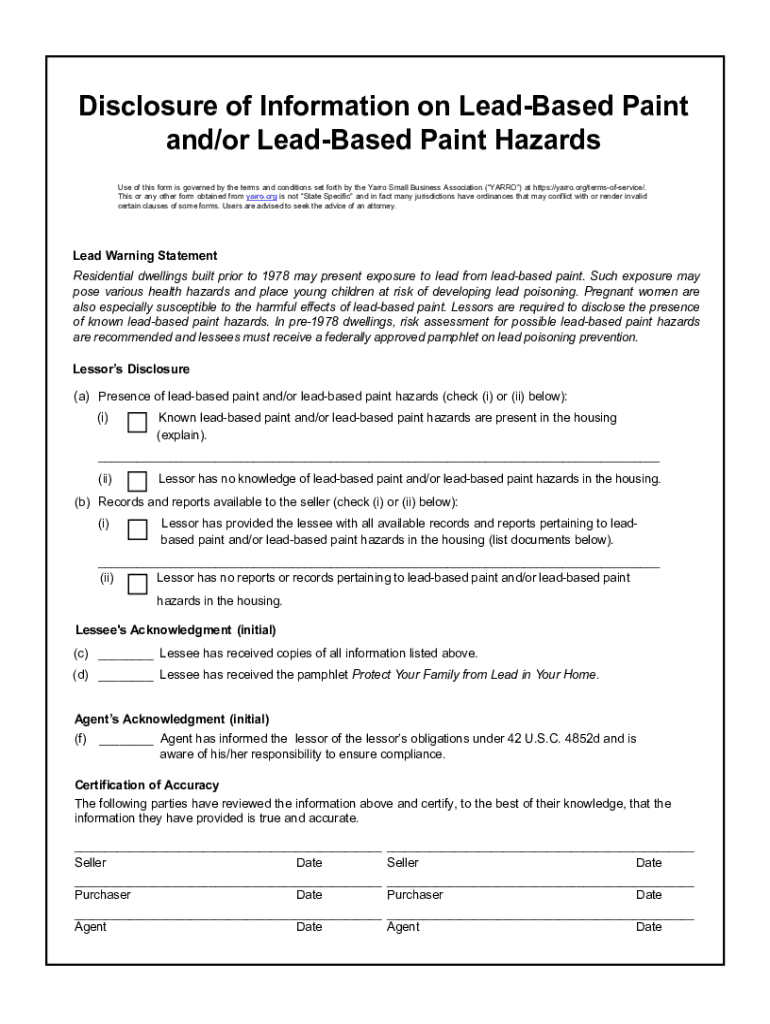







Definition & Meaning of Disclosure of Information on Lead-Based Paint
The "Disclosure of Information on Lead-Based Paint and or Lead-Based" is a critical form in real estate transactions involving residential properties built before 1978. This form is designed to inform potential buyers or lessees about the presence of lead-based paint or lead-based hazards in the property. The purpose is to ensure that all parties are aware of potential health risks associated with lead exposure and to comply with federal regulations.
Importance of the Disclosure
- Health Risks: Lead-based paint poses significant health risks, particularly to children and pregnant women. Exposure can cause neurological damage and other medical issues.
- Legal Compliance: Federal law mandates the disclosure to protect buyers and tenants from unknowingly acquiring properties with lead hazards.
- Informed Decisions: Ensures that potential buyers or lessees make informed decisions regarding the safety of the property.
Key Elements of the Disclosure Form
The form contains several crucial elements to ensure comprehensive disclosure and compliance with federal laws.
Lessor and Lessee Information
- Lessor Responsibilities: The current property owner must disclose any known information about lead-based paint hazards in the property.
- Lessee Acknowledgments: The potential buyer or renter acknowledges receipt of the information and any provided pamphlets.
- Agent Certification: If a real estate agent is involved, they must certify that the lessor has met all disclosure requirements.
Records and Reports
- Existing Reports: The lessor must provide access to any existing reports or records regarding lead-based paint hazards.
- Certification of Accuracy: All parties involved, including the agent, must certify the accuracy of the information provided in the form.
Importance of Compliance with Lead-Based Paint Disclosure
Failing to comply with federal disclosure requirements can lead to severe consequences.
Penalties for Non-Compliance
- Legal Penalties: Non-compliance may result in significant legal penalties and fines imposed on the lessor.
- Civil Liability: In some cases, parties may face civil suits from affected lessees for failing to disclose known hazards.
Importance of Disclosure
- Health Protections: Protects future occupants from the dangerous effects of lead exposure.
- Legal Protection: Ensures that all parties are legally protected during the transaction process.
How to Use the Disclosure Form Effectively
Understanding the correct use of the disclosure form can help prevent potential legal issues.
Step-by-Step Process
- Collect Information: Gather all known data about lead paint hazards and complete the disclosure form accurately.
- Distribute Pamphlets: Provide a federally approved pamphlet on lead poisoning prevention to potential buyers or lessees.
- Review and Sign: Ensure all parties review the information and sign the acknowledgment sections as required.
Who Typically Uses the Lead Disclosure Form?
The form is commonly used in various real estate transactions involving older residential properties.


Target Users
- Property Owners: Sellers or lessors of properties constructed before 1978 must use this form.
- Real Estate Agents: Agents need to facilitate the disclosure process and certify compliance.
- Potential Buyers or Lessees: Individuals or families interested in renting or buying a pre-1978 property.
State-Specific Rules for Lead-Based Disclosure
While federal law mandates the use of the disclosure form, specific state regulations may vary.
State Variations
- Additional Requirements: Some states may have additional disclosure requirements or more stringent guidelines compared to federal standards.
- State Health Departments: Check with local health departments for any state-specific rules or pamphlets that must accompany the disclosure.
Legal Use and Considerations
Understanding the legal aspects of the disclosure form is crucial for compliance and protection.
Federal Regulations
- Residential Lead-Based Paint Hazard Reduction Act: Enforces the need for disclosure during real estate transactions for older properties.
- EPA Guidelines: Provides detailed guidelines on how to handle lead-based paint hazards safely.
Role of Real Estate Professionals
- Due Diligence: Agents and brokers have a duty to ensure that the property owners comply with all disclosure requirements.
- Certification of Compliance: Real estate professionals are required to certify compliance with disclosure rules.
Disclosure Requirements for Different Scenarios
The mandatory use of this form applies to several property-related situations.
Applicable Scenarios
- Home Sales: Used during the sale of residential properties built before 1978.
- Residential Leases: Required for rental agreements involving older residential buildings.
- Agent Transactions: Necessary for real estate transactions facilitated by licensed agents.
By providing thorough details on the disclosure, all involved parties are better prepared to handle any lead-based paint issues legally and responsibly.




