







Definition & Meaning
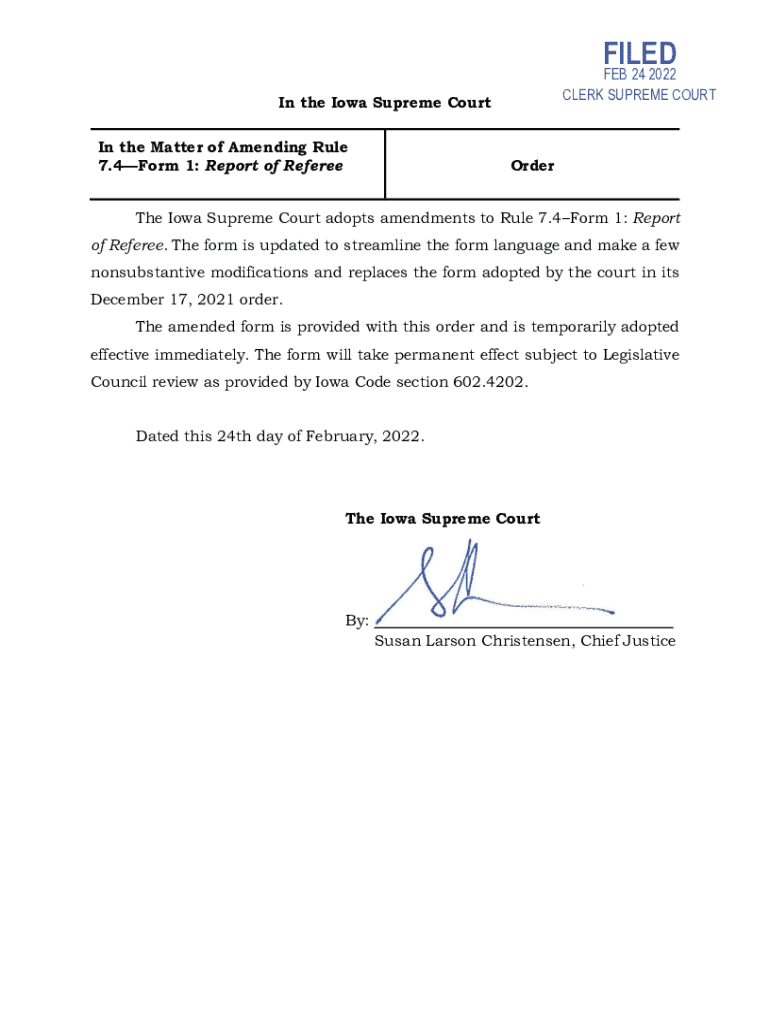
The "Report of Referee Order The Iowa Supreme Court" is a legal form utilized in the judicial process within the state of Iowa. This document is specifically designed for referees who have been appointed by the court to analyze facts, gather evidence, and make recommendations on cases. The form serves as an official vehicle for that report, documenting the referee’s findings and opinions to aid the court in reaching a decision. Referees play a crucial role in cases where detailed examination of facts or nuanced expertise is required, and this report is an essential component of their communication with the court.
Key Functions of the Report
- Analysis of Facts: Referees provide a detailed assessment of case facts.
- Evidence Compilation: A documented collection of evidence pertaining to the case.
- Recommendations: Suggestions and conclusions drawn by the referee.
Steps to Complete the Report of Referee Order The Iowa Supreme Court
Completing the "Report of Referee Order The Iowa Supreme Court" involves understanding its structure and requirements. Here are the steps to guide you through the process:
- Review the Case Details: Understand all aspects of the case, including background information, involved parties, and specific legal questions.
- Gather Evidence: Compile all necessary documentation, witness testimonies, and other relevant materials.
- Analyze Findings: Critically assess the evidence to prepare an unbiased report.
- Document Conclusions: Write clear and concise conclusions based on your analysis.
- Submit the Report: Ensure the completed form is submitted to the court within any specified deadlines.
Important Considerations
- Clarity and Precision: Ensure that all statements in the report are clear and supported by evidence.
- Timeliness: Pay attention to filing deadlines to ensure the report's timely submission.
Key Elements of the Report of Referee Order The Iowa Supreme Court
The form comprises various sections, each targeting specific information needed by the court. Understanding these elements will ensure a comprehensive and accurate report.
- Header Information: Includes case number, court details, and date.
- Case Background: Context and history relevant to the case under review.
- Findings: Factual observations made by the referee.
- Recommendations: Proposed actions or decisions based on the findings.
- Signatures: Verification and acknowledgment by the referee.
Section-Specific Details
- Header Information must be accurately filled to match court records.
- Findings should only include verifiable facts.
- Recommendations must be presented in a non-biased, professional tone.
Legal Use of the Report of Referee Order The Iowa Supreme Court
This report has significant implications in the legal proceedings, influencing the court’s judgment. It is used to:
- Enhance the efficiency of the judiciary by providing thorough independent evaluations.
- Offer expert insights on complex matters that require specialized knowledge.
Contextual Application
- Mediation: Occasionally used in mediation summaries.
- Family Law: Commonly utilized in custody and support evaluations.
Important Terms Related to Report of Referee Order The Iowa Supreme Court
Understanding the terminology associated with this form is essential to navigate its completion and implications effectively. Key terms include:
- Referee: A court-appointed neutral party tasked with fact-finding and report preparation.
- Findings of Fact: Specific detailed observations and results of the investigation.
- Order: A formal direction by the court, sometimes driven by the referee’s recommendations.
Further Exploration
- Nonsubstantive Modifications: Refers to updates that do not alter the fundamental meaning or function of the form but may improve clarity.
- Legislative Council Review: The process by which legislative bodies review amendments for permanent adoption.
How to Use the Report of Referee Order The Iowa Supreme Court
The form is used primarily by referees in legal proceedings. Here are some practical pointers:
- Integration into Court Proceedings: Submit the report for inclusion in case files as dictated by court procedure.
- Consult Legal Counsel: Referees may confer with legal experts to ensure compliance with legal standards and procedural protocols.
Best Practices
- Stay Informed: Keep updated with any changes to the form or related procedures through the official Iowa judiciary website.
- Communicate Clearly: Ensure that the reports are easily understandable by legal professionals and judge.
Examples of Using the Report of Referee Order The Iowa Supreme Court
Practical application of this form can vary based on the type of case and the judicial context. Examples include:
- Child Custody Cases: As a referee in family law, document parental suitability and child welfare considerations.
- Commercial Disputes: In cases of financial or business disagreements, compile reports on contract performances and infringements.
- Property Disputes: Provide unbiased assessments of property-related facts that impact judicial decisions.
Detailed Scenarios
- In child custody disputes, referees might detail observations from family interactions or third-party expert opinions.
- For business litigation cases, analyzing contractual obligations, deadlines, and deliverables may be part of the report.
State-Specific Rules for the Report of Referee Order The Iowa Supreme Court
While the core function of the form remains consistent, specific state laws and regulations in Iowa govern its use and submission. It’s crucial to recognize these guidelines to ensure compliance.
Iowa-Specific Considerations
- Regulatory Updates: Periodically check for amendments in Iowa Supreme Court Rules that may affect usage and submission.
- Judicial Precedents: Use existing judicial precedents in Iowa to guide evaluations and recommendations within the report.




