






Definition and Purpose of Toolbox Safety Talks - Heavy Equipment Start-Up
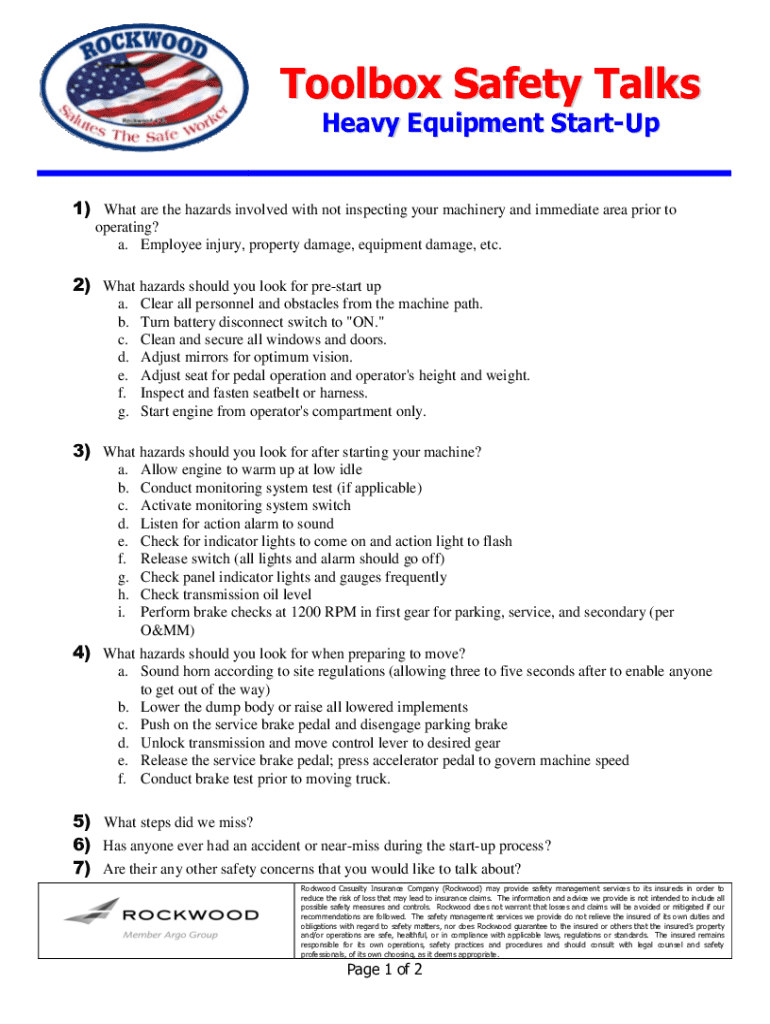
Toolbox Safety Talks for heavy equipment start-up are vital discussions designed to highlight safety protocols and operational procedures, ensuring the safe initiation of heavy machinery. These talks focus on preventing workplace accidents by emphasizing pre-operation inspections, routine maintenance checks, and operator awareness. By understanding the significance of these discussions, employees become more proactive in identifying potential hazards such as equipment malfunction or misuse, ultimately contributing to a safer working environment.
How to Use the Toolbox Safety Talks Effectively
-
Preparation: Gather all necessary materials, including safety checklists, equipment manuals, and any company-specific procedures. Set a consistent schedule for these talks, ideally before the start of a shift when employees are most attentive.
-
Execution: Conduct the talks at the job site where the equipment is located. Use visual aids and real-life scenarios to illustrate points. Encourage open dialogue by allowing operators to share experiences or concerns.
-
Documentation: Keep a record of attendance and topics covered during each session. This documentation may be required for legal compliance and can also track improvements in safety practices over time.
Steps to Complete the Toolbox Safety Talks - Heavy Equipment Start-Up
-
Review the Equipment Manual: Start by familiarizing yourself with the specific machinery involved. This ensures that all safety guidelines are adhered to.
-
Checklist Preparation: Create a detailed checklist covering pre-operation checks, such as fluid levels, tire conditions, and control functionality. Ensure that all safety features, like seatbelts and emergency stops, are tested.
-
Operator Training: Before the machinery is started, confirm that all operators are adequately trained and certified if required. This step includes verifying competency in handling the specific equipment.
-
Conduct Walk-Around Inspection: Have operators perform a physical inspection of the machinery, checking for visible damage, leaks, or obstructions in operational areas.
-
Communication Setup: Ensure clear channels of communication among team members, especially for those operating multiple pieces of equipment. This step is critical for coordinating movements and avoiding collisions.
Key Elements of the Toolbox Safety Talks - Heavy Equipment Start-Up
-
Pre-Operation Inspection: Comprehensive checks of the equipment's mechanical and electrical components must be completed to prevent malfunctions during operation.
-
Safety Feature Testing: Regular testing of all safety mechanisms, including alarms and shut-off capabilities, is essential to ensure they function correctly in emergencies.
-
Operator Awareness: Maintaining awareness of surroundings, including nearby workers and obstacles, is crucial for preventing accidents during machinery operation.
-
Environmental Considerations: Evaluate weather and site conditions, as factors like rain, snow, or unstable ground can significantly impact equipment handling and safety.
Importance of Toolbox Safety Talks - Heavy Equipment Start-Up
Regularly conducting Toolbox Safety Talks ensures that all employees are aware of the latest safety procedures and operational protocols. This proactive approach decreases the likelihood of accidents, which can lead to injury, costly repairs, or insurance claims. It also fosters a safety-first culture within the organization, encouraging accountability and diligence among workers.
Who Typically Uses the Toolbox Safety Talks - Heavy Equipment Start-Up
These talks are primarily conducted by safety managers, crew leads, or supervisors responsible for overseeing construction sites, mining operations, and other industries where heavy machinery is in use. They are essential for any team member involved in the operation, maintenance, or oversight of heavy equipment.


Legal and Compliance Aspects of the Toolbox Safety Talks
Adhering to OSHA guidelines and other regulatory frameworks is critical during these talks. Ensuring that discussions include legally mandated safety protocols helps the company remain compliant and protects against potential legal actions stemming from workplace accidents. Employers must document these sessions thoroughly, capturing attendance, topics covered, and any follow-up actions required.
Example Scenarios Involving Toolbox Safety Talks
One scenario might involve a construction team preparing a crane for operations at a new site. The Toolbox Talk would cover the importance of securing the crane during travel, checking rigging components, and ensuring that all lifting meets the weight restrictions. Another scenario could involve a mining operation where vehicles need precise coordination to avoid collisions in confined spaces. The talk would emphasize communication protocols and visibility strategies.
Digital vs. Paper Version of Toolbox Safety Talks
While traditional paper versions of safety talks provide a tangible record, digital versions offer several advantages. Digital platforms allow for easy updates to safety protocols, immediate distribution, and integrated tracking of participant engagement. They also facilitate faster reporting and analysis of safety data, aligning with modern workflows that prioritize efficiency and accessibility.
Software Compatibility and Integration
Toolbox Safety Talks can be integrated into platforms like DocHub, allowing for seamless documentation and sharing. Using software compatible with devices used on job sites ensures that safety information is always accessible and editable as needed. This integration supports a mobile workforce and encourages continuous improvement in safety practices through real-time feedback and updates.