






Definition and Purpose of the Well Inspection Report
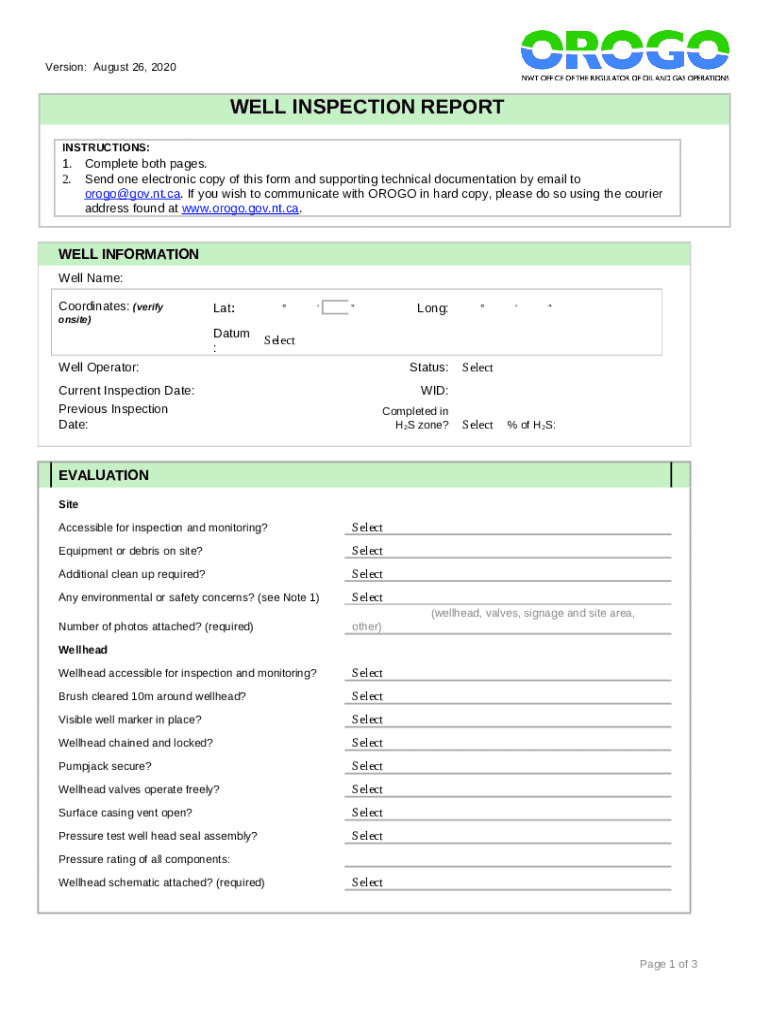
A Well Inspection Report is a comprehensive document used to evaluate the condition and safety compliance of oil and gas wells. Its primary function is to provide detailed information about each well, ensuring that it meets regulatory standards for safe operation. The report typically includes sections for well information, evaluation criteria, and certification by the inspector. These reports are crucial for identifying any safety concerns, necessary maintenance, and required clean-up actions.
Key Elements of the Report
- Well Information: This section captures detailed data about the well being inspected, including its location, depth, and operational status.
- Evaluation Criteria: A set of standards or benchmarks that the well is measured against to determine its safety and operational status.
- Inspector Certification: A formal statement or signature from the inspector attesting to the accuracy and thoroughness of the inspection.
Steps to Complete the Well Inspection Report
Completing a Well Inspection Report involves several systematic steps and careful documentation:
- Gather Required Data: Collect all necessary information about the well, including historical inspection records, maintenance logs, and operational data.
- Inspect the Well: Conduct a thorough examination of the well, focusing on structural integrity, equipment conditions, and safety practices.
- Document Findings: Use the report format to record precise observations and measurements, ensuring clarity and accuracy.
- Identify Concerns: Highlight any safety issues, non-compliance with regulations, or required maintenance tasks.
- Certification: The inspector must certify the report, verifying it is complete and the data is accurate.
Important Terms Related to the Well Inspection Report
Understanding specific terminology is crucial for accurately completing and interpreting the Well Inspection Report:
- Casing: A pipe that is placed in a well and cemented in place to prevent the well from collapsing.
- Drilling Mud: A fluid used during the drilling process to lubricate the drill bit and stabilize the wellbore.
- Blowout Preventer (BOP): A safety device used to prevent uncontrolled flow of liquids and gases during drilling operations.
Legal Use and Compliance
The Well Inspection Report serves as a legal document ensuring wells meet federal and state regulations. Operators are often required to submit this document to regulatory bodies like the Office of the Regulator of Oil and Gas Operations (OROGO) and are responsible for any remediation actions identified:
- Regulatory Compliance: Ensures that the well operations comply with the ESIGN Act and other federal safety regulations.
- Submission Requirements: The report must be electronically submitted, often through specific regulatory platforms.
Examples of Utilizing the Well Inspection Report
Several scenarios highlight the use and utility of the Well Inspection Report in real-world applications:
- Routine Inspection: As part of regular maintenance, operators use the report to document conditions and schedule necessary repairs.
- Incident Investigation: In case of an accident or equipment failure, the report helps in assessing contributing factors and necessary corrective actions.
- Baseline Assessment: A newly drilled well’s initial inspection establishes a reference point for future assessments.
Form Submission Methods
The Well Inspection Report allows for various submission methods, reflecting the flexible approach suited to a diverse range of operators:
- Online Submission: The preferred method through platforms like OROGO, ensuring quick and secure transmission.
- Mail Submission: For jurisdictions that permit paper submissions, physical reports can be mailed to the appropriate regulatory body.
- In-Person Submission: Less common, but possible where electronic means are unavailable.
Penalties for Non-Compliance
Failure to properly complete or submit a Well Inspection Report can result in significant penalties:
- Fines and Sanctions: Operators may incur financial penalties for missing submission deadlines or incomplete documentation.
- Operational Consequences: Non-compliance could lead to operational shutdowns until the required documentation is completed and submitted.
- Legal Repercussions: Persistent non-compliance might result in legal actions or revocation of licenses.
State-by-State Differences in Reporting Requirements
Regulatory requirements for well inspections can vary significantly across different states, each imposing its obligations:
- Texas: Emphasizes environmental protection, requiring detailed environmental impact sections within reports.
- North Dakota: Focuses on structural integrity, necessitating additional tests and documentation for older wells.
- California: Prioritizes renewable practices, often including additional sustainability measures in reporting standards.
Understanding the nuances of report preparation and submission in each state ensures compliance and operational efficiency for operators.