
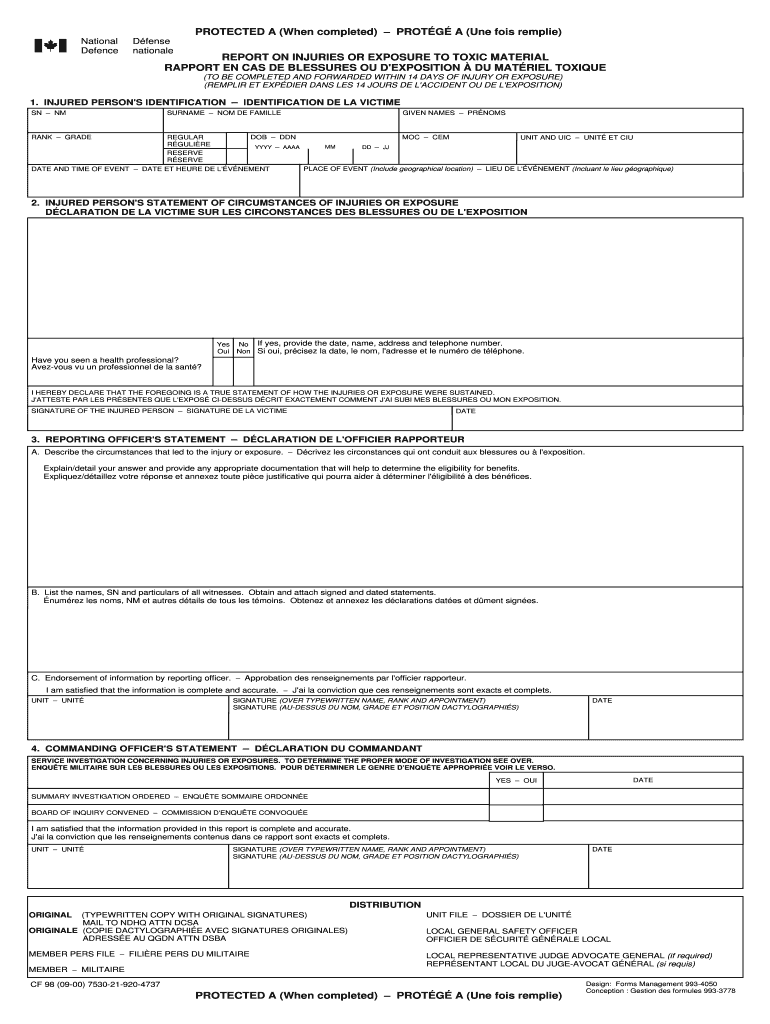







Definition and Purpose of Form CF 98
Form CF 98 serves as a comprehensive reporting tool designed to document injuries or exposure to toxic materials within the National Defence context. This form is integral in facilitating the investigation process, ensuring that all details concerning such incidents are thoroughly and accurately recorded. It is crucial to provide personal information about the affected individual, descriptions of the incident, and endorsements from reporting supervisors. The primary goal of this form is to furnish detailed and timely information that aids in the evaluation of potential claims for benefits related to the incident.
Importance of Timely Submission
Submitting Form CF 98 within the stipulated 14-day period is essential to avoid delays in processing the report and potential eligibility for associated benefits. Timeliness ensures that all relevant information is fresh and accurate, facilitating a more effective investigation. Missing this deadline could hinder the thoroughness of the inquiry and possibly impact the entitlement to certain compensatory benefits.
Steps to Complete Form CF 98
-
Gather Required Information: Compile all necessary details about the incident, including personal details of the injured party, date, location, and nature of the event.
-
Fill Identification Sections: Include the personal identification information of the affected person, detailing their role in the National Defence.
-
Detail Incident Circumstances: Provide an exhaustive account of the incident, describing how the injury occurred or the nature of exposure to toxic materials.
-
Secure Endorsements: Obtain necessary endorsements from the reporting officer and commanding officer, confirming the accuracy of the report.
-
Review and Verify: Ensure all sections are completed correctly and thoroughly, verifying the accuracy of the provided information.
-
Submit Form: Forward the completed form through the designated submission channels, complying with any specific departmental procedures.
Key Elements of the Form
- Personal Identification: Crucial for verifying the individual involved and for administrative follow-up.
- Incident Description: A detailed narrative of the circumstances, providing context and specifics essential for the investigation.
- Officer Endorsements: Signatures and comments from reporting and commanding officers to certify the validity and accuracy of the information.
Legal Significance and Compliance
Form CF 98 holds significant legal weight, particularly concerning claims for benefits or compensation due to workplace injuries. Adhering to the instructions and providing all necessary details is imperative to meet compliance requirements and ensure that claims are processed effectively.
Who Typically Uses Form CF 98
The primary users of Form CF 98 are personnel within the National Defence who experience or witness incidents involving injuries or exposure to hazardous materials. This form is also utilized by reporting officers tasked with ensuring that safety and procedural protocols are followed.
Explanation of Important Terms
-
Exposure to Toxic Materials: Refers to contact or proximity to substances that could cause harm to health, requiring documentation for safety protocol adherence.
-
Endorsement: A formal approval by a superior officer that the information provided in the report is true and complete.
Required Documents for Submission
Along with the completed Form CF 98, individuals may need to submit additional documentation such as medical reports, evidence of incident location, and witness testimonies, if applicable. Comprehensive documentation supports the narrative provided and aids in the claims process.
Variants and Versions of the Form
While the CF 98 is the standard for reporting such incidents, updates and revisions may occur to reflect changes in policy or procedure. It's important for personnel to ensure they are using the most current version to avoid any compliance issues.
Real-World Examples of Using Form CF 98
A soldier exposed to chemicals during training logs the experience using Form CF 98, detailing the exposure circumstances and securing endorsements. This documentation plays a pivotal role in assessing eligibility for medical evaluation and subsequent compensation if necessary. Another example could involve documenting an injury sustained during routine maintenance, ensuring safety protocols and reporting procedures are observed and followed.
By adhering to these guidelines and effectively utilizing Form CF 98, individuals and officers can ensure that all workplace incidents are accurately documented and investigated, supporting overall safety and compliance within the National Defence framework.




