
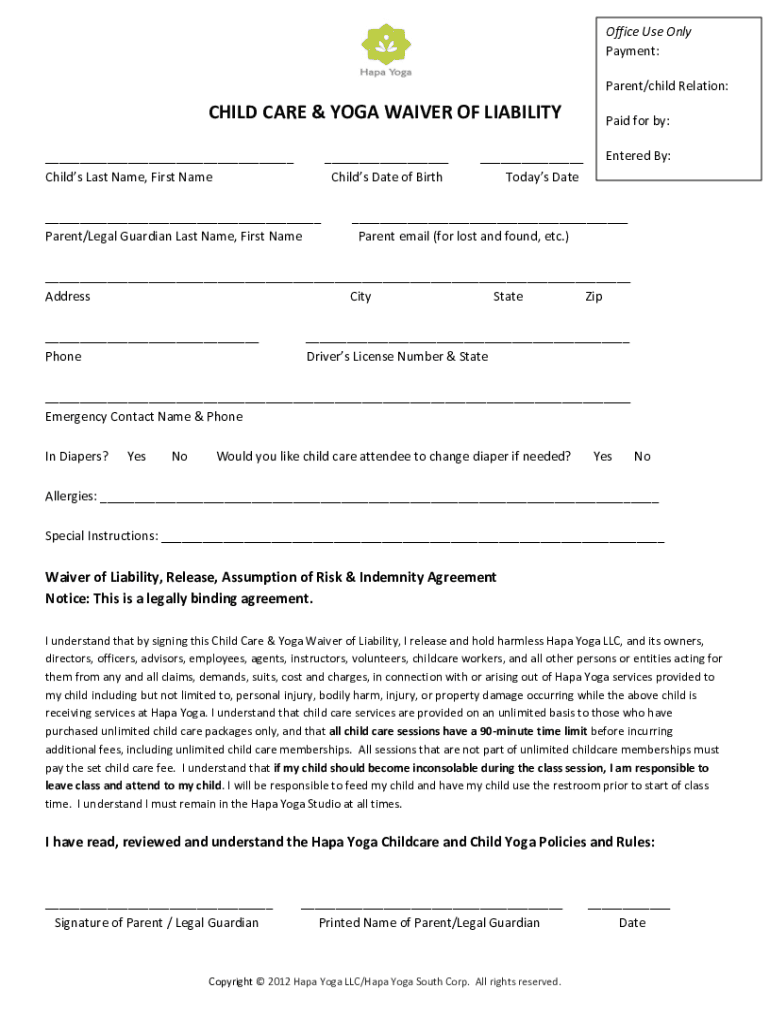







Definition & Meaning
A daycare liability waiver template is a formal document used in childcare settings that outlines the responsibilities, terms, and conditions between a daycare provider and a child's parents or guardians. It's designed to minimize the legal liability of the daycare facility by elucidating the risks involved in daycare services and obtaining consent from the parents. The template typically includes clauses that acknowledge the inherent risks associated with childcare, thus protecting the establishment from claims related to accidents or unforeseen incidents while under their care.
The waiver clarifies expectations, delineates policies, and provides a framework for understanding the daycare's operational procedures. It establishes a mutual agreement that ensures both parties are aware of their obligations, fostering a trusting relationship between caregivers and families.
Key Elements of the Daycare Liability Waiver Template
The daycare liability waiver template encompasses several critical components which are essential for its legal effectiveness and comprehensiveness.
-
Acknowledgment of Risks: This section outlines common risks associated with daycare activities, ensuring parents are informed about potential hazards their children might encounter.
-
Medical Authorization: Provides the daycare with permission to seek medical treatment for the child in emergencies when the parents cannot be reached promptly.
-
Release of Liability: Establishes that the parents waive their right to sue the daycare for accidents occurring under reasonable and foreseeable circumstances.
-
Emergency Contact Information: Requires parents to supply up-to-date contact details should emergencies arise.
-
Operational Policies: Details the daycare's policies regarding health requirements, personal items, and procedures such as drop-off and pick-up routines.
-
Signatures: Both the parent or guardian and a representative of the daycare must sign the document to make it legally binding.
Steps to Complete the Daycare Liability Waiver Template
Completing a daycare liability waiver template involves a structured approach to ensure all necessary information is accurately captured and both parties understand their obligations.
-
Review the Document: Carefully read through the template, noting any clauses requiring further clarification or modification.
-
Fill Out Personal Details: Enter the child's and parents' names, contact information, and any other personal details requested by the template.
-
Acknowledge Risks and Responsibilities: Check boxes or sign sections that indicate understanding and acceptance of the risks and daycare policies.
-
Provide Emergency Information: Supply current emergency contact numbers and any pertinent medical details about the child, such as allergies.
-
Sign the Waiver: Both the parent or guardian and the daycare representative need to sign the waiver, confirming their agreement to the terms.
-
Retain a Copy: It’s advisable for both parties to keep a signed copy for their records.
Legal Use of the Daycare Liability Waiver Template
The legal use of a daycare liability waiver template involves understanding its enforceability and scope within the legal system.
-
Legally Binding Agreement: A signed waiver is a legally binding contract that can protect the daycare from certain types of litigation if executed properly.
-
Restrictions on Legality: While waivers provide protection, they do not cover liability due to gross negligence or intentional harm.
-
Local Regulations: Ensure the waiver complies with state or municipal regulations which may affect its provisions or validity.
-
Consultation with Legal Counsel: Daycare providers should consult legal professionals to customize the waiver for specific circumstances and enhance its validity.
Who Typically Uses the Daycare Liability Waiver Template
The daycare liability waiver template is predominantly used by:
-
Daycare Centers and Preschools: Institutions that care for young children rely on these forms to manage risk and inform parents about their operational policies.
-
In-Home Daycare Providers: Individuals offering childcare services from personal residences also utilize waivers to set clear expectations with clients.
-
Parents or Guardians: Required to complete and sign waivers as part of the enrollment process to ensure they understand and accept the daycare terms and conditions.


Important Terms Related to Daycare Liability Waiver Template
Understanding the terminology in a daycare liability waiver template is crucial for effective communication and legal clarity.
-
Liability: Refers to the legal responsibility of the daycare in case of accidents or injuries.
-
Negligence: A failure to exercise reasonable care, which can nullify a liability waiver if proven.
-
Consent: The informed and voluntary agreement of the parent to accept the terms and conditions outlined in the waiver.
-
Indemnify: To compensate for harm or loss; some waivers require parents to indemnify the daycare against claims brought by third parties.
State-Specific Rules for the Daycare Liability Waiver Template
State-specific rules can significantly impact the structure and enforceability of a daycare liability waiver template.
-
Regulatory Compliance: Different states have varying childcare regulations that may dictate what must be included in liability waivers.
-
Enforceability Concerns: Some states may impose restrictions on waivers related to minors, impacting their enforceability in court.
-
Customization Needs: Providers need to tailor their templates to align with state laws to avoid void or unenforceable agreements.
Consulting state regulations and, if necessary, legal professionals can ensure that waivers fulfill state requirements while still providing necessary protections for daycare providers.
Examples of Using the Daycare Liability Waiver Template
Real-world applications illustrate the necessity and function of daycare liability waivers in everyday operations.
-
Standard Enrollment Process: Many daycare facilities incorporate waiver completion as a standard part of their enrollment procedures.
-
Incident Prevention Strategy: By clearly outlining risks and procedures, waivers help reduce misunderstandings and disputes over childcare activities.
-
Legal Disputes: In legal disputes, signed waivers can serve as evidence that parents acknowledged and accepted known risks, providing daycare centers with a layer of defense.
-
Custom Cases: Facilities may adapt templates for particular events or activities, like field trips, requiring additional parental consent and acknowledgments related to those specific situations.




