
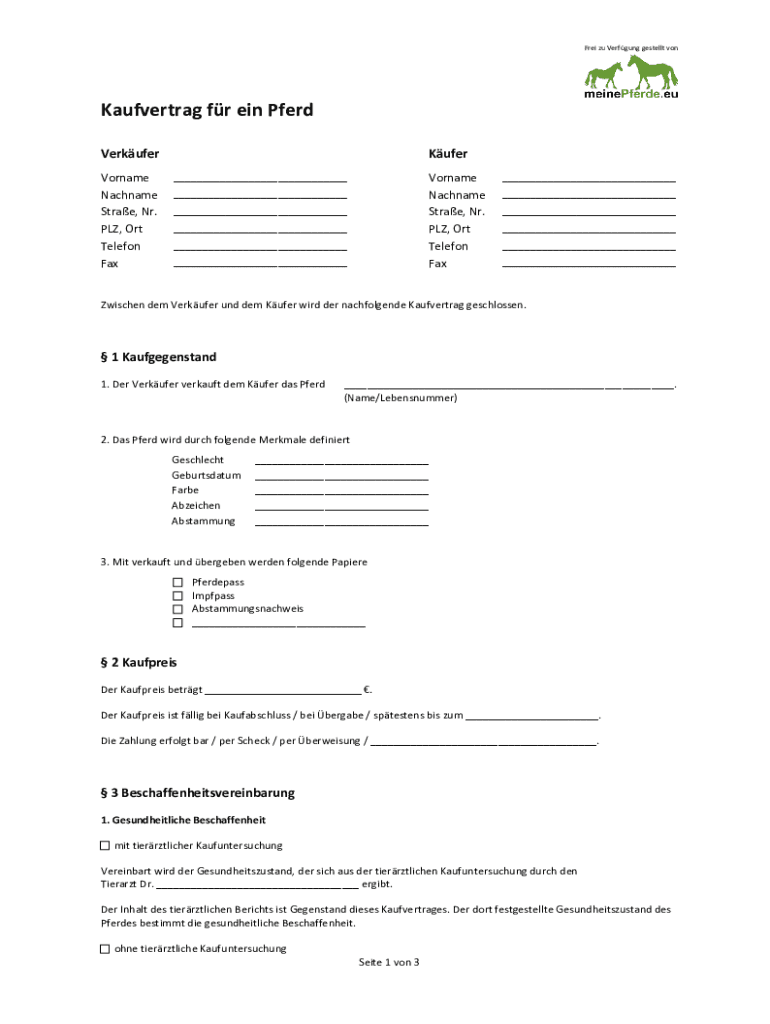







Definition and Meaning of Kaufvertrag für ein Pferd
A "Kaufvertrag für ein Pferd" is a purchase agreement specifically used for buying and selling horses. This document is crucial as it details the terms and conditions under which the transaction occurs, ensuring both buyer and seller are protected. The agreement typically includes vital information about the horse, such as its identification details, breed, age, health status, pedigree, and any existing veterinary records. By specifying these details, the contract aims to prevent disputes and misunderstandings post-transaction. For example, if a horse is sold with known health issues, this should be clearly stated in the contract to protect the seller from future liability.
Importance of Using the Kaufvertrag für ein Pferd
Utilizing a Kaufvertrag für ein Pferd is essential for several reasons. It provides legal backing and clarity for both parties, reducing the potential for future disputes. The contract outlines the financial terms, such as the purchase price, payment method, and payment timeline, ensuring transparency and agreement on monetary matters. For instance, if a buyer is making payments in installments, the schedule and conditions should be explicitly detailed. Moreover, the contract also covers transfer of ownership, stating when the buyer gains official ownership of the horse. Having this clarity helps avoid ambiguities concerning liability and care responsibilities. For example, if the horse requires medical attention shortly after purchase, the contract will outline whether the buyer or seller is responsible.
Steps to Complete the Kaufvertrag für ein Pferd
Completing a Kaufvertrag für ein Pferd involves several key steps that both parties must follow for a valid and enforceable agreement. First, the buyer and seller should gather all necessary information about the horse, including its identification details, health records, and any relevant certifications or documents. This initial step ensures that both parties are fully informed about the horse's condition and background.
Next, the details of the transaction must be negotiated and drafted into the contract. This includes specifying the purchase price, any payment arrangements, and the date of ownership transfer. Both parties should go through and understand these terms carefully before agreeing. If necessary, seek legal advice to address any ambiguities or concerns.
Once the terms are agreed upon, both the buyer and seller should sign the document to make it legally binding. It is advisable to have witnesses or a notary present at the signing to provide additional credibility and security. Copies of the signed contract should be retained by both parties for their records.
Key Elements of the Kaufvertrag für ein Pferd
Several critical elements must be included in a Kaufvertrag für ein Pferd to ensure it is comprehensive and effective. These elements typically include:
- Identifiers: The horse's breed, age, sex, color, and any distinctive markings or identification numbers.
- Health Information: Any known health issues, vaccinations, and veterinary records.
- Purchase Price and Payment Terms: The agreed-upon price, method of payment, and any financing arrangements.
- Transfer of Ownership: Specific details regarding when and how the ownership of the horse transfers from seller to buyer.
- Warranties and Liabilities: Any warranties provided by the seller and limitations on liability should be clearly noted to protect both parties. For example, a seller may offer a warranty that the horse is free from certain medical conditions.
- Contingencies: These are conditions that might void the contract if not met, such as the successful completion of a veterinary inspection before purchase.
Legal Use of the Kaufvertrag für ein Pferd in the U.S.
In the United States, the legal use of a Kaufvertrag für ein Pferd must comply with local and state laws regarding animal sales and purchase agreements. This contract must be clear and detailed to be enforceable in a legal setting. Any ambiguities or lack of specificity might result in the contract being challenged in court.
Buyers and sellers should be aware that some states have specific requirements, such as mandatory disclosures about the horse's health or its past behavior. For instance, if a horse has a history of aggressive behavior, some states might require this to be disclosed in the contract to indemnify the seller.
Important Terms Related to Kaufvertrag für ein Pferd
Understanding the terminology used in a Kaufvertrag für ein Pferd is crucial for both parties. Here are some important terms:
- Pedigree: The documented lineage of the horse, often crucial for valuation.
- Agistment: A term referring to the boarding or care of the horse before the transfer of ownership.
- Foal Share Agreement: A clause often included if the sale involves a mare intended for breeding, specifying how offspring will be shared.
- Condition Precedent: A condition that must be fulfilled before the purchase is completed. For example, a veterinary inspection might be a condition precedent to the completion of the sale.
Software Compatibility for Digital Kaufvertrag für ein Pferd
Using digital tools to complete a Kaufvertrag für ein Pferd offers several advantages, particularly in ensuring the accuracy and availability of documents. Platforms like DocHub provide extensive support for various file formats, including DOC and PDF, which are commonly used for contracts. These digital platforms allow users to easily edit, sign, and share documents online, significantly enhancing the efficiency of managing purchase agreements.
Significantly, DocHub’s capability to integrate with services like Google Drive and Dropbox ensures seamless document workflow. This flexibility allows the two parties involved in the transaction to work collaboratively on the contract, track changes in real-time, and securely store signed copies for future reference.
Digital vs. Paper Version of Kaufvertrag für ein Pferd
Deciding between a digital or paper version of a Kaufvertrag für ein Pferd can depend on several factors, including convenience, accessibility, and legal requirements. A digital version offers the advantage of easy sharing and editing, especially when multiple parties need to review or sign the document. Platforms like DocHub ensure these processes are secure and efficient, providing legally binding e-signatures that comply with U.S. laws.
Conversely, a paper version may be preferred in cases where digital access is limited or if the parties prefer physical documentation. Regardless of the format, both versions serve the same fundamental purpose: to provide a clear and actionable agreement between the buyer and the seller.




