




01. Edit your form online
Type text, add images, blackout confidential details, add comments, highlights and more.

Type text, add images, blackout confidential details, add comments, highlights and more.

Draw your signature, type it, upload its image, or use your mobile device as a signature pad.

Send it via email, link, or fax. You can also download it, export it or print it out.
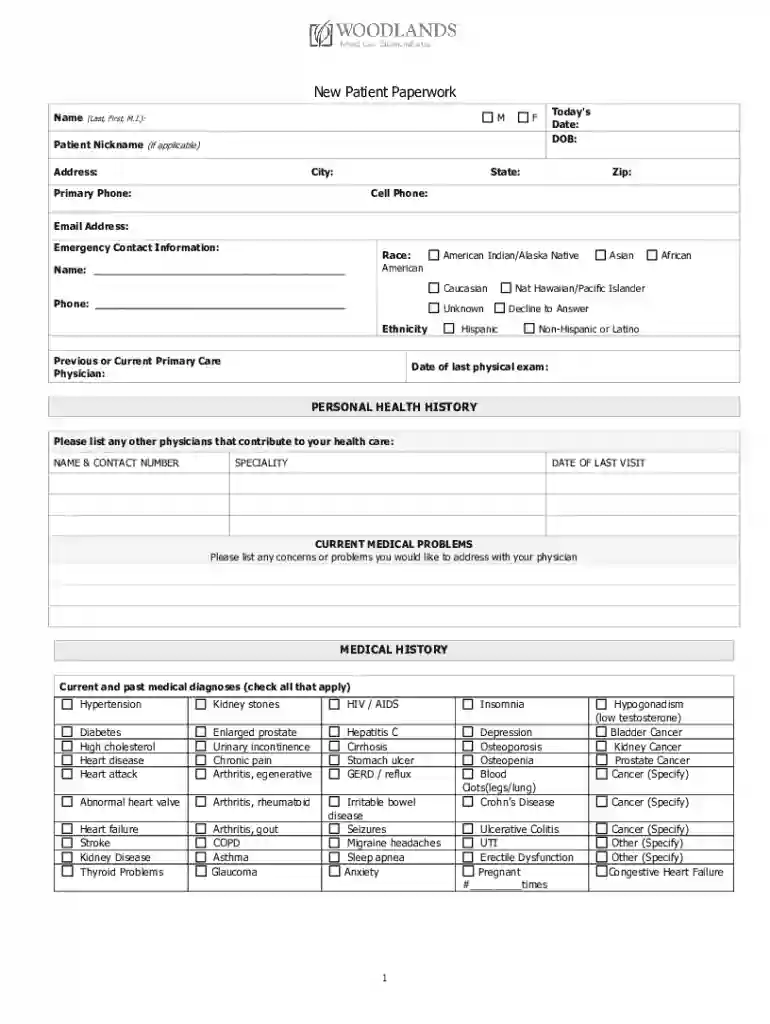
The "new patient docx - New Patient Paperwork PLEASE PRINT Date Primary Care Physician" is a comprehensive document designed to gather essential information from new patients visiting a healthcare provider. This form captures critical data such as personal identification, medical history, medications, allergies, family health background, and social habits. This enables healthcare professionals to provide personalized care and ensure that patients receive appropriate medical attention. The paperwork may also include consent forms related to HIPAA for the disclosure of health information and awareness of financial responsibilities concerning medical services.
To effectively use the new patient paperwork, patients or their guardians must carefully fill out each section with accurate and up-to-date information. This includes providing detailed responses about current medical conditions, past surgeries, and any chronic illnesses. Patients should ensure clarity when listing medications and dosages, as well as any known allergies, to prevent adverse reactions. Filling out the social habits section helps medical professionals understand factors that could impact health, such as smoking or alcohol consumption. Once completed, the form needs to be returned to the medical office, generally before the first consultation, to allow the healthcare provider to review the patient's information in advance.
This documentation is primarily used by new patients registering at a healthcare facility for the first time. It is applicable to a wide range of individuals, from those seeking routine medical check-ups to those with specific health concerns. Healthcare providers, including primary care physicians and specialists, also utilize this paperwork for efficient record-keeping and treatment planning. The paperwork is essential for ensuring that the medical staff has a thorough understanding of a patient’s health background before any consultation or treatment begins.


The new patient paperwork complies with U.S. healthcare laws and regulations, including the Health Insurance Portability and Accountability Act (HIPAA). It ensures patient privacy and consent for information disclosure necessary for medical treatment and billing. Patients must sign the consent sections to comply with legal requirements that permit the sharing of health information between healthcare providers and insurance companies. This documentation helps protect both the patient and healthcare institution from legal disputes by clearly outlining patient rights and responsibilities.
While the core components of the new patient paperwork are generally consistent nationwide, certain sections may differ based on state regulations, especially regarding privacy laws and healthcare coverage mandates. Patients should be aware that their state might have additional disclosure requirements or need supplementary forms for certain types of care, such as mental health services or substance abuse treatment. It's essential for patients to inquire about any state-specific elements that may affect their treatment or billing options when completing the paperwork.
Healthcare facilities might offer the option of completing the new patient paperwork digitally via email or through an online portal. A digital version streamlines the process, allowing patients to fill out and submit information electronically, often with options to upload supporting documents directly. This method increases convenience and reduces the risk of information loss. Paper versions are still widely used, especially in settings without the necessary digital infrastructure. Regardless of format, the content requirements remain the same, with electronic submissions typically providing faster processing and easier integration into the facility's health records system.
By understanding these vital components and adhering to the guidelines for completing the new patient paperwork, individuals can ensure that they provide the necessary information for accurate healthcare delivery and compliance with legal frameworks.
At DocHub, your data security is our priority. We follow HIPAA, SOC2, GDPR, and other standards, so you can work on your documents with confidence.



To allow the Physician(s) and Mid-Level Providers the flexibility to provide primary care to all citizens of Your County and surrounding areas.
For PCMM Phase I Enhancements, the user will be able to enter Primary Care Direct Patient Care Full Time Employee Equivalents for Primary Care providers (PC
Nov 23, 2020 Date of This Memorandum: November 19, 2020. Requesting Office or Division: Division of Rare Diseases and Medical Genetics (DRDMG).


