
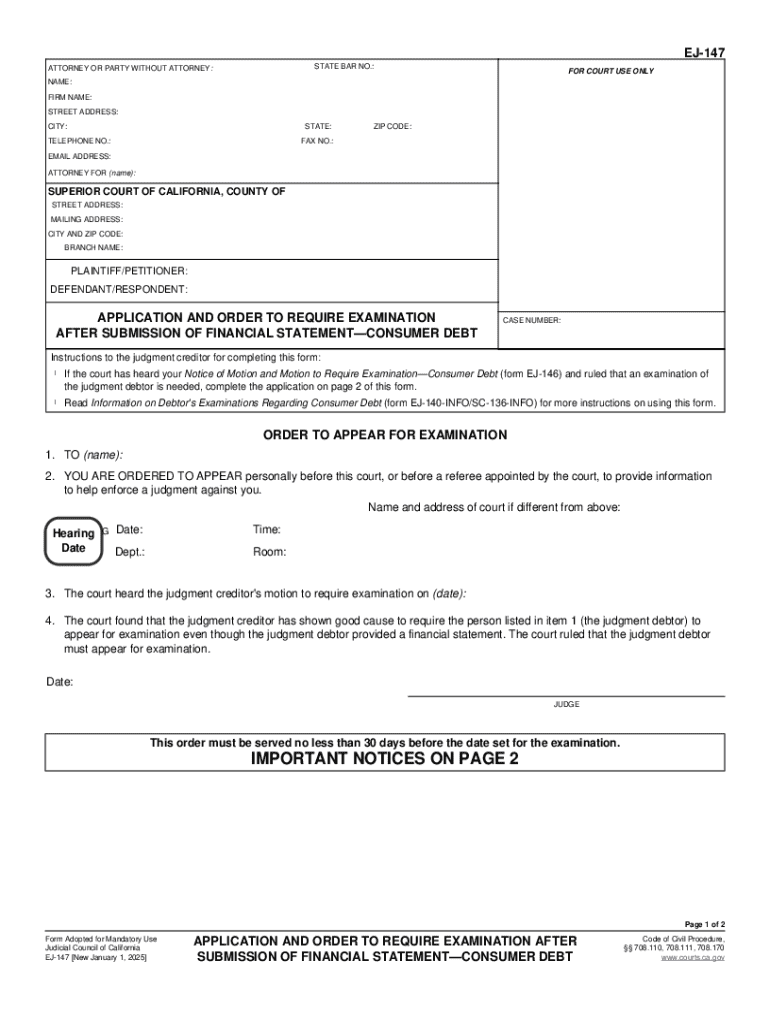







Definition and Purpose of EJ-147
The EJ-147 is a legal form utilized within California's Superior Court system, primarily for examining a judgment debtor. The purpose of this form is to facilitate a request for a court order mandating the debtor to provide a comprehensive financial statement, particularly concerning consumer debt. This allows the judgment creditor to assess the debtor's income and assets accurately, even if exemptions are claimed. The form is a critical component in enforcing judgments and ensuring compliance from debtors.
How to Obtain the EJ-147
Acquiring the EJ-147 form can be done through several avenues. Typically, the form can be downloaded from the California court's official website, where it is available in a printable PDF format. Alternatively, legal aid services or attorneys specializing in debtor-creditor law might provide the form as part of their client services. It is crucial to ensure that you access the most current version of the form to avoid any compliance issues when filing with the court.
Steps to Complete the EJ-147
Completing the EJ-147 form requires attention to detail and accuracy. Below is a step-by-step guide to filling it out effectively:
- Personal Information: Begin by providing your full name, address, and contact information as the judgment creditor.
- Debtor Details: Enter the debtor’s complete name and any known alias. Ensure accuracy, as any errors might delay proceedings.
- Judgment Information: Include the case number, date of judgment, and the court where the judgment was entered. Attach any related documents that support your claim.
- Financial Examination Request: Specify the type of financial information you seek, whether it's bank account details, income sources, or asset declarations.
- Service Instructions: Clearly outline how you intend to serve the order to the debtor. This section is crucial; improper service can render the examination ineffective.
Importance of Using the EJ-147
Using the EJ-147 form is vital for judgment creditors in enforcing legal judgments and effectively determining debtor compliance. This form serves as a powerful tool in ensuring that creditors receive the information needed to evaluate and, if necessary, challenge a debtor's claim of exemptions. Moreover, it provides a structured and legally-recognized pathway to address non-payment issues.
Legal Use and Implications of the EJ-147
The EJ-147 has significant legal implications, primarily regarding the enforcement of financial judgments. By filing this form, a creditor exercises their legal right to inquire about a debtor’s financial status and request a court-mandated financial examination. Furthermore, the form outlines protocols for serving the order, emphasizing the legal necessity of notifying the debtor at least 30 days before the examination. Missteps in this process can result in legal challenges or delays in enforcing the judgment.
Key Elements of the EJ-147
Several critical components need to be highlighted within the EJ-147 form:
- Examination Request: The comprehensive request for financial details deemed necessary for judgment enforcement.
- Notification Requirement: Emphasizes the debtor must receive a minimum 30-day notice before the examination date.
- Detailed Debtor Information: Accurate input of debtor's full details to prevent identification errors.
- Judicial District Specifications: Requires citation of the specific judicial district enforcing the judgment.
State-Specific Rules for the EJ-147
While the EJ-147 is a standardized form within California, slight nuances might exist based on local court rules:
- Service Protocols: Variations persist regarding acceptable service methods, whether personal service or mail.
- Court Preferences: Some courts may have additional requirements, such as preliminary mediation before acceptance.
- Fee Structures: Filing fees can differ between counties, impacting overall costs for creditors.
Examples of Using the EJ-147
Consider the scenario where a creditor has obtained a judgment against a debtor who claims insufficient resources to satisfy the debt. By leveraging the EJ-147, the creditor can request detailed financial disclosures, revealing assets that the debtor might not have previously disclosed. Another case could involve identifying new income streams, enabling the court to reassess repayment capabilities in light of updated information.




