






Definition and Meaning
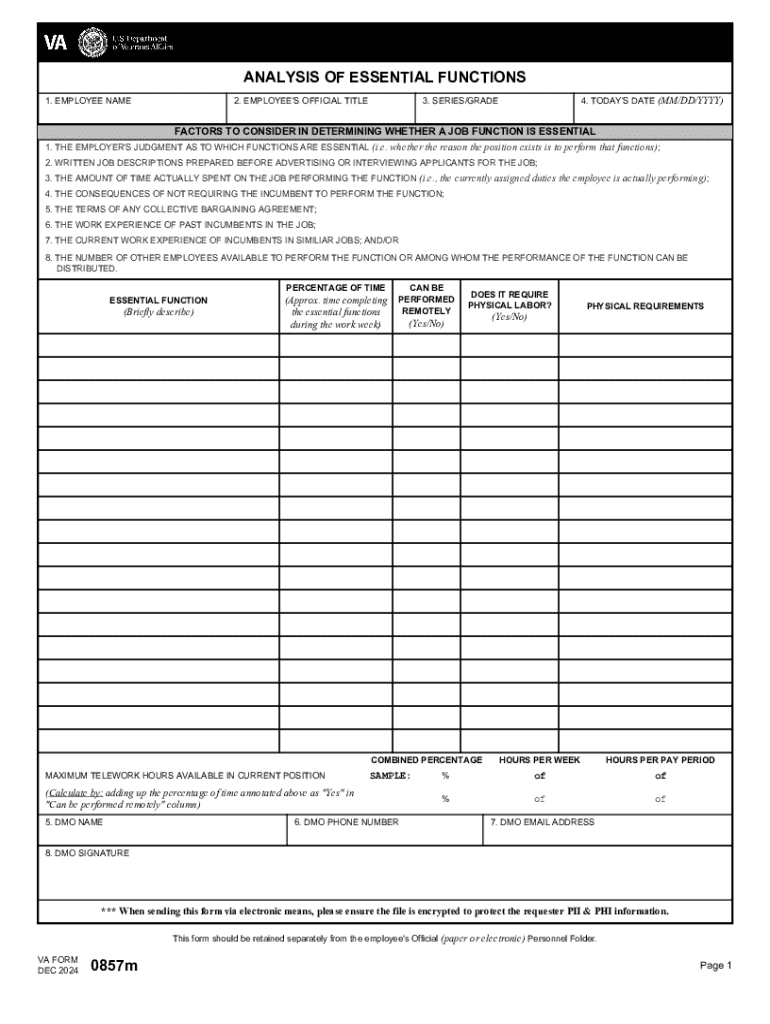
The "Analysis of Essential Functions" is a structured assessment designed to outline and evaluate the critical tasks associated with a job or position. It involves determining which job functions are necessary for the role by considering factors such as employer judgment, written job descriptions, and the impact of not performing these tasks. This analysis helps employers identify roles that are potentially adaptable for accommodations under various employment laws and can be essential for complying with legal requirements, such as the Americans with Disabilities Act (ADA).
Key Elements of the Analysis of Essential Functions
This form comprises several critical elements aimed at creating a comprehensive overview of a job's essential functions:
- Employer Judgment: Evaluation of the employer’s perspective on what constitutes an essential function.
- Job Descriptions: Reviewing existing documentation to determine the tasks and responsibilities typically associated with the role.
- Time Allocation: Analysis of how much time is spent on each task to assess its significance to the overall job responsibilities.
- Consequence of Non-Performance: Identifying potential outcomes if an essential function is not performed, providing insight into its importance.
Steps to Complete the Analysis of Essential Functions
- Compile Job Information: Gather relevant job descriptions and performance metrics.
- Consult with Management: Engage with supervisors to understand the critical nature of specific tasks.
- Evaluate Physical and Mental Requirements: Assess the physical and cognitive demands of each job function.
- Draft the Analysis: Create a detailed narrative and visual representation of essential functions, prioritizing based on importance and frequency.
- Review and Revise: Collaborate with legal advisors to ensure compliance with employment laws and company policies.
Legal Use of the Analysis of Essential Functions
The analysis serves several legal purposes, such as documenting compliance with ADA and other employment-related regulations. It helps determine reasonable accommodations for employees with disabilities and supports decisions on job restructuring or reclassification. By outlining what functions are considered essential, organizations can defend against discrimination claims related to hiring or termination decisions.
Examples of Using the Analysis of Essential Functions
Practical applications include:
- Reasonable Accommodations: Adjusting work responsibilities for employees with disabilities without altering critical job functions.
- Workplace Safety: Identifying essential physical activities that require specific safety measures.
- Performance Evaluations: Using the analysis as a benchmark for employee assessments and setting objective performance standards.
Software Compatibility
When conducting an Analysis of Essential Functions, consider using various software tools for creating, editing, and managing these documents:
- DocHub: For editing and sharing documents, allowing collaborative input and maintaining version control.
- Integration with Google Workspace: Enables seamless transfer and updating of documents between platforms like Google Drive and Gmail.
- Export Options: Facilitates saving completed analyses in multiple formats suitable for organizational needs.
Who Typically Uses the Analysis of Essential Functions
The primary users of this form include:
- Human Resources Professionals: Implementing the analysis to ensure job descriptions align with actual work requirements.
- Legal Advisors: Assuring compliance with labor laws and supporting organizational legal frameworks.
- Managers and Supervisors: Identifying and understanding critical tasks to improve organizational efficiency and effectiveness.

State-Specific Rules for the Analysis of Essential Functions
While the fundamental principles remain consistent, certain states may impose additional requirements or variations in how the Analysis of Essential Functions should be conducted or documented. It is vital for organizations to consult state regulations to tailor their analyses accordingly, particularly for compliance with state-specific labor laws.
Business Types that Benefit Most from Analysis of Essential Functions
- Corporations: To establish clear role responsibilities and support legal compliance efforts.
- Small Businesses: In ensuring that multiskilled roles are optimally aligned with business needs and legal standards.
- Non-Profit Organizations: Clarifying essential positions to align organizational goals with staffing resources efficiently.
These sections ensure comprehensive coverage of the Analysis of Essential Functions, offering practical insights and detailed explanations that support understanding and implementation within various organizational contexts.