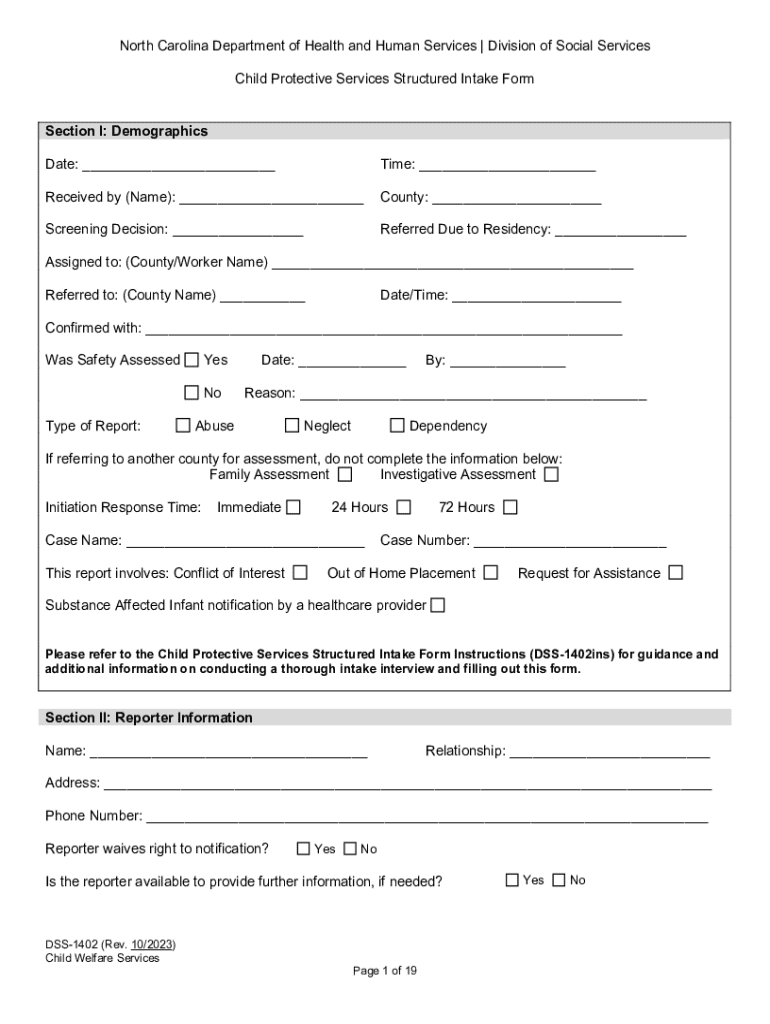







Definition and Purpose of Child Protective Services Intake Screening
The Child Protective Services Intake Screening process is critical for assessing potential cases of child maltreatment. This structured form evaluates various aspects of a case, including the child's demographics and any reported abuse or neglect. The primary goal is to collect comprehensive information that helps decide whether a full investigation is necessary. By standardizing the intake process, the form ensures consistent documentation and evaluation across cases, facilitating effective child welfare responses.
Steps to Complete the Child Protective Services Intake Screening Form
- Gather Required Information: Collect all necessary details relevant to the child and circumstances, such as demographic data, health information, and environmental factors that may affect the child's safety.
- Enter Reporter Details: Include the name, contact information, and relationship to the child of the person reporting the incident. This allows for follow-up questions and validation of the report.
- Document Maltreatment Information: Provide a detailed account of the suspected maltreatment, covering all relevant instances, including dates, descriptions, and any available evidence.
- Assess Family Strengths: Note any positive familial attributes or resources that may contribute to the child's care and protection.
- Evaluate Safety Factors: Identify immediate risk factors to the child, including any patterns of behavior or situational elements that increase vulnerability to harm.
- Review and Submit: Carefully review all filled sections for accuracy and completeness before submission. Missing or incorrect information could delay the intake process.
Key Elements of the Child Protective Services Intake Screening Form
- Demographic Details: Includes age, gender, and ethnicity of the child.
- Reporter Information: Contact details and relationship to the child.
- Maltreatment Details: Comprehensive description of alleged abuse or neglect.
- Family Dynamics: Information on family structure, support systems, and any relevant background.
- Current Safety Concerns: Immediate or potential threats to the child's safety.
Legal Use of the Child Protective Services Intake Screening Form
Child Protective Services Intake Screening must comply with state and federal confidentiality laws to protect sensitive information. The data gathered through this form should be used solely for investigating child welfare concerns. Improper handling or unauthorized sharing of information can result in legal repercussions and compromise the safety measures in place for the child involved.
Who Typically Uses the Child Protective Services Intake Screening Form
This form is utilized primarily by social workers, child welfare professionals, and sometimes by mandated reporters like educators or healthcare providers. These professionals are trained to identify signs of abuse and ensure that concerns are systematically reported and investigated. Multiple stakeholders within the child protection ecosystem rely on the form to maintain consistency and thoroughness in child abuse inquiries.


State-Specific Rules for the Child Protective Services Intake Screening Form
Regulations surrounding the use and format of the Child Protective Services Intake Screening Form can vary significantly by state. Differences can concern specific reporting requirements, mandatory fields, or particular definitions of abuse and neglect. Practitioners must be familiar with the guidelines in their state to ensure compliance with local laws and effective implementation of child protection services.
How to Obtain the Child Protective Services Intake Screening Form
The form is typically available through state Department of Health and Human Services websites or directly through Child Protective Services agencies. In some states, the form may also be disseminated as part of a training program for mandatory reporters. Ensuring immediate access to this form helps streamline the process of handling suspected abuse cases.
Examples of Using the Child Protective Services Intake Screening Form
- Case of Neglect: A teacher notices a student frequently appears unkempt and lacks basic necessities, prompting a report using the intake form to describe the observed neglect.
- Physical Abuse Reporting: A healthcare provider identifies unexplained injuries on a patient, submitting a detailed account of the suspected abuse through the form's structured fields.
- Environmental Concerns: A social worker documents unsafe living conditions discovered during a home visit, using the form to articulate the potential risks to the child's welfare.
Required Documents for Completing the Intake Screening Form
While completing the Child Protective Services Intake Screening, the user should have access to supporting documents that can substantiate the claims being reported. These may include medical records, school reports, photographs of injuries, or any other relevant documentation. Submitting these together with the form can streamline the investigation process and provide a clearer picture for Child Protective Services.
By understanding each of these aspects, stakeholders can more effectively utilize the Child Protective Services Intake Screening to safeguard children's welfare and ensure that legitimate concerns about their safety are diligently addressed.