




01. Edit your form online
Type text, add images, blackout confidential details, add comments, highlights and more.

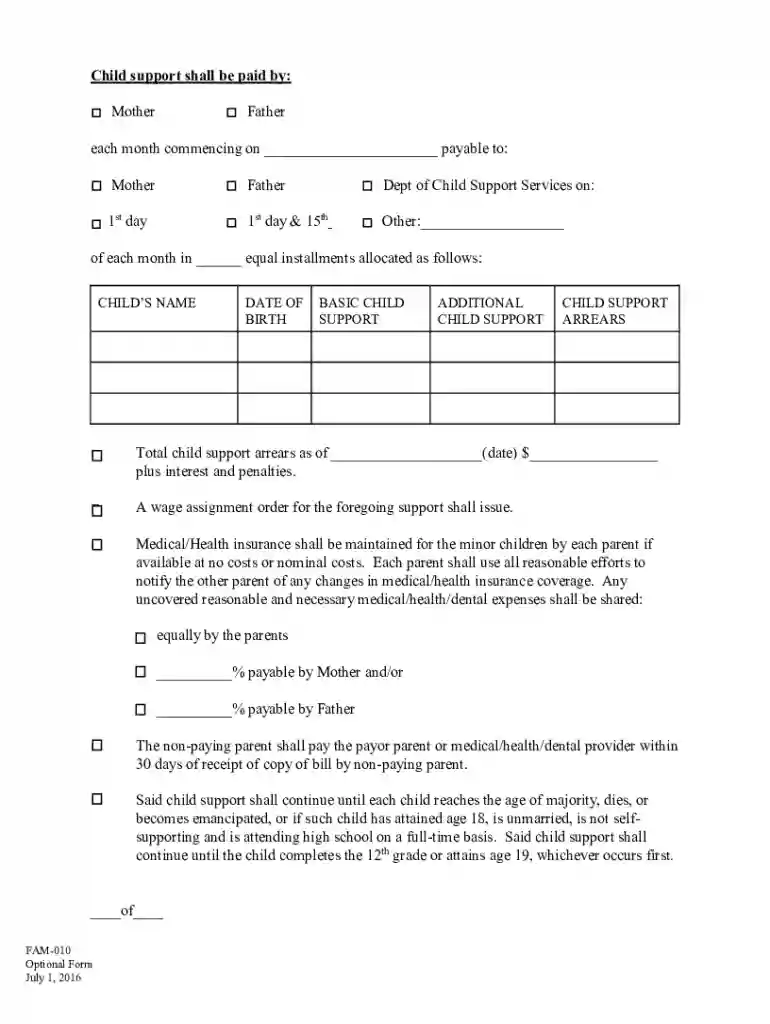
Type text, add images, blackout confidential details, add comments, highlights and more.

Draw your signature, type it, upload its image, or use your mobile device as a signature pad.

Send it via email, link, or fax. You can also download it, export it or print it out.
When contemplating "When Should All Income Be Considered in a New York Child," it refers to the process within child support cases wherein a complete evaluation of available income sources is necessary for determining appropriate support payments. This involves assessing all potential income streams from both parents to ensure fair child support determinations, in line with New York State's Child Support Standards Act (CSSA). This comprehensive evaluation helps determine the parents’ financial obligations for their children, supporting their well-being and essential needs.
Several elements are assessed when all income is considered in determining child support payments. These include:
This form is primarily used by:
The form is legally used under the New York Child Support Standards Act to ensure compliance with state guidelines for child support. This has profound implications in family law, enabling fair distribution and enforcement of financial duties between parties.
In New York, specific rules guide income consideration:
While IRS guidelines don't directly govern child support forms, accurate reporting of income ensures compliance with federal tax obligations. It’s crucial to align child support documentation with the annual tax approach. New York court deadlines vary but adhering to timelines is essential for avoiding non-compliance penalties.
Consider a self-employed individual whose income varies annually. In such instances, tax returns, client contracts, and banking statements are pivotal for income assessment:
Failure to provide accurate income details can result in legal consequences such as fines, contempt of court, or enforcement actions. Ensuring complete and honest financial disclosure prevents potential legal repercussions and ensures equitable child support arrangements align with New York law.
At DocHub, your data security is our priority. We follow HIPAA, SOC2, GDPR, and other standards, so you can work on your documents with confidence.


Line 1a. Enter all taxable interest income your child received in. 2017. Do not include tax-exempt interest in the total for line 1a, but.
The dollar amount of the credit is based upon a formula that includes an individual or couples in- come for the year as well as the number of dependents in the
Aug 26, 2025 If, for tax year 2023, you received at least $100 for the Empire State child credit and filed your New York State income tax return (Form


