






Definition and Meaning of Household Energy Burdens
Household energy burden refers to the proportion of a household's income that is spent on energy costs, including electricity, gas, and heating. This measurement is a crucial indicator of energy affordability, as it affects a family's ability to manage their budget and maintain essential services. Typically, a high energy burden means that a household spends more than a typical percentage of its income on energy, often resulting in economic challenges such as having to cut back on other essential expenses like food and healthcare. Understanding this concept is important for policymakers and support organizations, as it provides insight into the energy needs and potential financial struggles of households, particularly those with low incomes.
How to Use the Household Energy Burdens Form
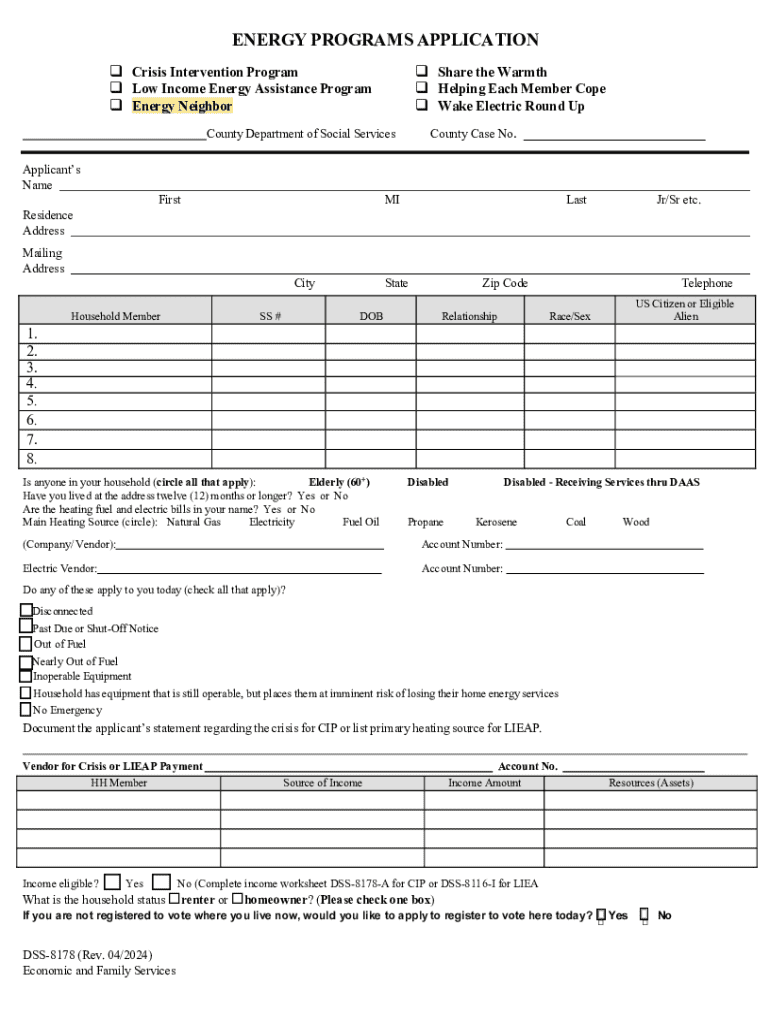
The "How High Are Household Energy Burdens?" form is a critical tool for assessing a household's energy expenses in relation to their income. This form collects data such as total income, housing costs, and energy bills to calculate the proportion of income spent on energy. By completing this form, households can gain a better understanding of their energy burden, which may also inform eligibility for energy assistance programs. Utilizing this form involves gathering relevant financial data, carefully inputting the information, and reviewing the results to determine financial strain and explore potential relief options.
Steps to Complete the Household Energy Burdens Form
- Gather Financial Documents: Collect all recent bills and income statements, including utility bills, pay stubs, and any other documentation that provides insight into your household's finances.
- Enter Income Information: Input your household's total annual income, including wages, benefits, and any other sources of income.
- Input Energy Costs: List all expenses related to utilities such as electricity, gas, and heating. These should be documented in a detailed format with specific amounts and dates.
- Calculate Energy Burden: The form will guide you through dividing your annual energy costs by your total household income to determine the energy burden percentage.
- Analyze Results: Review the burden percentage to understand if your household experiences a high energy burden and whether action is necessary.
Required Documents for Submission
To accurately complete the "How High Are Household Energy Burdens?" form, ensure you have the following documents ready:
- Recent utility bills for the past six to twelve months.
- Pay stubs or proof of income for all household members.
- Documentation of any additional income sources such as social security or unemployment benefits.
- Rent or mortgage statements to account for total housing costs.
Having these documents ensures that the information you provide is accurate and reflective of your current financial situation.
Key Elements of the Energy Burden Form
The form is structured to capture critical data points necessary for evaluating a household's energy burden. Key elements include:
- Total Household Income: This captures all income flowing into the household.
- Energy Costs: Essential utility costs, specifically electricity, heating, and gas.
- Housing Costs: Rent or mortgage payments that affect available income for other expenses.
- Calculated Energy Burden Percentage: The resultant figure that relates energy costs to income.
This structured approach ensures that evaluations of energy burden are comprehensive, allowing for a clear assessment of financial pressures related to energy consumption.
Application Process and Approval Time
While utilizing this form does not involve an application or approval process, its results can inform applications for energy assistance programs:
- Submit Supporting Documents: Attach the completed energy burden form as a support document for assistance applications.
- Review Period: Allow time for program administrators to review your eligibility based on the energy burden data provided.
Understanding these steps is key when using the form as part of an application for energy relief initiatives like the Low Income Energy Assistance Program.
Who Typically Uses the Household Energy Burden Form
This form is most beneficial for households aiming to assess their financial strain due to energy costs. It is particularly useful for:
- Low-income Families: Those struggling to pay their energy bills alongside other expenses.
- Policy Makers: For use in analyzing the impact of energy costs on community welfare and implementing support measures.
- Energy Assistance Organizations: These entities can utilize the form to target aid and tailor programs for those most in need.
Use of this form extends beyond individual households, providing value to organizations seeking to address energy poverty.

State-by-State Differences in Energy Burdens
Energy burden levels and the availability of relief programs can vary significantly by state, influenced by:
- Cost of Living: Differences in utility prices and average household incomes impact how burdens are assessed.
- State Initiatives: Programs like the Crisis Intervention Program or Low Income Energy Assistance Program vary by state, affecting relief availability.
- Regulatory Factors: Different state policies and regulations concerning utility billing practices and consumer protections.
When filling out the form, recognizing these differences is important as it contextualizes energy burden data, particularly when comparing across different regions.