




01. Edit your form online
Type text, add images, blackout confidential details, add comments, highlights and more.

Type text, add images, blackout confidential details, add comments, highlights and more.

Draw your signature, type it, upload its image, or use your mobile device as a signature pad.

Send it via email, link, or fax. You can also download it, export it or print it out.
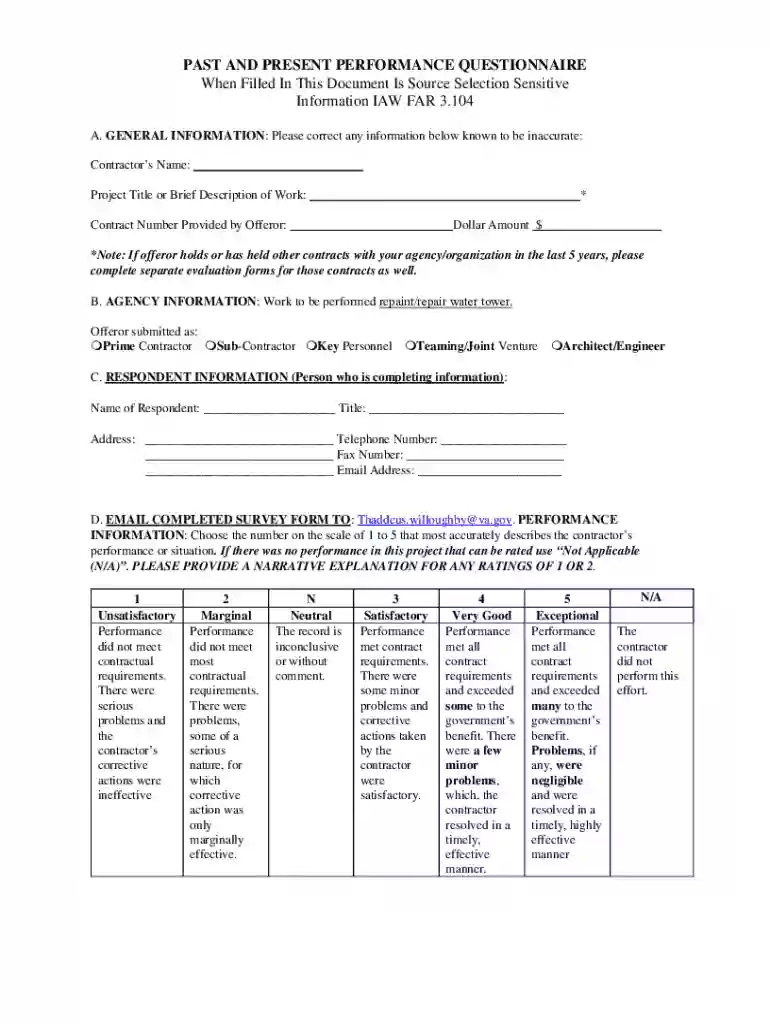
The Past and Present Performance Questionnaire is a critical document designed to assess the performance of contractors on specific projects, such as repainting or repairing water towers. This form captures detailed information about a contractor's past achievements and current capabilities. It includes sections for general contractor information, details about the agencies involved, and a structured rating scale to evaluate diverse performance metrics. By comprehensively analyzing both past and current performance, users of this questionnaire can more effectively judge the competency and reliability of contractors for future projects.
Gather Necessary Information: Before beginning, compile all relevant data, including contractor information, project specifics, and agency contacts.
Section by Section Guidance:
Review and Accuracy: Double-check all entries for accuracy and completeness before submission. Ensuring a thorough, thoughtful response in each section can help paint an accurate picture of contractor performance.
The questionnaire is primarily used by project managers, procurement officers, and agency representatives within the construction and maintenance sectors. These stakeholders rely on the form to make informed decisions regarding contractor selection, based on a contractor’s historical and current project performance.


Under certain regulatory compliance frameworks, completing the Past and Present Performance Questionnaire may be mandatory to ensure public resources are allocated to contractors who consistently meet required performance standards. Legal integrity in completing this form is crucial, and all submissions should reflect truthful, accurate assessments to avoid potential audit discrepancies or legal challenges.
Acquiring the Form: The form may be available through contracting offices, procurement portals, or directly provided by project lead agencies.
Filling the Form: Utilize digital platforms like DocHub for a streamlined, accessible process. This can facilitate easy edits, annotations, and form completions.
Submission: Based on the preferred method by the agency or project manager, submit the form either digitally or through paper mail to the specified contact.
While the general principles behind the questionnaire remain consistent, certain states may introduce additional criteria or modify existing ones to align with local industry regulations and standards. Understanding these variations is essential for compliance and ensuring the contractor evaluation process meets regional expectations.
Though the Past and Present Performance Questionnaire serves a specific purpose, alternative forms or extended versions can exist depending on the type of project, the scope of work involved, and specific client requirements. Users may encounter distinct forms for government contracts versus private sector projects, each adjusted for their particular compliance and performance tracking needs. Understanding the differences and selecting the appropriate form version is critical to ensure accurate evaluation and reporting.
At DocHub, your data security is our priority. We follow HIPAA, SOC2, GDPR, and other standards, so you can work on your documents with confidence.


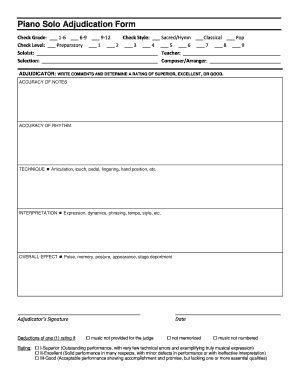
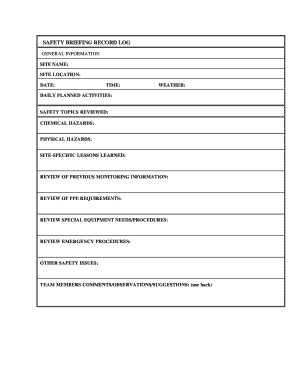
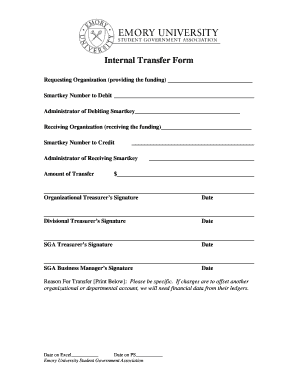
FSS Past Performance Questionnaire. 1. NAME OF FIRM/AGENCY PROVIDING CURRENT CONTRACT DOLLAR VALUE: 2. NAME OF ASSESSING OFFICIAL: EMAIL: PHONE
Apr 26, 2013 The information obtained from a Beehive Survey provides managers and change agents with a profile of an organisations performance that can be


