
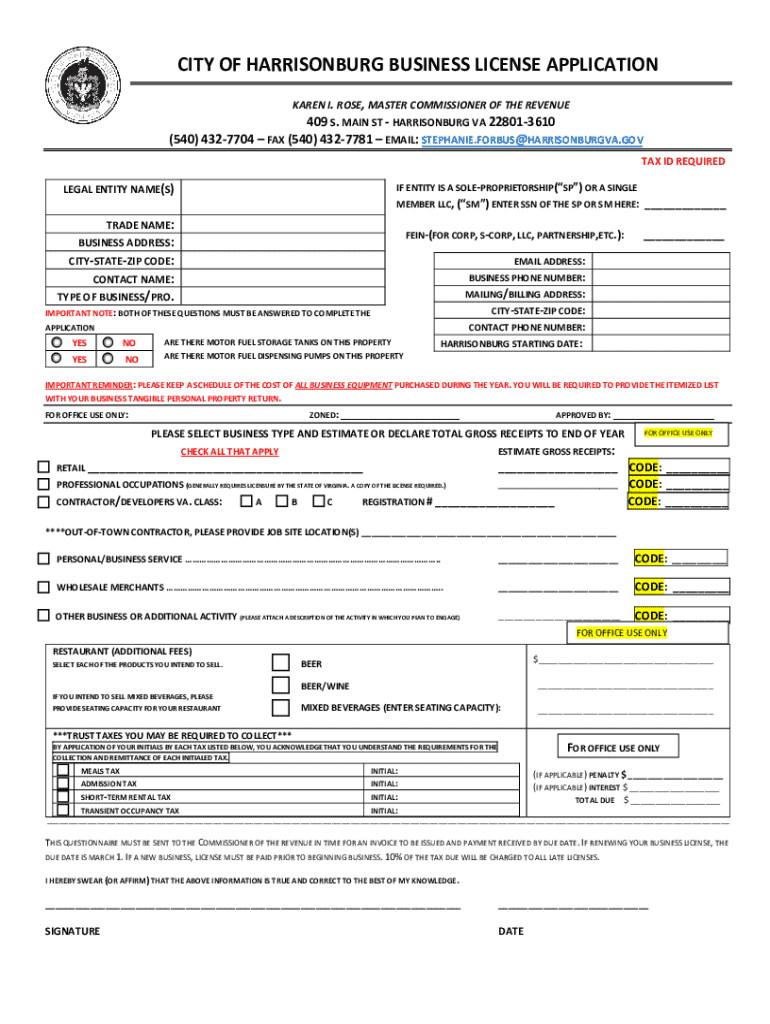







Definition and Meaning of Business License Application
A Business License Application is a necessary document for individuals or entities intending to operate a business within a specific jurisdiction. This form serves as a formal request to obtain a business license, which grants legal permission to engage in business activities. It typically includes sections that require personal and business information, such as the nature of the business, ownership details, and compliance with local zoning laws and other regulations. Understanding the specific requirements of this application is crucial for ensuring legal operations and avoiding potential fines or penalties.
Steps to Complete the Business License Application
Completing a Business License Application involves several structured steps:
- Gather Necessary Information: Collect all required personal and business details, such as business name, owner profiles, and contact information.
- Identify the Type of Business: Clearly define the business structure (e.g., LLC, Corporation, Sole Proprietorship) and specify the activities conducted.
- Estimate Gross Receipts: Provide expected gross revenue projections, as this may influence licensing fees.
- Review Regulatory Compliance: Ensure familiarity with local zoning laws and acquire any additional permits or documentation needed.
- Fill Out the Application: Carefully complete each section of the form, maintaining accuracy to avoid delays.
- Submit the Application: Depending on jurisdiction, submit the completed form online, by mail, or in-person to the appropriate licensing authority.
- Pay Applicable Fees: Include any required fees with the application to facilitate processing.
Ensuring thoroughness and precision during each step can expedite approval and help establish your business legally.
Legal Use of the Business License Application
Using a Business License Application legally requires adherence to regional requirements and regulations. The application is used to verify that a proposed business complies with zoning laws, health and safety regulations, and other local ordinances. Once approved, the business license authorizes legally conducting business operations within the jurisdiction. Failure to comply with these legalities can result in fines, penalties, or even the revocation of the business license. It is essential for business owners to understand relevant legal frameworks, ensuring their operations remain within legal bounds.
Who Typically Uses the Business License Application
The Business License Application is predominantly used by:
- Entrepreneurs and Startup Owners: Individuals establishing new businesses who need to obtain licensing to operate legally.
- Existing Business Owners: Those changing business locations or expanding service offerings may require updated or additional licenses.
- Nonprofit Organizations: Entities seeking to operate within certain sectors or collect donations publicly.
- Independent Contractors: Individuals or freelancers offering specialized services may need licenses depending on local regulations.
The application process ensures that all users understand their legal obligations and secure necessary approvals to operate within their domain.


Key Elements of the Business License Application
The Business License Application is composed of several key elements:
- Applicant Details: Names, contact information, and identification numbers of business owners or partners.
- Business Information: Description of the type, nature, and structure of the business (e.g., retail, services, manufacturing).
- Location Details: Address of business operations, ensuring compliance with zoning laws.
- Estimated Revenue: Projections for the business’s gross receipts, affecting fee calculations and eligibility.
- Required Permits: Identification and documentation of any additional permits or licenses required (e.g., health permits for food service).
- Compliance Acknowledgment: Statements ensuring awareness and commitment to local regulations and laws.
Each element serves a specific function in ensuring that applicants meet all legal and operational criteria before receiving approval.
State-Specific Rules for the Business License Application
Rules and requirements for a Business License Application can vary widely by state:
- Zoning Regulations: Each state enforces specific land use and zoning requirements, impacting where certain businesses can operate.
- Fee Structures: Varying fee amounts based on estimated gross receipts or business type, depending on regional legislation.
- Tax Obligations: State-specific sales tax permits or other state-mandated financial obligations may be necessary.
- Special Licenses: Certain states require specialized licenses for professions such as medical practice, construction, or alcohol sales.
Understanding and complying with specific state rules is vital for streamlining the application process and ensuring successful licensing.
Important Terms Related to Business License Application
Familiarity with key terms is essential when dealing with a Business License Application, including:
- Zoning Laws: Regulations governing land use and business types permissible in specific areas.
- Gross Receipts: Total revenue from business activities before expenses, crucial for license fee computations.
- Permits: Official documents authorizing specific activities or services (e.g., building permits, health inspections).
- LLC (Limited Liability Company): A business structure offering liability protection and tax flexibility for owners.
- Corporation: A legal entity separate from its owners, providing limited liability and potential tax benefits.
Appreciating these terms helps in understanding the complexities and legalities associated with the application process.
Required Documents for Business License Application
Typically, the Business License Application requires the submission of various documents, including:
- Identification Documents: Government-issued IDs for owners or authorized representatives.
- Proof of Address: Verification of business location through utility bills or rental agreements.
- Financial Statements: Current and projected earnings declarations, influencing fee determinations.
- Special Permits: Any additional permits relevant to your business type (e.g., liquors licenses, health screenings).
- Corporate Documents: Articles of incorporation or operating agreements, particularly for LLCs and Corporations.
Compiling accurate and complete documentation helps in the smooth processing of your application and minimizes potential delays or rejections.




