






Definition and Purpose of a Graphic Design Contract Template
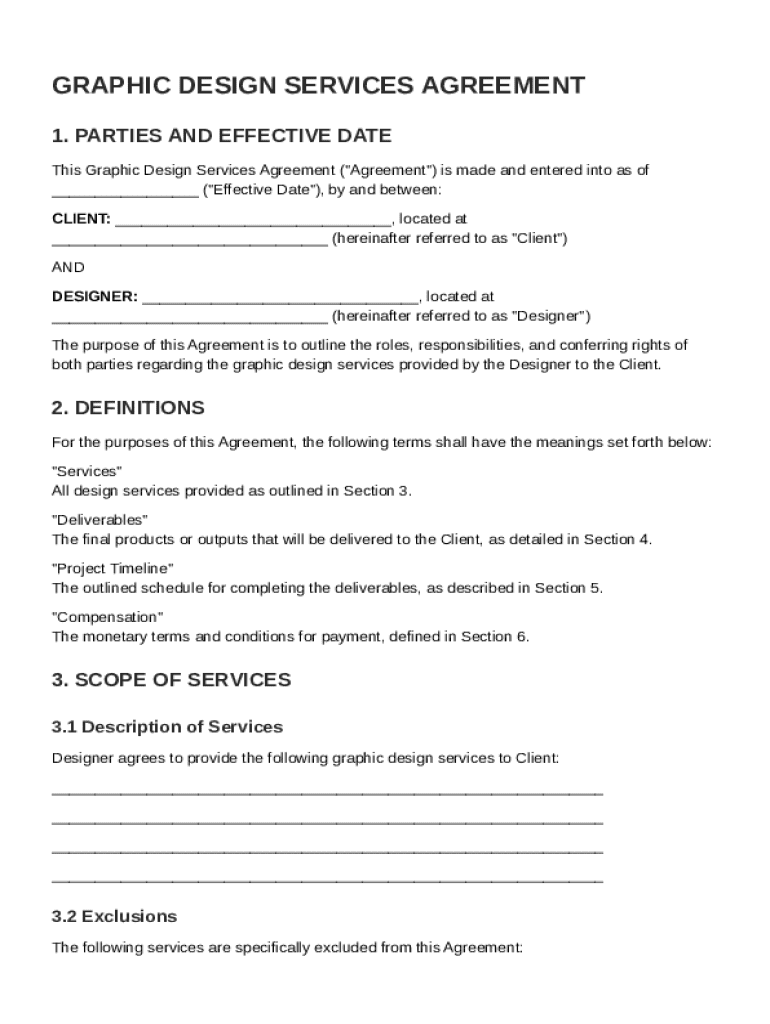
A graphic design contract template is a pre-structured agreement used to outline the specific roles, responsibilities, and expectations between a client and a designer for a graphic design project. This document serves as a legal framework to protect both parties involved by detailing the scope of services, deliverables, payment terms, and ownership rights. It ensures clarity and reduces the risk of disputes through comprehensive terms that cover project timelines, confidentiality, and termination conditions. Utilizing a contract template can streamline the initiation of a project by providing a solid foundation that can be customized to fit the unique requirements of each engagement.
Key Components Included in the Template
A well-structured graphic design contract template typically includes several crucial sections:
- Scope of Services: Details the specific tasks and responsibilities the designer will undertake, ranging from initial design concepts to the final deliverables.
- Deliverables: Outlines what will be produced (e.g., logos, brochures, web graphics), including formats and any revisions expected.
- Compensation Terms: Specifies payment structure, rates per hour or project, payment schedule, and any upfront deposits required.
- Project Timeline: Sets deadlines for each phase of the project and the final completion date.
- Ownership and Usage Rights: Defines who retains the copyright and how the final designs can be used by both parties.
- Confidentiality Clause: Ensures that proprietary information and designs remain confidential.
- Termination Conditions: Lists reasons and procedures for ending the contract prematurely, including how compensation is handled.
Steps to Complete the Graphic Design Contract Template
Filling out a graphic design contract template involves several steps to ensure it meets the specific needs of the project and both parties:
- Customizing the Template: Start by filling in the personal details of the client and designer, along with a brief project summary.
- Defining Scope and Deliverables: Clearly outline the design tasks and expected outcomes to avoid ambiguities.
- Setting Compensation and Payment Terms: Agree on a feasible payment structure and include terms for late payments or changes.
- Establishing Timelines: Determine realistic deadlines for drafts and final delivery.
- Assigning Ownership Rights: Specify whether the designer retains any rights over the work and in what capacity the client can use it.
- Adding Legal Provisions: Include clauses related to confidentiality, indemnity, and dispute resolution.
Benefits of Using a Graphic Design Contract Template
Using a graphic design contract template offers numerous advantages:
- Clarity and Protection: Both parties understand their obligations, which reduces the likelihood of misunderstandings and legal conflicts.
- Time-Saving: Pre-formatted contracts quickly adapt to individual projects, saving time on drafting from scratch.
- Professionalism: Presenting a contract demonstrates professionalism and builds trust, reflecting positively on the designer.
- Flexibility: Templates are customizable, allowing adjustments to cater specifically to the nuances of different projects and clients.
- Efficient Dispute Resolution: Established terms for conflict resolution can save time and cost if issues arise.
Who Typically Uses the Graphic Design Contract Template
This template is particularly useful for:
- Freelance Designers: Independent contractors who want to formalize their project terms with clients.
- Design Agencies: Agencies that handle multiple projects and need streamlined agreements for efficiency.
- In-House Teams: Companies with internal design teams that undertake projects for external clients or inter-departmental services.
- Start-ups and Small Businesses: Entities looking to engage with designers for branding and marketing needs, ensuring clarity and professionalism in services procured.


Legal Use and Compliance
Graphic design contracts must comply with legal standards to be enforceable. It is crucial that the contracts adhere to relevant U.S. laws, such as:
- Legally Binding Agreements: Contracts must include offer, acceptance, and consideration to be valid.
- Compliance with Copyright Laws: Outline the transfer or retention of rights in compliance with U.S. Copyright laws.
- Dispute Resolution and Governing Law: Specify jurisdiction and legal procedures for handling disputes to ensure enforceability in court.
Customizing the template to align with these legal standards ensures that both parties are protected under the law, providing a clear recourse in case of disagreements.
Examples of Using the Graphic Design Contract Template
Consider the following scenarios:
- Freelancer scenario: A freelancer signs a contract with a small business to design a new logo, using the contract to outline three initial concepts and two rounds of revisions, with a timeline of two weeks and payment upon completion.
- Agency scenario: An agency agrees to produce a branding package for a startup, using a contract to detail the deliverables including stationary design, ensuring a phased payment plan aligned with project milestones.
- In-house design: A corporation's in-house team uses the contract template to agree on project terms for creating annual report graphics with another department, ensuring deadlines and deliverables are met internally.
Digital vs. Paper Version: Pros and Cons
Both digital and paper formats have their merits:
-
Digital Copies:
- Pros: Easily shared and edited, ideal for remote work or prompt revisions, and beneficial for electronic signatures.
- Cons: Can sometimes be less formal and may pose challenges without adequate access to digital signing tools.
-
Paper Copies:
- Pros: A formal and tangible proof of agreement; useful when digital signatures aren't recognized or practical.
- Cons: Inflexible for amendments and inconvenient for geographically distant parties; environmental concerns regarding paper use.
Choosing between versions depends on circumstances such as client preference, available technology, and legal requirements for signature recognition.