







Definition & Meaning
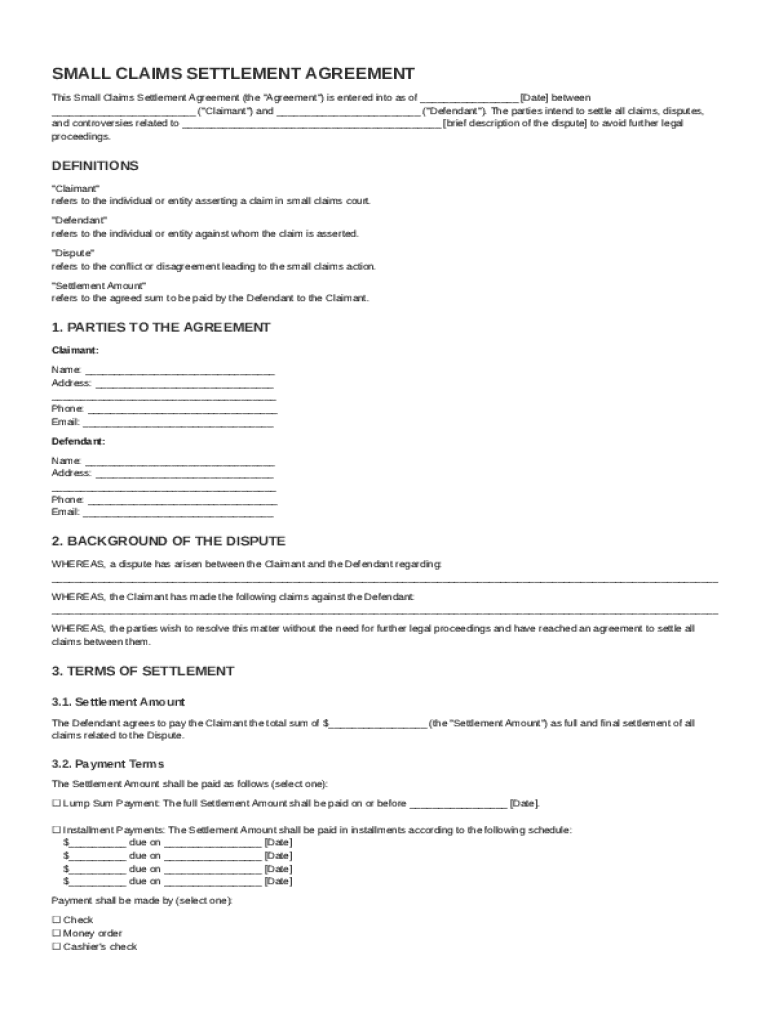
A Small Claims Settlement Agreement is a legal document used to resolve disputes between a Claimant and a Defendant without further legal proceedings. This agreement outlines the resolution terms, including the specified settlement amount, payment terms, and any additional conditions agreed upon by both parties. The goal of this agreement is to reach a mutually beneficial settlement swiftly and cost-effectively, bypassing the need for a court trial.
- Parties Involved: The agreement involves two parties: the Claimant, who brings forth the claim, and the Defendant, who is the party accused of causing harm or loss.
- Resolution Objective: The main objective of this agreement is to enable parties to resolve disputes and claims amicably and efficiently, minimizing legal expenses.
- Legal Framework: Provides a clear, legally binding framework that secures both parties' interests and ensures compliance with agreed terms.
Key Elements of the Small Claims Settlement Agreement Template
The Small Claims Settlement Agreement Template includes several crucial elements that delineate the specifics of the settlement, ensuring both parties are clear about their obligations and rights. Here are the primary components:
- Settlement Amount: Clearly specifies the financial compensation agreed upon by both parties.
- Payment Terms: Details how and when the settlement payments will be made, including any installment plans.
- Confidentiality Clause: Ensures all information and terms of the settlement remain private.
- Governing Law: Establishes which state laws govern the agreement in case of disputes.
- Release of Claims: Outlines that both parties are relinquishing further claims relating to this dispute after the agreement.
Steps to Complete the Small Claims Settlement Agreement Template
Creating a Small Claims Settlement Agreement requires careful completion of each section to ensure legal soundness and mutual agreement. Follow these steps:
- Gather Information: Collect all necessary information about the parties involved, including their names and contact details.
- Outline the Dispute: Clearly define the nature of the dispute and claims involved.
- Detail the Settlement Terms: Specify the agreed settlement amount, payment terms, and any conditions such as confidentiality requirements.
- Review Governing Law: Confirm the laws applicable to the agreement's enforcement and interpretation.
- Finalize the Release of Claims: Ensure both parties consent to release all related claims.
- Sign the Agreement: Once all terms are agreed upon, both parties and any witnesses should sign the document.
Legal Use of the Small Claims Settlement Agreement Template
This template provides a legally enforceable framework for the resolution of small claims disputes. It is important to understand its proper use to ensure that the document serves its intended legal function.
- Compliance With ESIGN Act: The agreement aligns with electronic signature laws, allowing for legally binding digital signatures.
- Preventing Future Disputes: By clearly outlining terms, the agreement reduces the potential for future disputes over the settled claim.
- Enforceability: Once signed, the agreement is a legally enforceable contract that can be upheld in court.
Important Terms Related to Small Claims Settlement Agreement Template
Understanding the terminology used in a Small Claims Settlement Agreement is essential for effectively utilizing the template. Key terms include:
- Claimant: The individual or entity who initiates the claim seeking compensation.
- Defendant: The individual or entity accused of causing harm or loss.
- Settlement Amount: The agreed sum to be paid by the defendant to resolve the dispute.
- Confidentiality Clause: A section of the agreement requiring both parties to keep contractual details private.
- Release of Claims: A provision where parties agree to forgo any future legal claims related to the dispute.
How to Use the Small Claims Settlement Agreement Template
Utilizing the Small Claims Settlement Agreement Template requires a structured approach to ensure its effectiveness and validity.
- Adapt for Specific Disputes: Modify the template to fit the exact nature and details of your dispute.
- Consult Legal Expert: It's advisable to have a legal professional review the agreement to confirm its appropriateness and compliance with applicable laws.
- Use with Electronic Platforms: By employing electronic document workflows, like those offered by DocHub, parties can benefit from streamlined digital completion and signing processes.
State-Specific Rules for the Small Claims Settlement Agreement Template
Legal requirements for small claims settlement agreements may vary by state. Here are common considerations for different jurisdictions:
- Filing Requirements: Some states may require filing of the settlement with a local court.
- Monetary Limits: State laws might limit the maximum amount for small claims settlements.
- Deadline Constraints: Certain states impose deadlines for filing claims and settlements related to small claims disputes.
Examples of Using the Small Claims Settlement Agreement Template
Providing real-world examples helps illustrate how this template is effectively used in various disputes:
- Example 1: A landlord and tenant dispute over withheld security deposits resolved through agreed compensation and terms laid out in the settlement agreement.
- Example 2: An employee settling a wage dispute with a former employer by agreeing on back payment without proceeding to court.
- Example 3: A customer and service provider resolving a dispute over alleged breach of service contract through a negotiated settlement documented in the agreement.




