






Key Elements of the Real Estate Commission Sharing Agreement Template
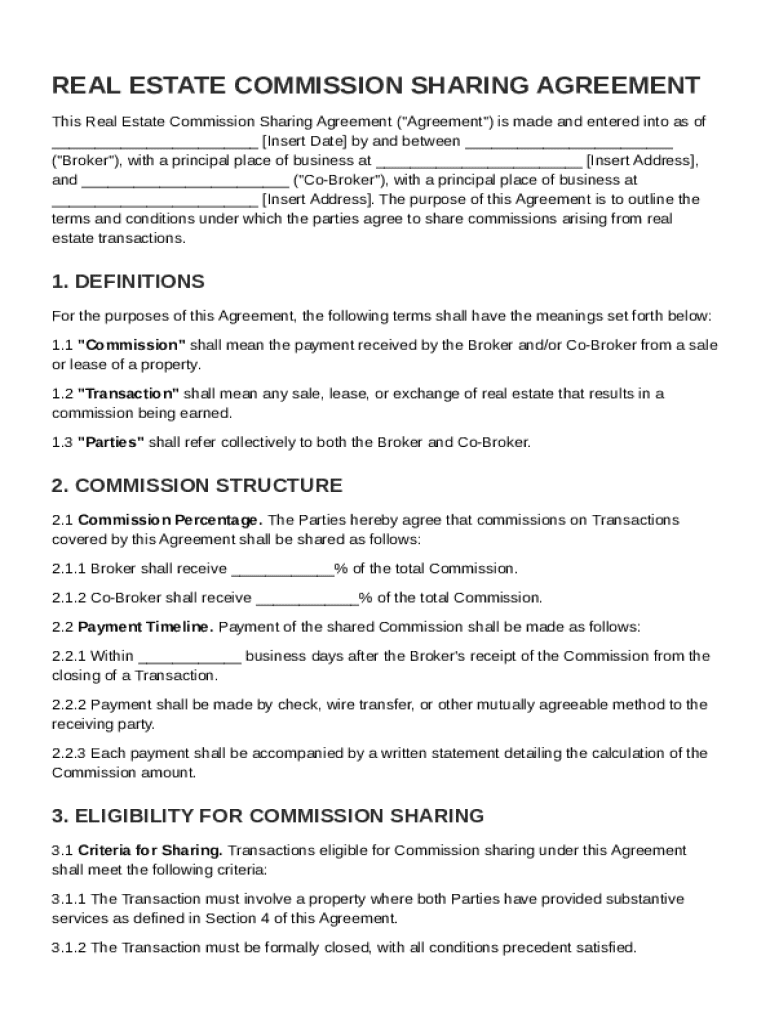
The Real Estate Commission Sharing Agreement is a critical document in detailing how commissions are divided between a Broker and a Co-Broker in property transactions. Essential elements include:
- Commission Percentages: Specify the percentage of commission allocated to each party. This helps avoid misunderstandings or disputes.
- Eligibility Criteria: Outline conditions required for a Broker or Co-Broker to be eligible for commission sharing.
- Payment Timelines: Define when each party will receive their share of the commission.
- Responsibilities: Detail the obligations each party must meet to ensure a smooth transaction.
- Confidentiality Obligations: Ensure sensitive transaction details remain private.
- Dispute Resolution: Include procedures to handle disagreements effectively.
- Termination Conditions: Specify scenarios where the agreement may be considered void.
Each of these components is pivotal to the agreement’s clarity and enforcement.
Important Terms Related to the Agreement
Understanding key terms is vital for utilizing the agreement effectively:
- Broker: The individual or firm responsible for overseeing real estate transactions.
- Co-Broker: A secondary broker who collaborates in a transaction.
- Commission: The payment received by Brokers from real estate transactions, often a percentage of the sale price.
- Eligibility: Requirements that must be met for commission sharing to be valid.
- Confidential Information: Data pertinent to the transaction that must not be disclosed.
Clarity of these terms ensures both parties have a mutual understanding and avoids misinterpretation.
How to Use the Template
When using the Real Estate Commission Sharing Agreement Template, follow these steps for a streamlined process:
- Review the Template: Understand the structure and fields within the template.
- Customize Details: Input specific transaction details, including the parties involved and commission percentages.
- Define Roles and Responsibilities: Clearly delineate what is expected from both the Broker and Co-Broker.
- Confirm Terms and Conditions: Ensure both parties agree to all terms listed in the agreement.
- Secure Signatures: Use DocHub to collect electronic signatures to validate the agreement.
- Distribute Copies: Share the finalized document with all involved parties for their records.
This step-by-step guide aids in tailoring the agreement to specific real estate transactions.
Legal Use of the Template
Proper usage of the Real Estate Commission Sharing Agreement Template involves:
- Compliance with State Laws: Ensure the template aligns with the laws of the state where the transaction occurs.
- Adherence to Brokerage Policies: Follow any rules established by the Broker’s agency.
- Confidentiality Agreements: Secure agreements if the transaction involves sensitive data that needs protection.
- Legally Binding Signatures: Use e-signatures that comply with the ESIGN Act for legal validity.
Failure to adhere to these legal aspects can invalidate the agreement or lead to legal challenges.
Steps to Complete the Template
Completing the template accurately is paramount:
- Gather Necessary Information: Collect data such as contact details, property information, and commission percentages.
- Input Data: Enter information into each relevant section of the template.
- Review for Accuracy: Ensure all entered information is correct and up-to-date.
- Enter Specific Clauses: Include any unique clauses agreed upon by both parties.
- Finalize the Document: Check for completeness and coherency.
- Execute the Agreement: Use DocHub for electronic signing and secure data storage.
These responsibilities ensure each section is appropriately addressed and legally enforceable.
Who Typically Uses this Template
Various parties may utilize this template, including:
- Real Estate Brokers: As a standard part of executing real estate transactions.
- Co-Brokers: To formalize involvement and financial entitlements.
- Real Estate Firms: Standardizing the commission sharing process within the organization.
- Legal Advisors: Reviewing terms to ensure compliance and clarity for clients.
Understanding the typical users helps tailor the agreement to meet specific professional needs.
State-Specific Rules for the Agreement
Real estate transactions, including commission sharing, often differ by state, requiring:
- State Licensing Requirements: Ensure all involved parties are licensed to operate within that state.
- Specific Commission Regulations: Abide by any state-mandated caps or minimums on commission share percentages.
- Regional Disclosure Requirements: Fulfill all disclosure obligations as dictated by state law.
Familiarity with state-specific regulations ensures compliance and prevents disputes.
Who Issues the Template
Generally, the Real Estate Commission Sharing Agreement Template is provided by:
- Real Estate Firms: Distributing templates designed to meet industry and legal standards to their agents.
- Online Platforms: Services like DocHub allow for easy access to editable and customizable templates.
- Legal Counsel: Attorneys may offer specialized templates tailored to specific needs or regulations.
This dissemination enables Brokers and Co-Brokers to formalize their financial arrangements easily.
Digital vs. Paper Version
Comparing digital versus paper versions involves several factors:
- Ease of Access: Digital versions allow for easy sharing, editing, and storage compared to paper counterparts.
- Eco-Friendliness: Digital methods reduce environmental impact by eliminating paper waste.
- Security Features: Digital versions can incorporate encryption and password protection, enhancing document security.
- Flexibility: Digital versions can be altered more readily in response to legal updates or changes in transaction details.
Choosing between these options involves evaluating the needs of the transaction and the preferences of the involved parties.