







Definition and Meaning
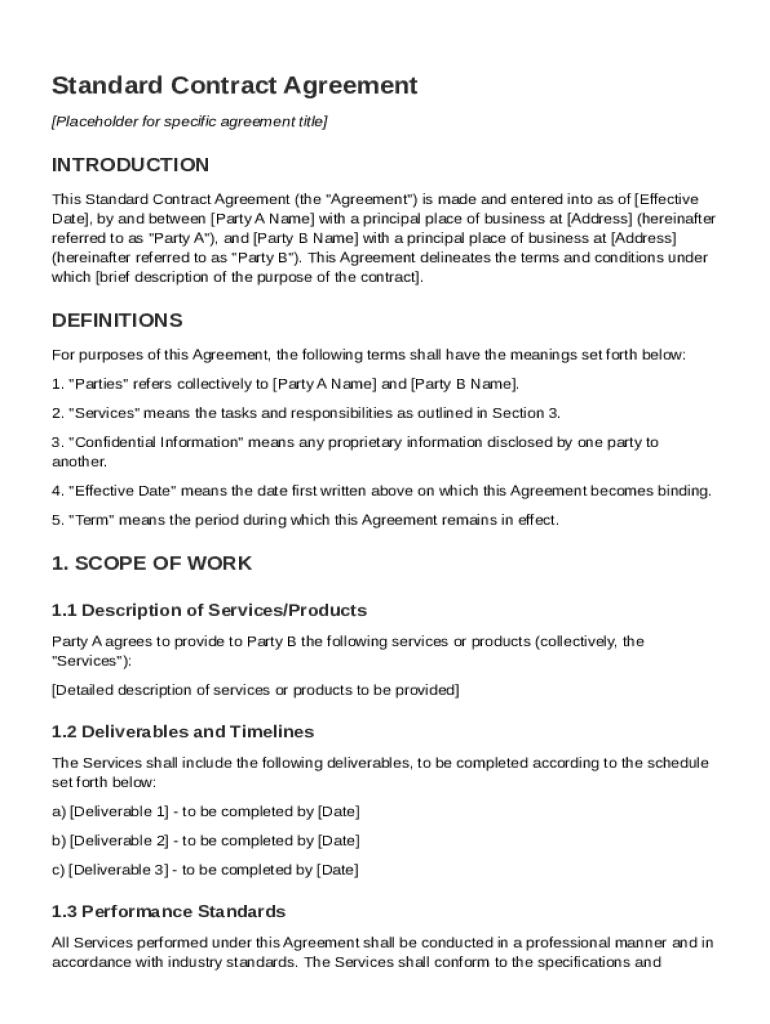
The Standard Contract Template is a blueprint for creating comprehensive agreements between two parties, often referred to as Party A and Party B. This template outlines the essential terms and conditions necessary for the provision of specific services or products. Key elements include the scope of work, payment terms, confidentiality clauses, and dispute resolution procedures. By ensuring clarity and mutual understanding, the template safeguards against misunderstandings and fosters a mutually agreeable business relationship.
Core Components
- Scope of Work: Clearly defines the tasks to be performed or the goods to be provided by each party.
- Compensation Details: Specifies payment amounts, schedules, and consequences of non-payment.
- Confidentiality Clauses: Protects sensitive information from unauthorized disclosure.
- Dispute Resolution Procedures: Establishes the methods for resolving potential conflicts, such as mediation or arbitration.
How to Use the Standard Contract Template
To effectively use the Standard Contract Template, the following steps should be taken to ensure accurate and comprehensive contract creation.
Step-by-Step Process
- Identify Parties Involved: Clearly specify the names and roles of all parties entering into the agreement.
- Define Terms and Conditions: Outline all relevant terms, including responsibilities, payment schedules, and obligations.
- Customize for Specific Needs: Modify the template to address specific industry standards or requirements.
- Review Legal Compliance: Ensure that all elements of the contract adhere to local laws and regulations.
- Sign and Finalize: Obtain signatures from all parties to formalize the contract.
Practical Application
- Using DocHub, import and edit the template using its intuitive editor. Add text boxes, insert images for logos, and make necessary modifications directly on the platform. This allows for custom adjustments to meet unique business needs without starting from scratch.
Important Terms Related to the Standard Contract Template
Understanding the terminology within the contract is vital for all parties to uphold their responsibilities accurately.
Key Legal and Contractual Terms
- Breach of Contract: Failure to comply with one or more terms of the agreement.
- Force Majeure: Clause that frees parties from liability in the case of unforeseen events beyond their control.
- Indemnification: Protection against legal liability for actions performed under the contract.
- Jurisdiction: Specifies the legal authority that governs the contract, often by state or region.
Legal Use of the Standard Contract Template
Legality is a critical component when drafting any contract. The Standard Contract Template ensures contracts are legally binding and enforceable.
Ensuring Legal Compliance
- Adherence to ESIGN Act: Electronic signatures must comply with the ESIGN Act to be considered valid and legally binding.
- State-Specific Laws: Different states have unique laws affecting contractual terms, such as interest rates or indemnity clauses, which must be adhered to.
- Regulatory Standards: Depending on industry, certain regulatory standards, such as HIPAA for healthcare, must be integrated into the contract.
Key Elements of the Standard Contract Template
Specific elements within the Standard Contract Template are designed to cover various scenarios and ensure thoroughness and clarity.
Essential Components
- Termination Conditions: Details under what circumstances the contract may be terminated prior to the completion date.
- Warranties and Representations: Guarantees provided by parties regarding certain conditions or responsibilities.
- Assignment and Delegation: The ability for parties to assign tasks or rights to third parties or delegates.
Steps to Complete the Standard Contract Template
Completing the Standard Contract Template involves a series of methodical steps to ensure nothing is overlooked.
Detailed Completion Steps
- Gather Required Information: Collect personal, financial, and operational data relevant to the contract.
- Input Data into Form: Use the DocHub editor to enter information directly into the template.
- Review for Accuracy: Cross-check all details to ensure accuracy and completeness.
- Add Signatures: Utilize the electronic signature feature to add legally binding signatures from all parties.
- Distribute Copies: Share finalized copies with relevant parties, ensuring everyone has immediate access.
Required Documents
Having the right documentation is crucial when drafting and submitting a contract using the Standard Contract Template.
Necessary Documentation
- Identification Documents: For all parties involved for verification purposes.
- Financial Statements: If relevant for the terms of compensation or scope of work.
- Previous Agreements: For context or reference if applicable.
Who Typically Uses the Standard Contract Template
The Standard Contract Template has broad applicability and is commonly utilized across various sectors and industries.


Common Users
- Business Partnerships: Companies entering joint ventures or business agreements.
- Service Providers: Freelancers or companies offering services, such as consulting or IT services.
- Non-Profits: Organizations engaging in collaborations or sponsorship agreements.

Software Compatibility
Ensuring compatibility with different software platforms enhances the usability of the Standard Contract Template.
Integration with DocHub and Other Software
- DocHub Integration: Allows for seamless editing and management of the contract.
- Google Workspace: Integration allows importing and exporting between Google Drive, enhancing workflow efficiency.
- Other Platforms: Compatibility with popular accounting and management software like QuickBooks and Salesforce ensures flexibility and convenience.
By offering comprehensive coverage and practical scenarios, this guide ensures users can navigate the intricacies of using a Standard Contract Template effectively.




