
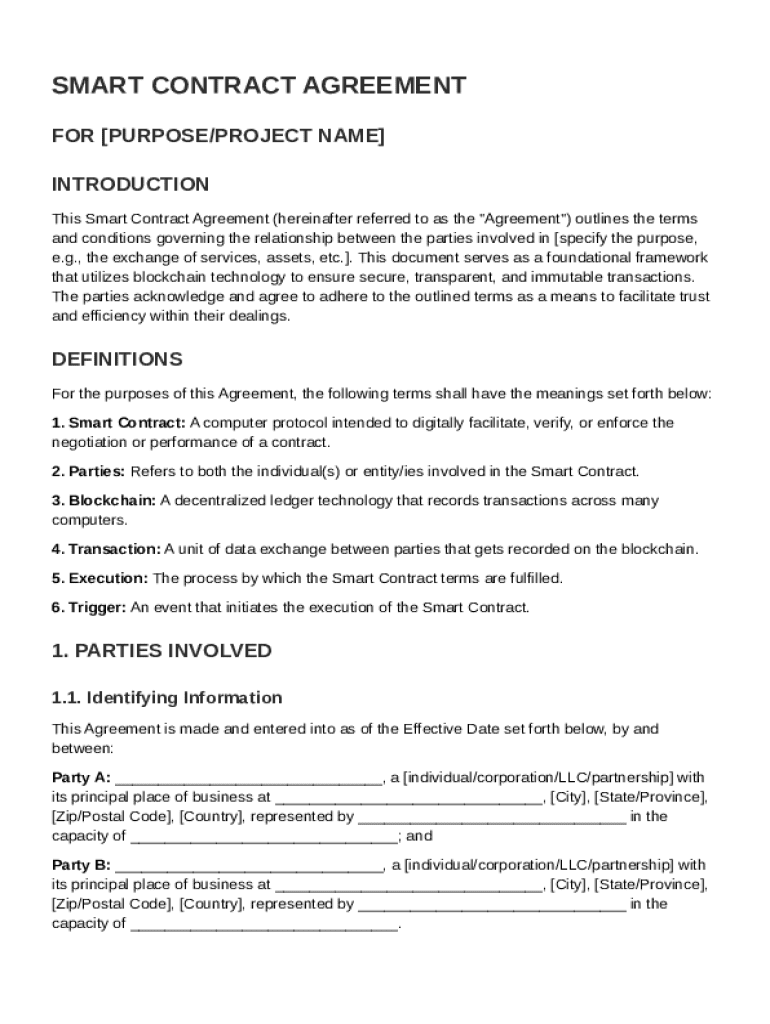







Definition and Meaning of Smart Contract Template
A Smart Contract Template is a predefined digital document that outlines the terms and conditions between two or more parties in a self-executing contract. These contracts are coded using blockchain technology, ensuring security and transparency in transactions. The template ensures consistency and reduces errors by standardizing key components such as roles, objectives, and deliverables. By automating execution once conditions are met, smart contracts eliminate the need for intermediaries, providing efficiency in business operations.
Specific elements of a Smart Contract Template include:
- Definitions: Clearly states key terms used throughout the contract.
- Parties involved: Identifies each party with specific roles and responsibilities.
- Objectives: Outlines the purpose and goals of the agreement.
- Scope of work: Details the specific work to be conducted under the contract.
- Execution triggers: Defines conditions under which the contract automatically executes.
Key Elements of the Smart Contract Template
The Smart Contract Template comprises several critical components that ensure it functions effectively. Each element of the contract is standard but customizable to fit different legal and business contexts.
- Compensation and Deliverables: Specifies the payment structures and expected outputs.
- Liability: Addresses responsibility for breaches and outlines dispute resolution procedures.
- Amendments and Termination: Covers how changes can be made and when the contract can be ended.
- Confidentiality: Focuses on data protection and non-disclosure of sensitive information.
These elements collectively form the backbone of a Smart Contract Template, ensuring that all pertinent legal and operational elements are addressed.
How to Use the Smart Contract Template
The utility of a Smart Contract Template is maximized when users understand how to suitably adapt it to their specific needs.
- Customization: Modify the template to include specific terms relevant to your agreement.
- Implementation: Deploy the customized contract on a blockchain platform.
- Monitoring: Track the contract's progress to ensure conditions are met for execution.
- Execution: Allow the contract to self-execute when pre-determined conditions are fulfilled.
Practical usage involves integrating the template within a blockchain environment compatible with the users' existing systems for real-time tracking and execution.
Steps to Complete the Smart Contract Template
Completing a Smart Contract Template requires precise steps to ensure legal and functional accuracy. This involves:
- Identifying the Participants: Firmly establish who the contract involves, including roles.
- Choosing Blockchain Platform: Select a blockchain for deployment like Ethereum.
- Drafting Terms: Input specific terms, including deadlines and delivery criteria.
- Testing: Pre-run the contract to catch and rectify errors.
- Deployment: Launch the contract on the blockchain for activation.
- Monitoring: Continuously oversee the contract for any required adjustments or breaches.
By adhering to these steps, users facilitate a streamlined contract process aligning with legal standards.
Legal Use of the Smart Contract Template
Smart Contract Templates serve a significant role in maintaining legal accountability across digital transactions. They adhere to the ESIGN Act for creating legally binding contracts over digital platforms.
- Regulatory Compliance: Each contract component complies with legal standards ensuring they are as enforceable as traditional contracts.
- Authentication: Utilizes blockchain for a verifiable and immutable record of the agreement.
- Security: Built-in cryptographic measures for data integrity during and after execution.
These aspects reinforce that Smart Contract Templates are not only practical but also legally sound tools for conducting business in the digital era.
Examples of Using the Smart Contract Template
Smart Contract Templates find application in numerous domains due to their flexibility and efficiency:
- Real Estate: Automating the sale process once payment installments are complete.
- Supply Chain: Enabling real-time tracking of goods and automatic release of payments upon delivery.
- Insurance: Processing claims automatically once specified criteria are verified by the system.
Each example showcases how diverse industries leverage smart contracts to streamline workflows and enhance transparency.
Who Typically Uses the Smart Contract Template
A variety of individuals and organizations benefit from using Smart Contract Templates. Some examples include:
- Small Businesses: Streamline operations without additional labor costs on contract management.
- Legal Departments: Reduce drafting time for recurring contracts.
- Tech Companies: Integrate the use of smart contracts for efficiency in service agreements.
By embracing these templates, organizations across industries enhance processes while reducing risks and costs associated with traditional contract management.


Software Compatibility
For practical use, it is essential that Smart Contract Templates are compatible with existing business software. Many templates are adapted to popular platforms like:
- QuickBooks: For synchronizing contract terms with accounting entries.
- Google Workspace: Facilitates collaboration and storage with seamless integration.
- Customized Blockchain Tools: Specific software can enhance the adaptability and functionality of smart contracts.
Compatibility with these systems ensures that Smart Contract Templates are practical and easily integrated into existing workflows.
Software Integration and Ecosystem
Smart Contract Templates are part of a wider digital ecosystem that includes integration with document management platforms like DocHub. This integration provides:
- Ease of Use: Users can import, modify, and store documents with no need for additional software.
- Security and Compliance: Smart contracts on platforms such as DocHub ensure data protection and meet legal standards.
- Collaborative Tools: Enhances real-time editing and document synchronization for team processes and external partners.
Such integration affirms the practical benefits of smart contracts, especially for business operations requiring frequent and secure digital documentation.




