
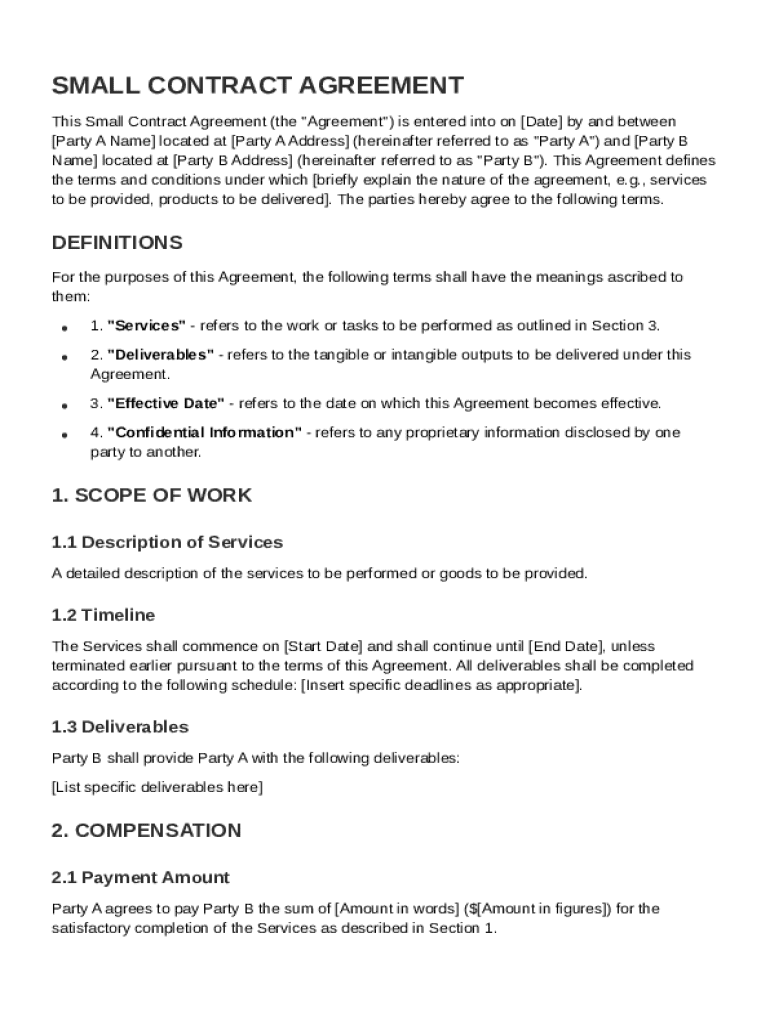







Definition and Meaning of the Small Contract Template
A Small Contract Template is a structured document used to establish terms and conditions between two parties, often referred to as Party A and Party B, for the provision of services or deliverables. This template typically includes several key sections: definitions, scope of work, compensation details, responsibilities, confidentiality commitments, termination rights, dispute resolution procedures, and miscellaneous provisions. Designed to be comprehensive yet concise, the template provides a clear framework that outlines the expectations and obligations of each party, emphasizing the independent contractor nature of the relationship. Amendments or assignments require written consent to ensure transparency and mutual agreement.
Key Elements of the Small Contract Template
The Small Contract Template encompasses several critical components essential for a sound contractual agreement:
- Definitions: Clarifies specific terms utilized within the contract to prevent ambiguity and ensure shared understanding.
- Scope of Work: Details the services or tasks that Party A will perform for Party B, including any specific deliverables and deadlines.
- Compensation Details: Outlines the payment terms, methods, and schedule, such as hourly rates, flat fees, or milestones, ensuring both parties understand financial obligations.
- Responsibilities: Specifies the duties of each party, including the expectations for service delivery, quality standards, and any requisite resources or support.
- Confidentiality Obligations: Protects sensitive information exchanged between the parties by detailing any non-disclosure requirements.
- Termination Rights: Describes the circumstances under which either party may terminate the contract, ensuring a fair and structured exit process if necessary.
- Dispute Resolution Procedures: Provides methods for resolving any disagreements that arise, such as mediation or arbitration, to avoid legal conflicts.
Steps to Complete the Small Contract Template
- Identify Parties: Clearly state the legal names and contact details of both parties involved in the contract.
- Define Scope and Deliverables: Articulate the specific services, tasks, or products to be delivered, including any relevant deadlines.
- Set Compensation Terms: Establish payment structure, including the amount, schedule, and method of payment.
- Outline Responsibilities: Enumerate the duties and responsibilities each party has regarding the performance of services.
- Include Confidentiality Clauses: Draft clauses to protect sensitive data and proprietary information.
- Determine Termination Conditions: Specify the terms under which the contract may be terminated, noting required notice periods and acceptable reasons.
- Add Dispute Resolution Methods: Include mechanisms for settlement, such as mandatory discussions, mediation, or binding arbitration.
Why Use a Small Contract Template
Utilizing a Small Contract Template offers multiple advantages:
- Clarity and Transparency: Establishes clear expectations for both parties, reducing the likelihood of misunderstandings.
- Legal Protection: Provides a formal document that can be referred to in the event of disputes, enhancing legal standing.
- Efficiency: Saves time in contract preparation by offering a structured approach and including all essential elements.
- Scalability: Suitable for various contract types and adaptable to unique requirements or modifications as needed.
Who Typically Uses the Small Contract Template
The Small Contract Template is commonly used by individuals and entities in various sectors:
- Freelancers and Independent Contractors: For creating clear agreements with clients about the services to be provided.
- Small Businesses: To formalize relationships with vendors, clients, and service providers.
- Startups: When outlining precise roles and responsibilities with new hires or collaborators.
- Consultants: For defining the scope and terms of consultancy services provided to different organizations.


Important Terms Related to Small Contract Template
Understanding specific terms is crucial when working with a Small Contract Template:
- Indemnification: A promise to compensate for any potential losses or damages claimed by the other party.
- Force Majeure: A clause that frees both parties from obligations due to unforeseen events beyond their control.
- Non-compete: Restricts one party from engaging in business activities that compete with the other party during and after the duration of the contract.
- Assignment: Transference of contract rights or obligations from one party to another, often requiring prior consent.
Legal Use of the Small Contract Template
When utilizing a Small Contract Template, legal considerations must be observed:
- Compliance with U.S. Law: Ensure the contract adheres to applicable state and federal laws.
- Signature Requirements: Obtain signatures from authorized representatives of both parties to make the contract legally binding.
- Modification and Amendments: Require amendments to be documented in writing and agreed upon by all parties involved, emphasizing consent and clarity.
State-Specific Rules for the Small Contract Template
Although the Small Contract Template provides a general framework, legal requirements and customary practices can vary by state:
- Jurisdiction-Specific Terms: Some states may have unique regulations relating to contract law, such as permissible termination conditions or requisite disclosures.
- Contractual Minimums: Certain jurisdictions may impose minimum requirements that must be met for a contract to be valid.
- Enforcement and Remedies: Variation in enforcement protocols and available legal remedies may differ state by state, affecting how disputes are resolved.
Each of these blocks provides comprehensive insights into the structure, usage, and significance of a Small Contract Template, addressing various aspects that are essential for creating, managing, and executing legally sound contracts.




