
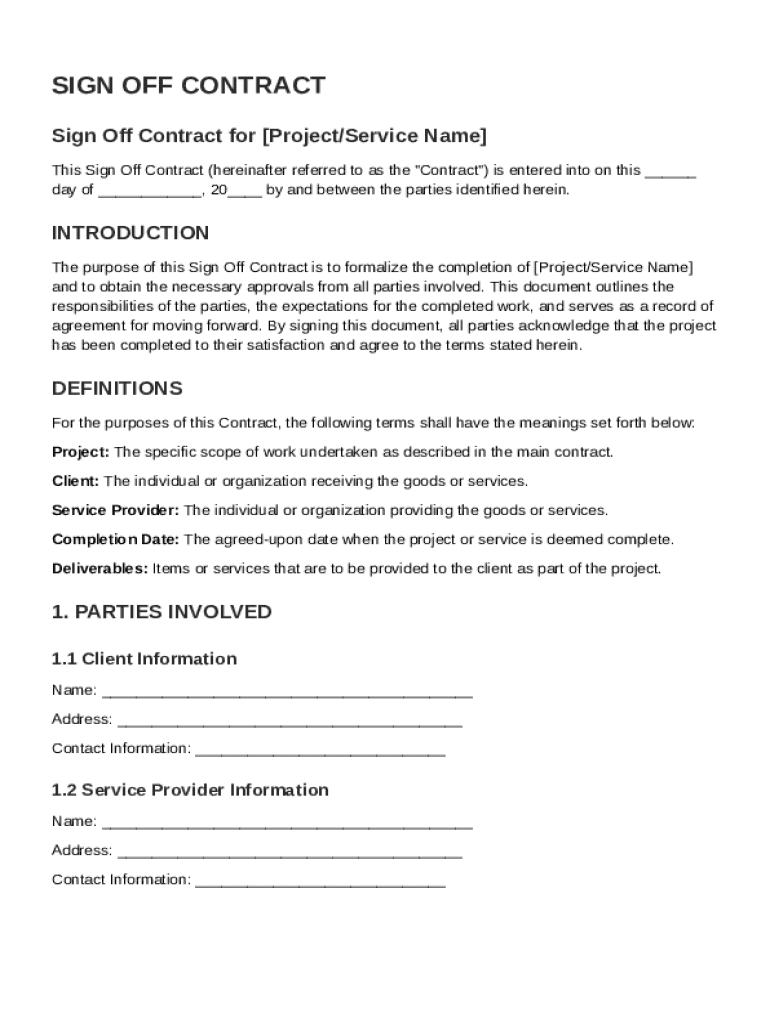







Definition and Importance of a Sign Off Contract Template
A Sign Off Contract Template is a formal document used to signify the completion of a project or service. It includes important details such as project definitions, responsibilities, expectations, and completion criteria. This template acts as a mutual acknowledgment between the client and the service provider, ensuring that the outcomes align with agreed terms. By using this document, all parties confirm their satisfaction with the final deliverables, which minimizes misunderstandings and protects against future disputes.
Key Elements of the Sign Off Contract Template
Understanding the components of the Sign Off Contract Template is crucial for effective usage:
- Project Details: Clearly outline the project scope, objectives, and deliverables.
- Completion Criteria: Define what constitutes the completion of the project or service.
- Approval Process: Include a step-by-step sign-off procedure for all parties involved.
- Payment Terms: Specify payment schedules, amounts, and methods of transaction.
- Additional Conditions: Cover confidentiality clauses, liability constraints, and any post-completion obligations.
Steps to Complete the Sign Off Contract Template
Completing a Sign Off Contract Template involves several meticulous steps:
- Identify the Project Scope: Clearly describe the boundaries of the project.
- Outline Responsibilities: Assign roles and responsibilities to each party.
- Define Completion Standards: Specify the measurable indicators for project completion.
- Secure Necessary Approvals: Obtain signatures from primary stakeholders.
- Finalize Financial Agreements: Confirm payment details and schedules.
- Address Additional Provisions: Incorporate any additional legal or confidentiality clauses.
Practical Scenarios
Various real-world scenarios necessitate the use of a Sign Off Contract Template, such as:
- IT Service Completion: Finalizing a software development project.
- Construction Projects: Confirming the completion of a building phase.
- Consultation Services: Acknowledging the culmination of consultancy work.
Legal Use of the Sign Off Contract Template
The template serves as a legally binding document that secures the interests of all parties involved. It adheres to legal standards and practices under the ESIGN Act, ensuring that electronic signatures used within are valid and enforceable. This legal framework offers protection and clarity, preventing potential disputes and ensuring compliance with statutory requirements.
Who Typically Uses the Sign Off Contract Template
The template finds applicability across diverse industries and roles:
- Project Managers: Oversee completion and client satisfaction.
- Service Providers: Document and confirm service fulfillment.
- Clients: Acknowledge receipt and approval of deliverables.
- Legal Teams: Ensure compliance and mitigate risks.

Why You Should Use a Sign Off Contract Template
Using a Sign Off Contract Template provides numerous benefits:
- Clarifies Expectations: Ensures both parties align on project goals and outcomes.
- Enhances Communication: Provides a structured framework for discussions.
- Reduces Disputes: Minimizes misunderstandings by documenting agreed details.
- Facilitates Payment Processes: Clearly outlines financial arrangements.
- Provides Legal Assurance: Acts as a legally binding agreement, offering security for both parties.
Digital vs. Paper Version
The Sign Off Contract Template can be utilized in both digital and paper formats, each with its respective advantages:
- Digital Version: Offers ease of access, quick editing, and secure electronic signatures.
- Paper Version: Suitable for environments preferring physical documentation or where digital access is limited.
Software Compatibility
DocHub ensures seamless integration with cloud services such as Google Workspace, facilitating easy import, edit, and export functions for digital templates. Its compatibility with various file types enhances versatility, making it easier to incorporate existing project documentation into the template.
Important Terms Related to the Sign Off Contract Template
Understanding specific terminologies is vital when dealing with Sign Off Contract Templates:
- Completion Criteria: Specific requirements that determine if a project is completed satisfactorily.
- Confidentiality Clause: Legal requirement to keep specific information private.
- Liability Clause: Specifies the responsibilities and limits of financial accountability.
- Electronic Signature: Digital form of signature compliant with legal standards under the ESIGN Act.
State-Specific Rules for the Sign Off Contract Template
While the template aims for a universal application, certain states in the U.S. may have specific requirements or restrictions related to contract enforceability or electronic transactions. Legal consultation is advisable to ensure compliance with local statutes and to adapt the template accordingly.
State-by-State Differences
For instance, variations might occur in:
- Notarization Requirements: Some states may require notarized signatures.
- Specific Clauses: Legal terms may differ based on local business practices.
- Enforceability: Different states might have unique qualifications for what renders a contract enforceable.
By adhering to these guidelines, users can effectively utilize the Sign Off Contract Template to properly signify project accomplishments, manage stakeholder relations, and ensure legal protection across various business sectors.




