
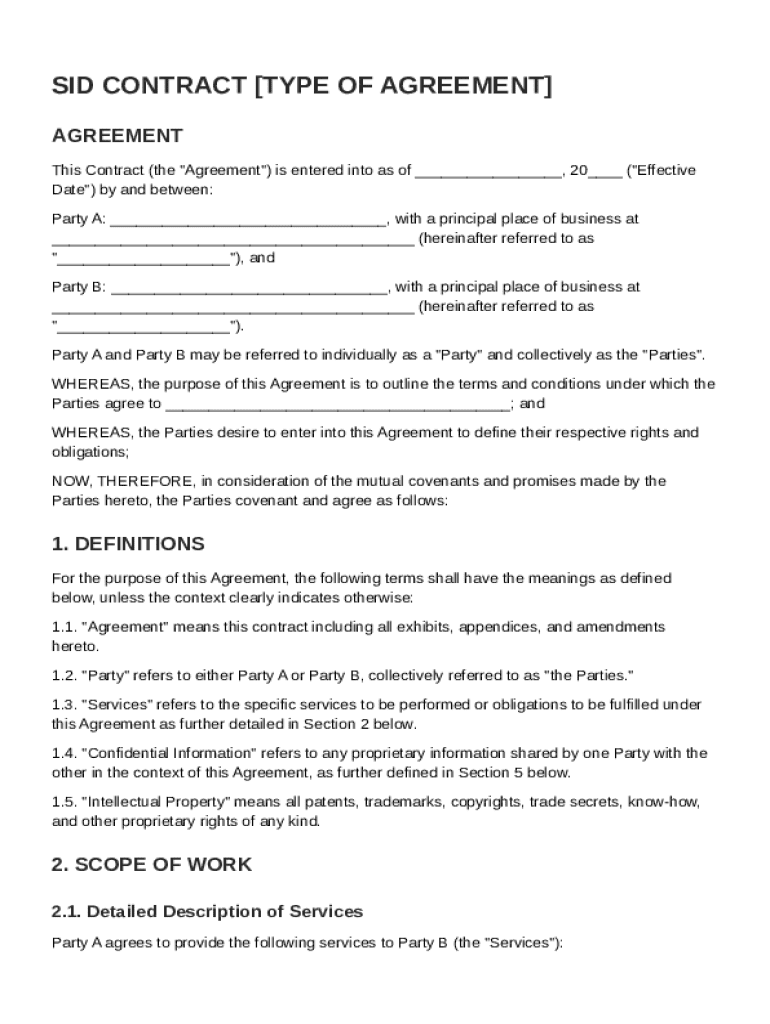







Definition and Meaning of the Sid Contract Template
The Sid Contract Template is a foundational document designed to outline the terms and conditions for agreements between two parties, particularly in a business or service context. This template serves as a structured framework to ensure that all critical aspects of a contract are addressed comprehensively. Within this template, users can expect sections covering essential elements such as the scope of work, payment terms, service timelines, and confidentiality clauses. By utilizing a standardized format, the Sid Contract Template helps users clarify roles and responsibilities, reducing the potential for misunderstandings or disputes.
How to Utilize the Sid Contract Template
Utilizing the Sid Contract Template involves several structured steps to ensure all necessary details are captured effectively. Before filling out the specific sections, gather all relevant information about the parties involved and the nature of the agreement:
-
Review the Template Sections:
- Familiarize yourself with the different sections included in the template, such as the introduction, scope of work, and payment terms.
-
Customize for Specific Needs:
- Tailor the template’s general provisions to fit the specific requirements of the agreement, adjusting legal terms and conditions as necessary.
-
Complete Each Section:
- Fill out each section thoroughly, ensuring that all the details are clear and precise.
By following these steps, users can ensure that the template effectively captures all necessary elements of their agreement, facilitating clear communication and mutual understanding between the parties involved.
Steps to Complete the Sid Contract Template
Completing the Sid Contract Template requires attention to detail across multiple sections. Here is a detailed guide to ensure accuracy:
-
Identify Parties Involved:
- Clearly state the names and contact information of both parties.
-
Define the Scope of Work:
- Elaborate on the specific services or deliverables, including timelines and milestones.
-
Specify Payment Details:
- Outline terms of compensation, including amounts, schedules, and methods of payment.
-
Detail Expiration and Termination Clauses:
- Define the duration of the contract and any conditions for early termination.
-
Include Confidentiality Provisions:
- State the confidentiality obligations to protect sensitive information and intellectual property.
-
Add Miscellaneous Provisions:
- Address any additional terms such as amendments, dispute resolution, and governing law.
Following these steps ensures that all critical elements of the contract are addressed, laying a firm foundation for a legally sound agreement.
Key Elements of the Sid Contract Template
Key elements of the Sid Contract Template consist of several distinct sections, each serving a specific function in the overall agreement. These include:
- Definitions: Clarifies the terminology used within the contract to prevent ambiguity.
- Scope of Work: Details the specific tasks, deliverables, and responsibilities of each party.
- Compensation: Specifies how and when payments will be made.
- Term and Termination: Describes the duration of the contract and any termination conditions.
- Confidentiality: Provisions to ensure that private information shared is protected.
- Intellectual Property: Addresses the ownership and rights concerning any intellectual property involved.
- Governing Law: Defines the jurisdiction under which the contract is governed for legal purposes.
Each section plays a significant role in protecting the interests of both parties, ensuring clarity and enforceability.
Legal Use of the Sid Contract Template
The Sid Contract Template serves as a versatile tool for creating legally binding agreements that are recognized within the legal framework of the U.S. It is important to customize the template to meet any specific legal requirements relevant to the respective state laws that might affect the contract.
Users must ensure that all added clauses are clear and that both parties have a mutual understanding of their obligations and rights. A well-prepared contract may prevent legal disputes by clearly defining responsibilities, compensation, and other terms, which results in a mutually agreed document enforceable in court if necessary.
Who Typically Uses the Sid Contract Template
The Sid Contract Template is widely used by various entities and individuals who need to formalize agreements. This includes:
- Businesses: Small to midsize companies looking to define terms with clients or vendors.
- Freelancers: Independent contractors who require a structured format to outline their services and payment terms with clients.
- Agencies: Marketing or creative agencies formalizing service agreements with clients.
- Consultants: Professionals providing advice or expertise on a project basis.
Each of these users benefits from the template’s ability to standardize contract terms, promote transparency, and reduce the risk of disputes.


Examples of Using the Sid Contract Template
Consider these practical scenarios where the Sid Contract Template plays a crucial role:
-
Freelance Writer Agreement:
- A freelance writer may use the Sid Contract Template to outline terms for content creation with a publishing company, detailing deliverables and payment terms.
-
Vendor Services Contract:
- A company might use the template to formalize an agreement with a vendor supplying regular materials, clearly defining delivery schedules and pricing.
-
Consulting Services Contract:
- Consultants can customize the template to establish their engagement terms with clients, including the scope of consultation services and applicable fees.
These examples illustrate how the template aids in creating agreements that are clear and legally sound.
State-Specific Rules for the Sid Contract Template
While the Sid Contract Template provides a general framework for a contract, it is vital to consider state-specific regulations that could impact its enforceability. Different states have varying laws concerning contractual agreements, especially related to elements like employment terms, non-compete clauses, and liability.
-
Review State Contract Laws:
- Each party should consult local regulations to ensure compliance with state-specific requirements.
-
Adjust for State Mandates:
- Modify terms to reflect any state-mandated clauses, such as notice periods or dispute resolution processes.
-
Consider Legal Advice:
- Engaging a legal professional knowledgeable in state law can help tailor the template for maximum compliance and protection.
By aligning the template with state-specific regulations, users achieve a legally compliant agreement that can stand up in a court of law if necessary.




