






Definition & Meaning
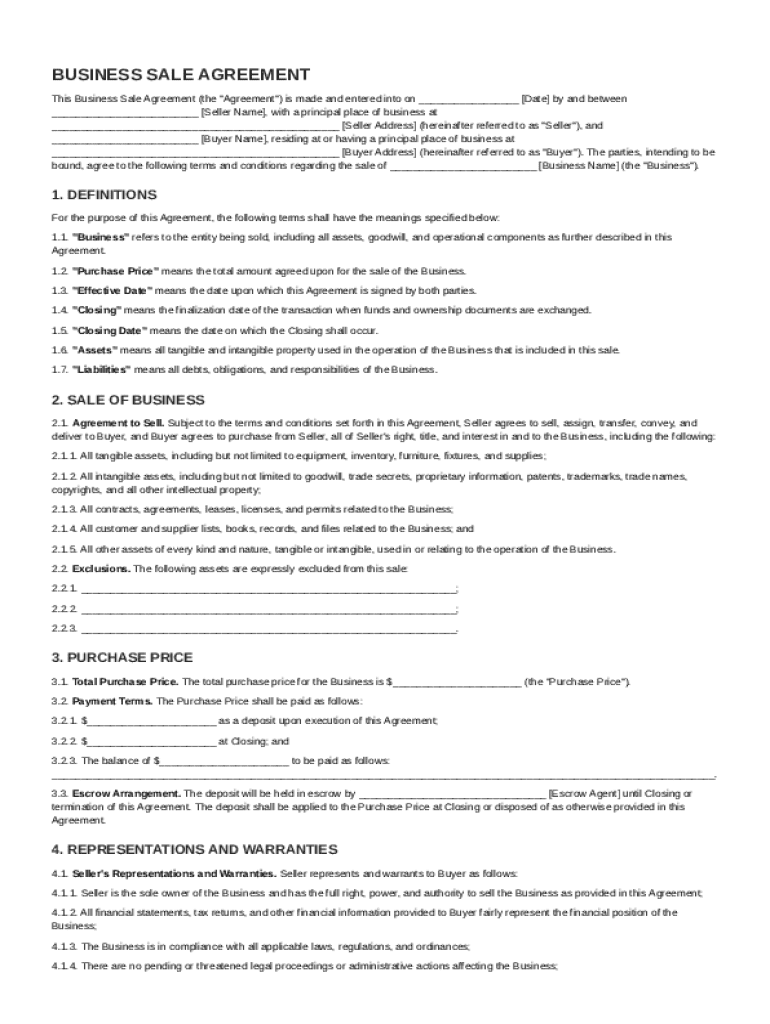
The "Sell Business Contract Template" is a structured legal document designed to formalize the sale of a business. It encompasses the terms and conditions agreed upon by the seller and the buyer, ensuring both parties have a clear understanding of the transaction. The contract outlines essential elements such as the sale of assets, liabilities, purchase price, and representations from both parties. By providing a definitive framework, it minimizes disputes and miscommunications during the business transfer process. This template serves as a crucial instrument in protecting the interests of both parties, offering a reference point for resolving potential disagreements that may arise.
Key Elements of the Sell Business Contract Template
This template comprises several crucial components, each playing a vital role in facilitating a successful business sale.
- Sale of Assets: Specifies the tangible and intangible assets included in the sale, like real estate, inventory, intellectual property, and customer lists.
- Purchase Price: Details the agreed-upon financial amount the buyer will pay and any payment terms, such as installments or financing arrangements.
- Representations and Warranties: Enumerates assurances provided by both parties regarding the business's condition and the seller's legal authority to execute the sale.
- Conditions for Closing: Lists prerequisites that must be satisfied before finalizing the sale, such as securing necessary consents from third parties.
- Indemnification Clauses: Outlines responsibilities for compensating the other party for losses arising from breaches of the contract.
These elements must be customized to fit the specific circumstances of each business transaction.
Steps to Complete the Sell Business Contract Template
Completing the Sell Business Contract Template can be achieved through a well-structured approach:
- Review the Template: Understand each section and its significance to the agreement.
- Gather Required Information: Collect all relevant data such as business assets, financial statements, and legal documents.
- Fill in the Details: Enter specific information related to the sale, including business details, parties involved, and purchase price.
- Customize the Agreement: Tailor clauses to address unique aspects of the transaction, such as employee transitions and non-compete agreements.
- Legal Review: Consult with a legal professional to ensure the contract complies with local laws and accurately reflects the intent of both parties.
- Sign the Document: Both parties should execute the document officially, often in the presence of a notary public for additional validation.
Legal Use of the Sell Business Contract Template
The legal utility of this template lies in its ability to create a formal, binding agreement between seller and buyer. It adheres to legal standards and is designed to withstand scrutiny in a court of law.
- ESIGN Act Compliance: The template supports electronic signatures, which are legally binding and facilitate quicker processing.
- State-Specific Legal Requirements: Incorporates local legal norms to ensure compliance across different jurisdictions within the U.S.
- Dispute Resolution Mechanisms: Offers mediation or arbitration options to resolve conflicts outside of court, saving time and resources.
This template provides a legal safeguard for both parties, ensuring that the transaction adheres to applicable laws and regulations.
Important Terms Related to Sell Business Contract Template
Familiarity with the terminologies used in the Sell Business Contract Template is indispensable for understanding and negotiating terms effectively.
- Earnout: A financial agreement where the seller may receive additional payments based on the future performance of the business.
- Non-Compete Clause: Restricts the seller from starting or joining a competing business within a specified period and geographical area.
- Due Diligence: A thorough investigation and analysis conducted by the buyer to verify the details of the business being sold.
- Escrow: A legal arrangement where a third party temporarily holds funds or property until specified conditions are met.
- Closing Date: The agreed date when the transaction is completed, and ownership is officially transferred.
Understanding these terms is critical for ensuring clarity and precision in the contractual arrangement.
Who Typically Uses the Sell Business Contract Template
The Sell Business Contract Template is most commonly utilized by:
- Business Owners: Looking to sell their business, whether as part of retirement planning or a strategic exit strategy.
- Potential Buyers: Individuals or entities seeking to acquire a new business venture.
- Legal and Financial Advisors: Supporting clients through the transaction process by offering expertise and ensuring compliance with all relevant laws.
- Brokers: Facilitating the sale by connecting buyers and sellers and assisting in negotiating terms.
Each of these parties relies on the template to streamline the selling process, ensuring that all essential terms are thoroughly addressed.


Examples of Using the Sell Business Contract Template
Real-world scenarios illustrate the versatility of the Sell Business Contract Template:
- Case Study 1: A family-owned restaurant chain uses the template to sell its city locations to a national chain, ensuring a fair transfer of assets and operations while maintaining existing employee roles.
- Case Study 2: An entrepreneur sells a growing e-commerce business, utilizing the template to include contingencies for inventory handover and technical support in the transition period.
- Case Study 3: A technology startup employs the template to structure its acquisition, aligning specified deliverables related to intellectual property rights and ongoing project commitments.
Each example highlights the robust adaptability of the template in various industries and transaction complexities.
State-Specific Rules for the Sell Business Contract Template
Different U.S. states may impose additional requirements or modifications to the Sell Business Contract Template:
- California: May require special considerations for employee continuation and compliance with state-specific labor laws during the business transfer.
- New York: Often necessitates a particular focus on tax implications and regulatory compliance related to the sale of personal property.
- Texas: Requires clarity on liens and encumbrances that might affect property transfers associated with the business assets.
It is crucial to consult local legal experts to adapt the template to state-specific legal nuances, ensuring comprehensive compliance across jurisdictions.