
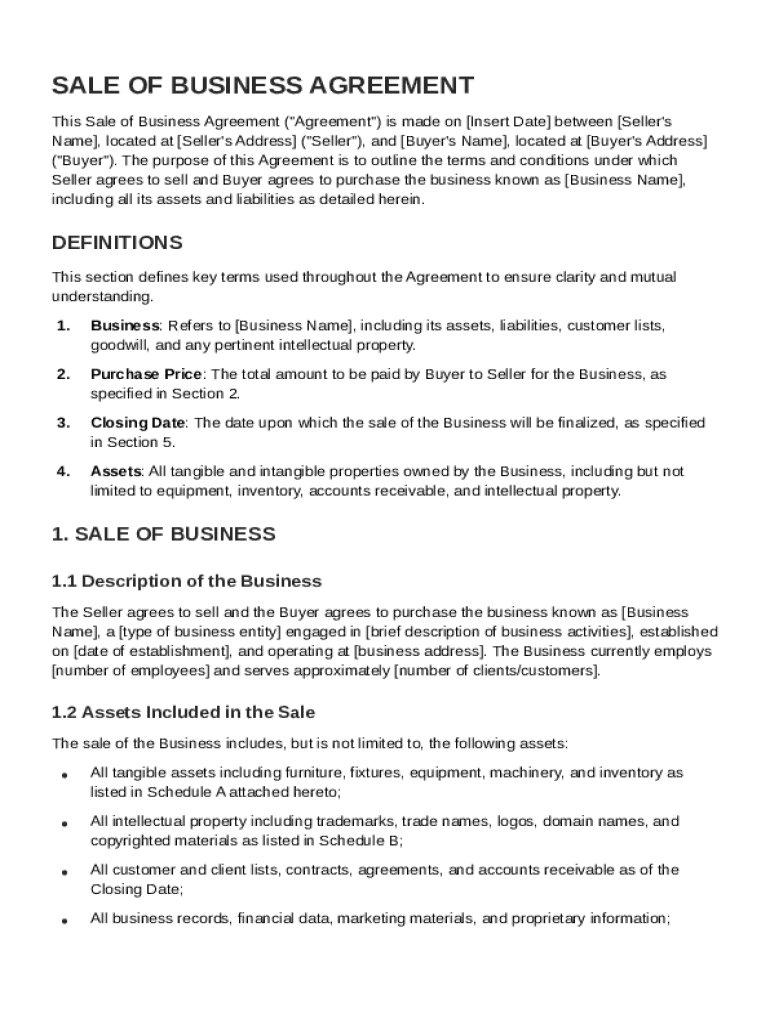







Definition & Meaning
The Sale of Business Contract Template is a legally binding document that outlines the terms and conditions involved in selling a business from the seller to the buyer. It serves as a comprehensive agreement that details critical aspects such as the purchase price, payment terms, and any conditions that need to be met before finalizing the sale. By providing a clear framework, this template ensures both parties understand their obligations and facilitates a smoother transaction.
How to Use the Sale Of Business Contract Template
To effectively use the Sale of Business Contract Template, begin by identifying all parties involved in the transaction—typically the buyer and the seller. Fill in essential details, including business names, addresses, and contact information. Next, meticulously outline the terms of sale, including the purchase price and payment schedule. It's also crucial to incorporate representations and warranties to safeguard the interests of both parties. Ensure both sides review the agreement, make any necessary revisions, and sign it to make it legally binding.
Steps to Complete the Template
- Gather relevant information: Business details, personal contacts, etc.
- Fill in basic information: Parties' names, business details.
- Define transaction terms: Purchase price, payment terms.
- Include representations and warranties: Assurances from both buyer and seller.
- Review for accuracy: Ensure all details are correct.
- Both parties sign the document: Finalize and execute the contract.
Key Elements of the Sale Of Business Contract Template
The template is designed to cover all essential elements needed for the sale of a business. Key components include:
- Purchase Price and Payment Terms: Clearly states how much the business will be sold for and how this payment will be made.
- Representations and Warranties: Includes assurances about the state of the business regarding assets, liabilities, and legal compliance.
- Conditions Precedent: Conditions that must be fulfilled for the transaction to proceed.
- Post-Closing Obligations: Obligations such as confidentiality and non-compete clauses that extend beyond the sale.
Who Typically Uses the Sale Of Business Contract Template
Small business owners, entrepreneurs, and business brokers commonly use the Sale of Business Contract Template. It is especially valuable for those engaged in transactions involving small to medium-sized enterprises (SMEs) as it streamlines the process and mitigates potential legal disputes. Entrepreneurs looking to divest or expand their business portfolio also find the template indispensable for ensuring that all relevant details are covered.


Important Terms Related to Sale Of Business Contract Template
Several crucial terms are frequently used within the Sale of Business Contract Template:
- Assets: Tangible and intangible items owned by the business.
- Liabilities: Existing debts or obligations of the business.
- Confidentiality Clause: Provisions preventing the disclosure of business-sensitive information.
- Non-Compete Clause: Agreement restricting the seller's ability to start or work in competing businesses for a specific period.
Legal Use of the Sale Of Business Contract Template
In the United States, the Sale of Business Contract Template must comply with state-specific regulations and federal laws, such as the Uniform Commercial Code (UCC) where applicable. It should be customized to meet jurisdictional requirements. Legal professionals often assist in tailoring the contract to ensure it adheres to these laws and effectively reduces the risk of disputes. It's also advisable to include dispute resolution mechanisms, such as arbitration or mediation, to handle any disagreements that may arise.
Examples of Using the Sale Of Business Contract Template
Real-world scenarios illustrate the utility of the Sale of Business Contract Template:
- Retail Business Sale: A small retail store owner uses the template to sell their store, including stock, equipment, and customer lists, while outlining specific payment plans.
- Franchise Sale: A franchise owner creates a contract to ensure a smooth transition of ownership, detailing the transfer of franchise rights and operational protocols.
- Tech Startup Acquisition: A growing tech company uses the template to negotiate a full buyout, covering intellectual property rights and employee contracts as part of the sale.
Versions or Alternatives to the Sale Of Business Contract Template
Several versions or alternatives exist for different scenarios:
- Asset Purchase Agreements: Focuses specifically on the sale of business assets rather than the entire entity.
- Stock Purchase Agreements: Used when transferring shares of a company instead of its operations.
These alternatives ensure that the unique nature of each business sale is adequately addressed, protecting the interests of involved parties.




