







Definition and Meaning
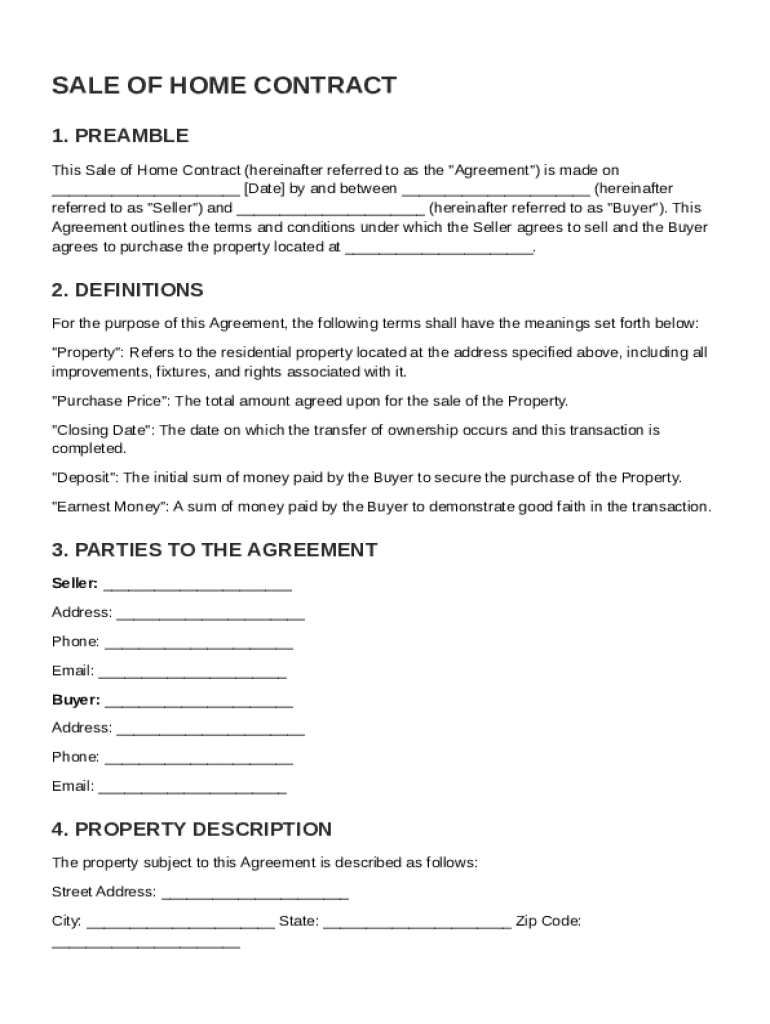
The "Sale for Home Contract Template" is a legal document used to outline the terms and conditions pertaining to the sale of a residential property between a seller and a buyer. This template encompasses crucial elements such as definitions of key terms, comprehensive property details, and the agreed purchase price. It also lays out the payment terms, any contingencies related to financing and inspections, the process for closing, legally required disclosures, remedies for default on both sides, and a miscellaneous provisions section. This widely-used template ensures alignment and understanding between both parties involved in the transaction.
Steps to Complete the Sale for Home Contract Template
-
Fill in Basic Information:
- Enter the names and addresses of both the buyer and the seller.
- Provide a detailed description of the property being sold, including any identifying information like the address or parcel number.
-
Specify Financial Terms:
- Clearly state the agreed purchase price.
- Outline the payment terms, which could include initial deposits and the schedule for subsequent payments.
-
Incorporate Contingencies:
- Include any contingencies, such as the requirement for a satisfactory property inspection or the need for financing approval.
- Detail the steps to be taken if any contingencies aren't met.
-
Determine Closing Procedures:
- Specify the closing date when the transaction will be finalized.
- Outline the process for transferring ownership, including any necessary documentation and the role of a closing agent.
-
Include Legal Disclosures:
- Ensure the inclusion of all legally required disclosures, such as lead-based paint warnings for older homes.
- Verify acknowledgment of these disclosures by both parties.
-
Review Default and Remedies Clauses:
- Describe the actions that constitute default by either party.
- Specify the remedies available if a default occurs.
-
Execute the Contract with Signatures:
- Both parties must sign the contract, affirming their agreement to its terms and conditions.
- Consider the inclusion of witness signatures or notarization, especially if required by state laws.
Key Elements of the Sale for Home Contract Template
- Definitions of Essential Terms: Clearly defining terms within the contract helps prevent misunderstandings and ensures both parties have the same interpretation.
- Property Details: Includes an accurate and comprehensive description of the property, ensuring transparency about what is being sold.
- Purchase Price and Payment Terms: Precise information on the agreed sale price and details of how and when payments will be made.
- Contingencies and Requirements: Specific conditions to be met before the sale, such as passing inspections or securing financing.
- Closing Process Details: Outlines what will occur at closing, including the necessary documents and any fees to be paid.
- Default and Remedies: Provides a framework for addressing breaches of the contract and the potential consequences.
Important Terms Related to Sale for Home Contract Template
- Contingency: A condition that must be met for the contract to be binding. Common contingencies include property inspections and financing approvals.
- Closing Date: The agreed-upon date when the property transaction is officially completed.
- Disclosure: Legal notification concerning potential issues with the property, such as environmental hazards or zoning restrictions.
- Default: The failure to fulfill a contractual obligation, which could lead to termination or penalties as outlined in the contract.
- Earnest Money: A deposit made to demonstrate the buyer's seriousness in purchasing the property, often forming part of the final payment.
State-Specific Rules for the Sale for Home Contract Template
Real estate transactions in the United States are subject to varying regulations depending on the state.
- Disclosure Requirements: States like California have stringent laws requiring sellers to disclose specific conditions about the property.
- Title and Ownership Protocols: Each state may have different processes for transferring the title and verifying ownership.
- Required Inspections: Some states, such as Florida, may mandate specific inspections, like termite or mold checks.
- Closing Procedures: States can dictate specific processes for how and where closings are conducted, including the use of escrow services.
Legal Use of the Sale for Home Contract Template
- Adheres to Legal Standards: Ensures compliance with the ESIGN Act, allowing electronic signatures to be as valid as handwritten ones.
- Binding Agreement: Once signed, this template serves as a binding legal document enforceable in a court of law.
- Protection for Both Parties: Provides legal protections for both buyers and sellers through clear stipulations and remedies.
Examples of Using the Sale for Home Contract Template
- Scenario 1: A first-time homebuyer utilizes the template to negotiate with a seller, including contingencies for financing and home inspection.
- Scenario 2: A real estate investor uses the form to quickly close on a property in a competitive market, streamlining necessary contractual obligations.
- Scenario 3: A homeowner looking to sell independently without a realtor employs the form to ensure compliance with state regulations and protect against liability.
Versions or Alternatives to the Sale for Home Contract Template
- Standardized State Templates: Some states offer specific contract forms that accommodate local legal requirements.
- Digital vs. Paper Forms: Digital contracts often provide the convenience of electronic signatures and easier distribution.
- Realtor-Specific Forms: Often include additional clauses that cater to professional real estate transactions facilitated by agents or brokers.




