
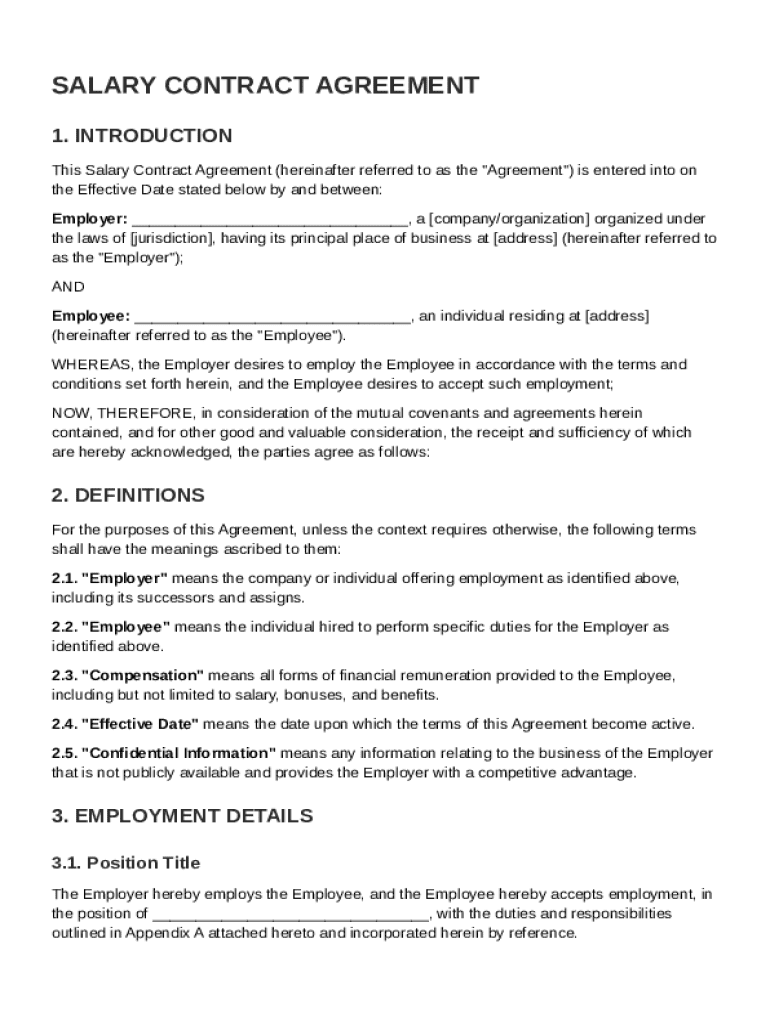







Definition & Meaning
A salary contract, also known as a Salary Contract Template, is a comprehensive legal document that outlines the terms of employment between an employer and an employee. This document formalizes the employment relationship by specifying the obligations, rights, and responsibilities of both parties. It typically includes sections on compensation, employment terms, confidentiality obligations, and termination conditions. Understanding these elements ensures that both parties have a clear mutual understanding of expectations, reducing potential disputes.
Key Elements of the Salary Contract Template
This template includes several crucial components that are essential for clear communication of the employment relationship. These elements often encompass:
- Employment Details: Specify the job title, duties, and responsibilities to ensure alignment on the role’s expectations.
- Compensation: Clearly outline the salary, bonuses, and any additional benefits provided to the employee.
- Confidentiality Obligations: Define the scope of information protected and the duration of confidentiality required.
- Termination Conditions: Include procedures and conditions for ending the employment, such as notice periods and grounds for dismissal.
- Governing Law: State the legal jurisdiction that will govern any disputes arising from the contract.
Steps to Complete the Salary Contract Template
Completing a salary contract template involves several key steps to ensure all relevant information is accurately captured:
- Gather Personal Information: Collect detailed personal information of the employer and employee, including names, addresses, and contact details.
- Define Employment Terms: Specify the job title, employment duration, and start date.
- Detail Compensation and Benefits: Clearly outline the salary, any additional benefits, bonuses, and commissions.
- List Job Responsibilities: Provide a comprehensive list of duties and responsibilities associated with the position.
- Include Confidentiality Clauses: Ensure sections related to confidentiality are clear and legally enforceable.
- Review and Sign: Both parties should thoroughly review the document for accuracy before signing.
Who Typically Uses the Salary Contract Template
Salary contract templates are primarily used by employers who are formalizing employment agreements with their employees. This includes:
- Small Businesses and Corporations: Employers from various industries use these contracts to clearly define employment relationships.
- Human Resources Professionals: HR departments utilize these templates to standardize the hiring process and mitigate risk.
- Freelancers and Independent Contractors: Professionals seeking to formalize pay structures and terms with their clients may also use these templates.


Important Terms Related to Salary Contract Template
Understanding the terminology within a salary contract is essential for both employers and employees. Key terms often include:
- Probation Period: A trial phase during which employment can be terminated without full ramifications.
- Severance: Compensation paid to an employee upon termination under certain conditions.
- Non-Compete Clause: A clause preventing an employee from engaging in competing businesses post-employment.
- Amendment Clause: The section detailing how changes to the contract may be made.
Legal Use of the Salary Contract Template
Within the United States, salary contracts must comply with federal and state labor laws to be legally binding. This includes adhering to:
- Minimum Wage Laws: Ensuring compensation meets federal and state wage minimums.
- Anti-Discrimination Laws: The contract must not violate laws protecting employees from discrimination.
- Employment-at-Will Doctrine: In many U.S. states, employment can be terminated by either party at any time, under this doctrine.
State-Specific Rules for the Salary Contract Template
While federal labor laws provide a baseline, states have their own specific regulations that might affect salary contracts:
- California: Prohibits non-compete clauses in most employment contracts.
- Texas: Requires a written agreement for certain employment terms like commissions or bonuses.
- New York: Has specific notice requirements for termination periods.
Digital vs. Paper Version
Salary contracts can be executed digitally or on paper, each method having its own advantages:
- Digital Versions: Convenient for remote executions, with easy storage and modification advantages. These can often be signed electronically, with signatures being legally binding.
- Paper Versions: Preferred in environments where digital literacy is low or where physical records are mandatory for compliance.
Understanding these distinctions enables both parties to choose the format that best suits their operational needs.




