






Definition and Meaning
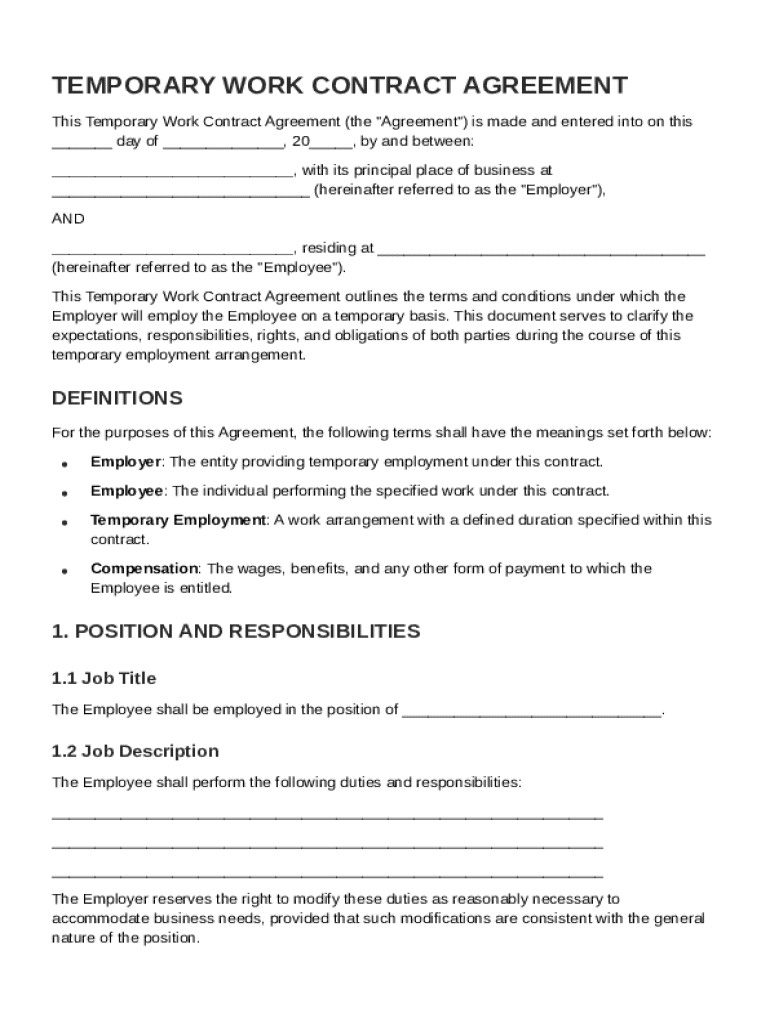
A Temporary Work Contract Template is a formal document used to outline the terms and conditions of temporary employment between an employer and an employee. This template serves to set clear expectations for both parties, including job responsibilities, compensation details, work schedule, and termination conditions. The agreement plays a crucial role in ensuring that both the employer and the employee understand their rights and obligations during the course of temporary employment. It is a legal tool that helps prevent disputes by providing a written record of the agreed-upon terms.
Key Components of the Definition
- Job Responsibilities: Clearly outlines the duties and tasks that the employee is expected to perform during their temporary employment period.
- Compensation Details: Specifies the salary or wage, along with any additional benefits that the employee is entitled to.
- Work Schedule: Details the working hours, including start and end times, as well as any breaks or time off.
- Termination Conditions: Defines the circumstances under which the contract may be terminated by either party, including notice periods and procedures.
How to Use the Temporary Work Contract Template
The Temporary Work Contract Template is designed to be user-friendly, allowing employers to easily adapt the document to fit their specific needs. Here’s a step-by-step guide on how to effectively use the template.
- Download the Template: Obtain a copy of the template from a reliable source, ensuring it is up-to-date with current legal standards.
- Customize the Document: Fill in the necessary details, such as the company name, employee details, position, and job responsibilities.
- Review Key Sections: Pay particular attention to important sections such as compensation, confidentiality agreements, and termination clauses.
- Seek Legal Advice: If unsure about any section, consult with a legal professional to ensure accuracy and compliance with state laws.
- Finalize and Sign: Once completed, both the employer and employee should review the document thoroughly before signing. This final step formalizes the agreement.
Steps to Complete the Temporary Work Contract Template
Filling out the Temporary Work Contract Template involves several essential steps to ensure that all necessary information is captured accurately.
- Insert Basic Information: Begin by entering the names and contact details of both the employer and the employee.
- Define Job Role and Responsibilities: Clearly list the job title and detailed responsibilities expected from the employee.
- Detail Compensation and Benefits: Specify the salary, any bonuses, health insurance, or other benefits provided.
- Outline Working Hours: Include specific details about working hours and any flexibility allowed.
- Incorporate Termination Clauses: Clearly state the conditions under which the contract may be terminated by either party.
Additional Considerations
- Confidentiality and Non-Disclosure: Include clauses that protect sensitive information about the company.
- Arbitration and Dispute Resolution: Define the process for resolving any disputes that arise during the employment period.
- Significance of Accurate Information: Ensure all information provided is true and accurate to avoid legal complications.
Legal Use of the Temporary Work Contract Template
The Temporary Work Contract Template must comply with legal standards to be enforceable. It serves not only as a guide but also as a legal document, ensuring both parties are protected under the law.
Legal Compliance
- State-Specific Regulations: Adapt the contract template to meet specific legal requirements of the state in which it is used.
- Enforceability: Ensure the contract is clear, comprehensive, and signed by both parties to be legally binding.
- Regular Updates: Keep the template current with changes in employment law and regulations to maintain compliance.
Key Elements of the Temporary Work Contract Template
Understanding the key elements of the Temporary Work Contract Template is essential in drafting a thorough and binding agreement.
Principal Elements to Include
- Employee and Employer Identification: Basic details of both parties involved.
- Job Description: A detailed overview of job responsibilities and expectations.
- Compensation and Benefits: Outline of financial compensation and any additional benefits provided.
- Duration of Employment: Clearly defined start and end dates of the temporary employment.
- Termination Conditions: Outline of circumstances and procedures for ending the contract.
Who Typically Uses the Temporary Work Contract Template
Temporary work contracts are commonly used by various types of businesses and organizations that need to employ workers on a short-term basis.


Common Users of the Template
- Seasonal Businesses: Companies that experience fluctuations in work volume during certain times of the year.
- Project-Based Companies: Organizations that hire workers for specific projects or assignments.
- Startups: New businesses that may not have the resources for long-term employment commitments.
- Event Management Firms: Companies that require additional staff for specific events or functions.

State-Specific Rules for the Temporary Work Contract Template
State regulations can significantly influence the content and enforcement of temporary work contracts. It is crucial to consider these specific rules when drafting a contract.
Examples of State Variations
- Minimum Wage Requirements: States have different minimum wage laws that must be reflected in the compensation section.
- Working Hours and Overtime: Regulations regarding overtime pay and maximum working hours vary from state to state.
- Termination Notice Periods: Some states have specific requirements for termination notice periods that must be adhered to.
Examples of Using the Temporary Work Contract Template
The Temporary Work Contract Template can be applied in various real-world scenarios, showcasing its flexibility and utility.
Practical Applications
- Retail Stores during Holiday Seasons: Hiring additional staff to handle increased customer volume.
- Construction Projects: Employing specialized skill sets for the duration of a particular project phase.
- Temporary Replacements: Filling in for staff on leave, ensuring continuity of operations.
- Consultancy Firms: Engaging experts for short-term consultancy roles or training sessions.