
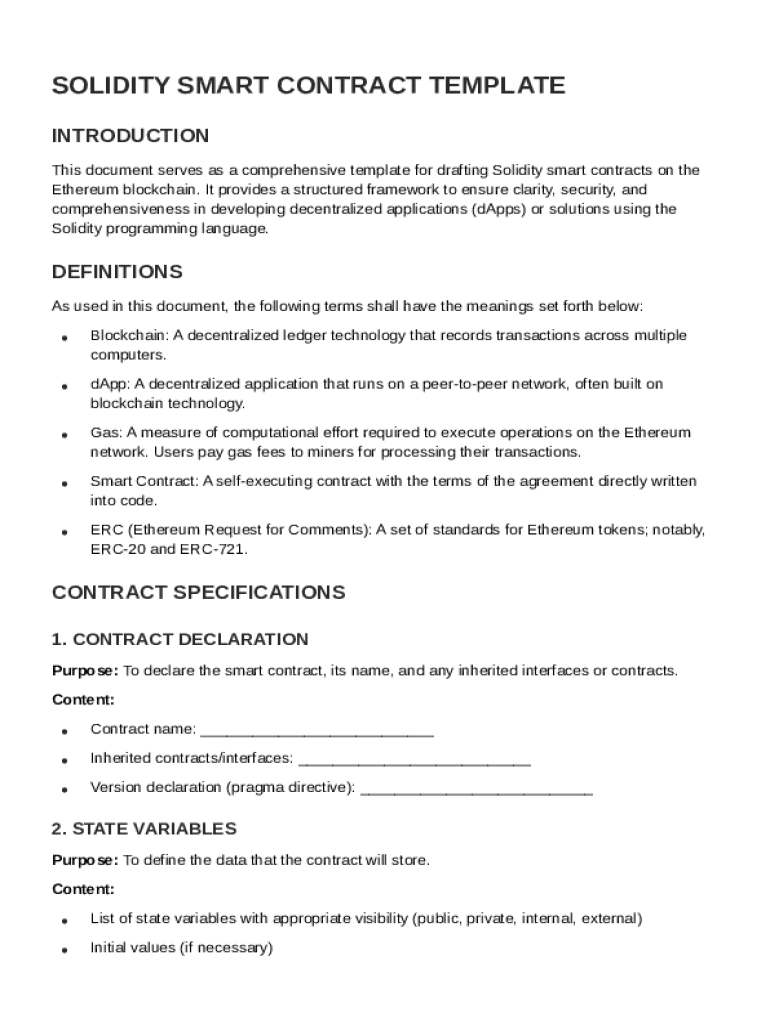







Definition & Meaning
The Solidity Contract Template is a foundational framework designed for developing smart contracts on the Ethereum blockchain. It provides a structured approach to define the essential elements required in any smart contract, ensuring clarity, security, and functional integrity. This template includes contract declarations, state variables, modifiers, event logs, function definitions, and governance guidelines, all structured to cater to the complexities of decentralized applications. By standardizing these components, developers can streamline the process of creating robust smart contracts that align with best practices in blockchain development.
How to Use the Solidity Contract Template
To effectively utilize the Solidity Contract Template, developers must first understand the specific requirements of their blockchain application. Begin by integrating the template's contract declaration section, which sets the foundation for the contract's purpose and scope. Developers should then customize state variables to store data pertinent to their application's functionality. Next, apply modifiers to enforce conditions on functions, ensuring that operations such as access control and transaction validation are in place. Utilize event logs to record critical activities on the blockchain, enabling transparency and traceability. Function definitions should be tailored to execute the core operations of the contract, adhering to the logic and rules set by the project. Finally, consider the governance section to outline the decision-making processes and amendments protocol for the contract's lifecycle.
Key Elements of the Solidity Contract Template
The template is composed of several critical components that must be carefully structured:
- Contract Declaration: This specifies the contract's identity and sets the parameters for its operational environment.
- State Variables: Variables used to store contract data, essential for tracking the contract's state and behavior.
- Modifiers: Functions that amend the behavior of other functions, often used for access control and validating conditions.
- Event Logs: Mechanisms for recording events and transactions on the Ethereum blockchain, crucial for creating an audit trail.
- Function Definitions: Core methods that execute specific tasks within the contract, structured to ensure operational efficiency and compliance.
- Governance: A set of rules and procedures for managing the contract's amendments and decision-making processes.
Steps to Complete the Solidity Contract Template
- Initialize the Contract: Begin by setting up the contract declaration to define its basic structure and intended operations.
- Define Variables: Establish state variables to represent the contract's data and operational metrics.
- Implement Modifiers: Add conditions through modifiers to enhance function security and control.
- Create Event Logs: Design event logs to track significant transactions and changes to contract states.
- Develop Functions: Program the necessary function definitions to facilitate key contract operations.
- Establish Governance: Outline the rules and processes for modifying the contract and making decisions.
- Test and Deploy: Conduct thorough testing to ensure functionality and deploy the contract on the Ethereum network.
Important Terms Related to the Solidity Contract Template
Understanding key terminology is vital for developers working with Solidity contracts:
- Smart Contracts: Self-executing contracts with the terms of the agreement directly written into lines of code.
- Ethereum: A decentralized platform that supports smart contracts and facilitates blockchain transactions.
- Gas: A unit measuring the computational work of executing operations on the Ethereum network.
- ABI (Application Binary Interface): A specification that defines how to interact with the binary code of a smart contract.
- ERC Standards: A set of predefined protocols for ensuring standardization across Ethereum smart contracts.
Legal Use of the Solidity Contract Template
Legally, smart contracts via the Solidity template must comply with both blockchain protocols and applicable laws in the jurisdiction of operation. The ESIGN Act recognizes electronic signatures as legally binding within the United States, essential for the execution of legally enforceable agreements via blockchain. It is crucial to ensure all contract terms are visible and accessible to stakeholders and that operations meet both technical and legal standards to avoid disputes or regulatory challenges.
Examples of Using the Solidity Contract Template
Several real-world scenarios highlight the versatility of the Solidity Contract Template:
- Decentralized Exchanges: Smart contracts that facilitate peer-to-peer trading of digital assets without intermediaries.
- Supply Chain Management: Contracts that automate tracking and management of goods across a supply chain.
- Decentralized Finance (DeFi): Applications allowing users to lend, borrow, and trade cryptocurrencies in a trustless manner.
- NFT Marketplaces: Templates can be extended to handle the creation, transfer, and ownership of non-fungible tokens.
Software Compatibility and Integration
Smart contract development using the Solidity template often integrates with various development and deployment tools:
- Remix: A popular online Solidity IDE for writing and testing smart contracts.
- Truffle Suite: Offers a comprehensive suite of tools for smart contract development, including testing and migration.
- Infura: Provides infrastructure to connect Ethereum applications to the blockchain seamlessly.
- MetaMask: A browser extension enabling interaction with Ethereum-enabled applications, crucial for smart contract testing and deployment.




