







Definition & Meaning
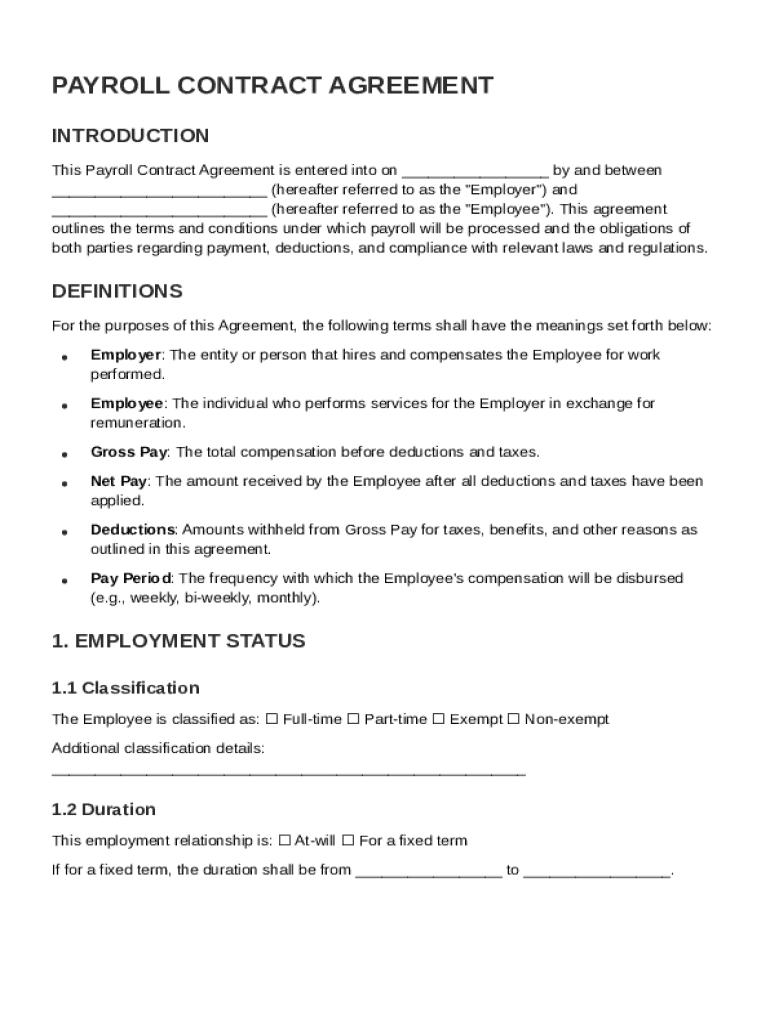
The Payroll Contract Template is a document that establishes the terms and conditions for payroll processing between an employer and an employee. This legally binding agreement outlines essential components such as gross pay, net pay, deductions, employment status, and compensation structures. It protects both parties by clearly defining responsibilities and expectations. The Payroll Contract Template also addresses confidentiality obligations, dispute resolution mechanisms, and the procedures for the termination of employment. By adhering to the prescribed terms, employers and employees can ensure efficient payroll management and compliance with applicable labor laws.
Key Elements of the Payroll Contract Template
The template consists of several critical elements that form the backbone of a comprehensive payroll agreement. These include:
- Gross and Net Pay Definitions: Clearly specifies employee earnings before and after all deductions.
- Deductions: Details both mandatory (taxes, Social Security) and voluntary (retirement contributions, health insurance) deductions.
- Compensation Structure: Explains how wages or salaries are calculated based on hourly rates, commissions, or bonuses.
- Payment Schedules: Sets the frequency and timing of pay periods, whether weekly, bi-weekly, or monthly.
- Employment Status: Defines the nature of the employment as full-time, part-time, or freelance.
These elements work together to ensure clarity and transparency in payroll processes.
How to Use the Payroll Contract Template
Implementing the Payroll Contract Template involves a series of steps:
- Customization: Begin by tailoring the template to fit specific employment agreements, considering variables like role, compensation, and company policies.
- Inclusion of Key Details: Ensure all essential elements—such as parties involved, employment terms, and compensation details—are accurately represented.
- Review and Edit: Carefully review the draft with legal professionals to ensure compliance with state and federal laws.
- Employee Agreement: Present the document to the employee for any necessary clarifications or amendments.
- Finalization and Signing: Both parties should sign the document to formalize the agreement. Retain copies for future reference.
These steps can help in creating a solid foundation for payroll management and legal compliance.
Legal Use of the Payroll Contract Template
The Payroll Contract Template serves as a legally binding document between an employer and employee. Its primary purpose is to safeguard the rights and obligations of both parties concerning payroll-related matters. Legally, it should:
- Adhere to Employment Laws: Comply with federal, state, and local employment regulations, including minimum wage and overtime policies.
- Incorporate Legal Terminology: Use clear legal language to avoid misinterpretations and disputes.
- Include Confidentiality Clauses: Protect sensitive company information from unauthorized disclosure.
- Provide Resolution Mechanisms: Outline procedures for resolving disputes or misunderstandings related to payroll.
A legally sound template minimizes risks and fosters a trustworthy employer-employee relationship.
State-Specific Rules for the Payroll Contract Template
Payroll contracts may require adjustments to account for varying state regulations. Key state-specific considerations can include:
- Minimum Wage Laws: States like California and New York have higher minimum wage requirements than the federal standard.
- Overtime Policies: Some states mandate different overtime pay rates and work week definitions.
- Paid Leave Regulations: Laws regarding sick leave and paid time off can vary significantly.
- State Tax Withholding: Complying with state-specific tax reporting and withholding requirements is crucial.
Employers must remain updated on these aspects to ensure the template aligns with local regulations.
Examples of Using the Payroll Contract Template
Real-world applications of the Payroll Contract Template can be observed across diverse employment scenarios:
- Startups: Small businesses use the template to formalize payment terms with new hires, ensuring a standardized payroll approach.
- Freelancers and Contractors: Clear payment terms and schedules can be established, avoiding future disputes.
- Large Corporations: Utilize the template for uniformity in payroll processes across various departments or branches.
These examples underscore the template's flexibility and utility in securing transparent payroll procedures.
Important Terms Related to Payroll Contract Template
Understanding key terminologies in the payroll contract is essential for both employers and employees:
- Gross Pay: Total earnings before deductions.
- Net Pay: Take-home pay after deductions.
- Deductions: Subtracted amounts for taxes and other obligations.
- Overtime: Additional pay for hours worked over the standard workweek.
- Compliance: Adhering to relevant employment and labor laws.
These terms form the crux of payroll agreements, affecting the financial aspects of employment contracts.
Who Typically Uses the Payroll Contract Template
The Payroll Contract Template is widely used by various entities engaged in employment contracts. These typically include:
- Human Resource Departments: Standardize payroll agreements across organizations.
- Small Business Owners: Set clear payroll terms for new or existing employees.
- Freelance and Contractual Work Arrangements: Define payment terms for non-permanent employment.
- Legal Advisors: Ensure contracts meet legislative standards.
The template's versatility makes it a valuable tool for any entity involved in managing payroll agreements.


Digital vs. Paper Version of the Payroll Contract Template
Choosing between digital and paper versions of the template can influence workflow efficiency.
-
Digital Version: Allows for easy modification, sharing, and storage. Ideal for remote work environments or companies with a paperless policy.
-
Paper Version: Traditional method suitable for settings where physical signatures or hard copies are required for legal purposes.
Understanding the advantages and limitations of each format allows organizations to select the most effective medium for their operations.




