
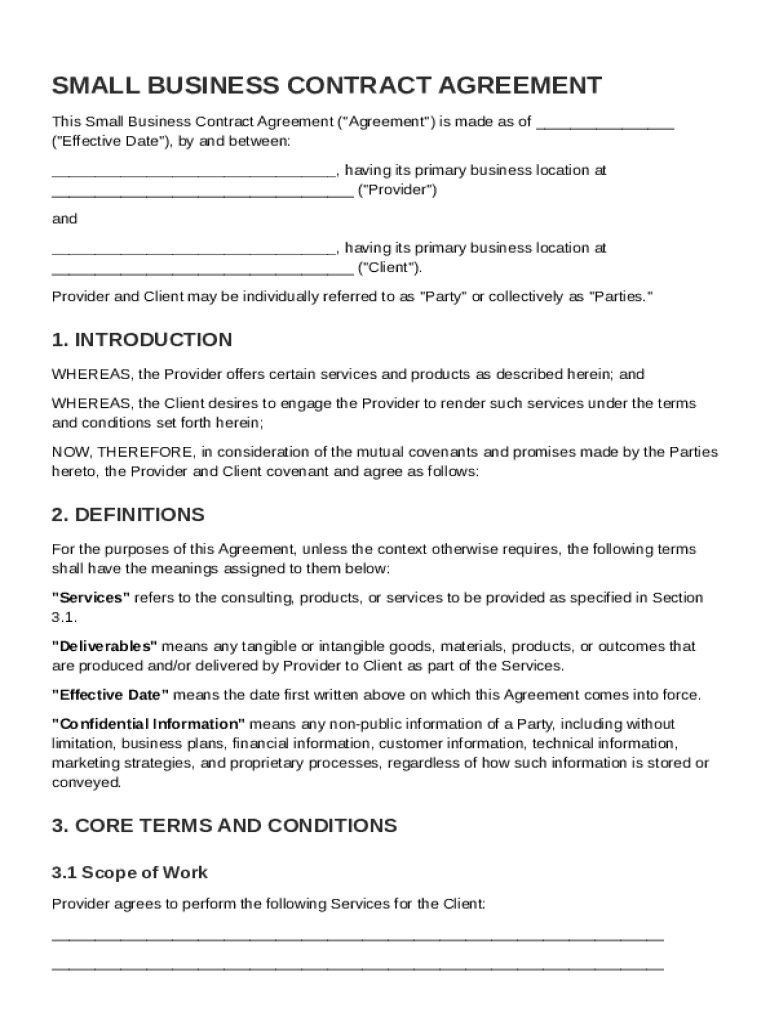







Definition and Meaning
The Small Business Contract Template is a comprehensive document designed to formalize the business relationship between a service provider and a client. It typically includes essential sections such as definitions, scope of work, payment terms, duration of the agreement, confidentiality clauses, indemnification, dispute resolution mechanisms, governing laws, and general provisions. The primary objective of this template is to clearly define the responsibilities, obligations, and expectations of both parties involved, thereby minimizing misunderstandings and potential conflicts. By outlining all relevant terms and conditions in writing, the template serves as a legally binding agreement that protects the interests of both the provider and the client.
How to Use the Small Business Contract Template
Utilizing the Small Business Contract Template involves several key steps to ensure it aligns with the specific needs of your business relationship. Start by reviewing the template to familiarize yourself with its structure and content. Customize the placeholders within the document to reflect the unique details and requirements of your business agreement. This may include editing sections like the scope of work, payment terms, and duration to suit your specific situation.
Once these details are inserted, thoroughly read through the entire contract to ensure all terms and conditions accurately represent the agreement between parties. Both the provider and the client should review the document, allowing for any necessary clarifications or amendments. After finalizing the content, both parties should sign the contract, making it enforceable by law. Retain a copy of the signed document for future reference or in case of any disputes that might arise.
Key Elements of the Small Business Contract Template
The Small Business Contract Template comprises several crucial elements to ensure clarity and legal enforceability. These components include:
- Scope of Work: Clearly defines the services provided by the service provider, including any deliverables, timelines, and quality expectations.
- Payment Terms: Specifies the compensation structure, including payment amounts, schedules, and acceptable payment methods. It also addresses scenarios such as late payments or additional fees.
- Confidentiality: Includes clauses that protect sensitive information shared between the parties during the contract's duration, often outlining the consequences of breaches.
- Termination Clause: Details the circumstances under which the contract can be terminated, outlining any required notice periods and obligations upon termination.
- Dispute Resolution: Offers strategies for resolving conflicts that may arise, such as mediation or arbitration procedures, before considering litigation.
- Governing Law: Specifies which jurisdiction’s laws will apply to interpret and govern the agreement.
These elements ensure that both parties have a clear understanding of their roles and can address any issues that arise efficiently and legally.
Steps to Complete the Small Business Contract Template
Completing a Small Business Contract Template involves a systematic approach to ensure that the agreement is comprehensive and valid. Follow these steps:
- Initial Review: Examine the entire template to understand its components.
- Customization: Insert specific details relevant to your agreement, such as names, scope of work, pricing, and deadlines.
- Consultation: Allow time for both parties to review the document thoroughly. Consider consulting legal professionals for advice on complex sections.
- Amendments: Make necessary changes based on feedback and discussions.
- Final Approval: Once agreed upon by all parties, make a final review to ensure consistency and clarity.
- Signatures: Have all parties sign the contract to render it legally binding.
- Distribution and Filing: Distribute copies to all parties involved and retain a file for your records to support possible future legal inquiries.
Who Typically Uses the Small Business Contract Template
The Small Business Contract Template is commonly utilized by a wide array of individuals and entities involved in providing or receiving services. These users typically include freelancers, consultants, small business owners, and startups. Service providers use the template to formalize engagements with clients across various sectors, from technology and marketing to legal and financial services. Clients, on the other hand, use it to ensure that they receive the agreed-upon deliverables within the specified terms, thus safeguarding their interests and investments.


Business Types That Benefit Most from the Small Business Contract Template
Various business types can significantly benefit from employing a Small Business Contract Template, including:
- Professional Services: Businesses providing expertise in areas such as consulting, marketing, and technology.
- Creative Industries: Agencies or freelancers in design, photography, and multimedia production.
- Trades and Home Services: Entities offering maintenance, repair, or construction services.
- Healthcare Providers: Independent contractors offering auxiliary health services.
- Retail and Online Businesses: Partnerships aiming to streamline inventory or operational collaborations.
These businesses often rely on formal agreements to manage client relationships, clarify services, and minimize liabilities effectively.
Legal Use of the Small Business Contract Template
The legal use of the Small Business Contract Template ensures all agreements are enforceable under applicable law, providing protection to both parties involved. In the United States, such contracts should comply with federal and state laws governing commercial transactions, such as the Uniform Commercial Code (UCC). It is advisable for parties to include a governing law clause specifying which state’s laws will apply. Additionally, the document should clearly articulate each party's obligations, use plain language to avoid ambiguity, and incorporate signatures from all stakeholders. Legal advice should be sought to address complex terms or jurisdictional variances to reinforce the contract's validity.
State-Specific Rules for the Small Business Contract Template
When drafting or completing a Small Business Contract Template, it is crucial to consider any state-specific regulations that might impact the agreement. Each state may have distinct laws regarding some contract clauses, such as those related to interest rates on overdue payments or confidentiality requirements. States like California or New York, for example, may have extra provisions for contracts involving freelancers or independent contractors.
Additionally, specific industries in certain states might be subject to regulatory oversight, requiring special clauses in contracts. Consulting with a legal professional familiar with the relevant jurisdictional laws can ensure the template is adequately tailored and compliant with local requirements, thereby safeguarding against legal challenges.




