Definition & Meaning
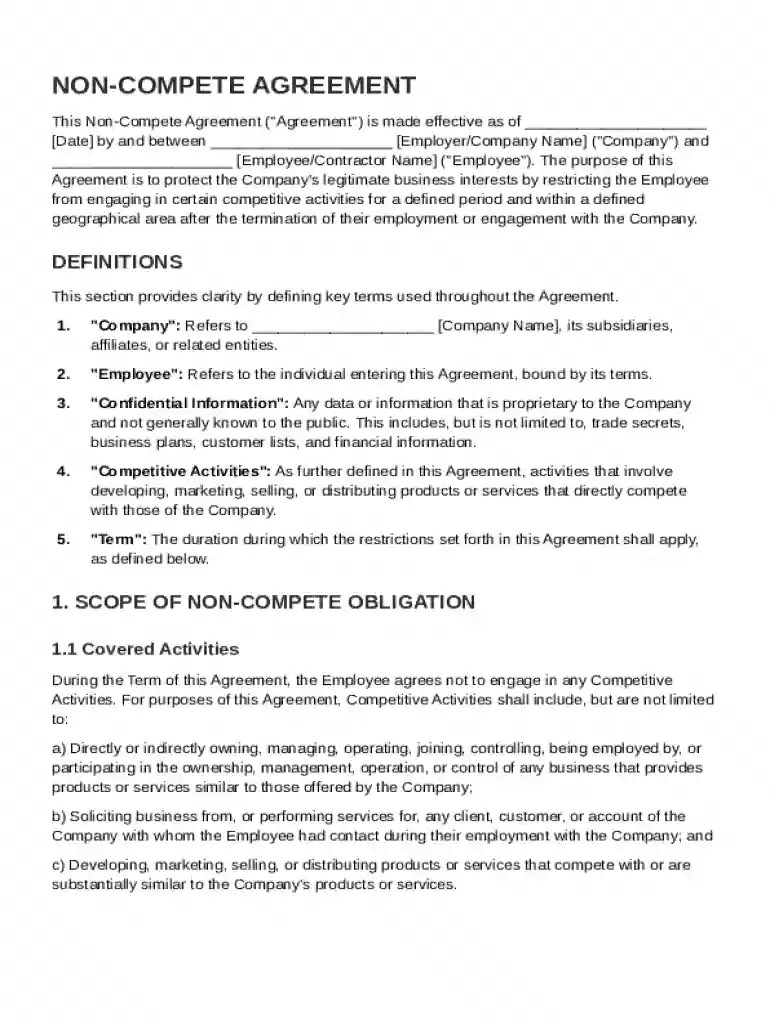
A Non-Compete Contract Template is a legal agreement between an employer and an employee that limits the employee's ability to engage in activities that directly compete with the employer's business after their employment period. This template typically stipulates a defined geographical area and duration for these restrictions, intending to protect the employer's proprietary interests and confidential information. By preventing former employees from leveraging insider knowledge to benefit competitors, this contract helps maintain a competitive edge in the marketplace.
Key Components of a Non-Compete Contract
- Geographical Scope: Defines the specific area where the employee cannot work in a similar industry or with competitors.
- Duration: Specifies how long the non-compete obligations last after employment ends.
- Restricted Activities: Lists the types of competitive actions that are prohibited, such as working with specific competitors or starting a similar business.
- Consideration: Details what the employee receives in exchange for agreeing to the non-compete, such as monetary compensation or employment benefits.
How to Use the Non-Compete Contract Template
The Non-Compete Contract Template is designed to be a flexible starting point for drafting a comprehensive agreement that suits specific business needs.
- Customizing the Template: Start by filling in the fields with details relevant to the employment relationship, including the names of the parties involved, the parameters of the non-compete section, and the respective obligations.
- Reviewing Legal Requirements: Ensure that the template complies with state laws that govern non-compete agreements. This may require consultation with a legal professional to avoid potential invalidation or litigation challenges.
- Streamlining the Process: Use electronic signature capabilities to finalize the document quickly if both parties agree to the terms.
Practical Tips
- Ensure clarity and specificity to avoid any ambiguities in terms, locations, and durations.
- Balance the restrictions to be fair and not overly broad, increasing the likelihood of legal enforceability.
Key Elements of the Non-Compete Contract Template
The Non-Compete Contract Template includes several critical elements that form its structure and enforceability.
Core Elements
- Purpose Statement: Articulates the rationale behind the non-compete, which often includes protecting trade secrets or client relationships.
- Definitions: Provides clarity on key terms used throughout, such as "competing activities" or "confidential information."
- Enforcement: Outlines the actions the employer can take if the agreement is breached, such as seeking injunctions or damages.
Additional Clauses
- Severability: Ensures that if a part of the agreement is found unenforceable, the rest remains effective.
- Modification Provisions: Allows for changes to be made to the agreement, provided both parties consent.
Legal Use of the Non-Compete Contract Template
Using a Non-Compete Contract Template involves understanding the legal landscape and the implications of enforcing such an agreement.
Compliance with State Laws
- Variability: Non-compete agreements are subject to state-specific legislation, which can differ significantly across jurisdictions.
- Reasonableness Test: Courts generally assess the reasonableness of non-competes based on scope, duration, and necessity.
Documentation and Best Practices
- Keep detailed records of the negotiation and signing process to demonstrate informed consent.
- Regularly review and update the agreement to align with any legal changes or strategic business shifts.
State-Specific Rules for the Non-Compete Contract Template
Non-compete regulations vary widely between states, impacting how these agreements are drafted and enforced.
Examples of State Differences
- California: Generally prohibits non-compete clauses except in limited circumstances such as the sale of a business.
- Texas: Permissible if necessary to protect legitimate business interests but must include reasonable time and geographic limitations.
Considerations for Employers
- Stay informed about the jurisdiction in which the employee works, as this will dictate the enforceability of the agreement.
- Consider whether alternative agreements like Non-Solicitation or Confidentiality Agreements may be more appropriate.
Important Terms Related to Non-Compete Contract Template
Understanding specific terms used within a Non-Compete Contract is essential for ensuring clarity and compliance.
Common Terms
- Non-Solicitation: Restricts the departing employee from approaching clients or employees to join a new enterprise.
- Confidentiality Agreement: Protects sensitive information from being disclosed to competitors, often used alongside non-compete contracts.
Interpretation and Usage
- Clearly define each term in the context of the business relationship to prevent disputes later.
Steps to Complete the Non-Compete Contract Template
Filling out and finalizing a Non-Compete Contract Template involves several key steps to ensure it is robust and enforceable.
- Gather Information: Collect all relevant details regarding the parties, scope of restrictions, and employment terms.
- Fill in the Template: Input the data into the template, making necessary adaptations to fit the business context.
- Legal Review: Have a legal professional review the drafted agreement to ensure compliance with state law.
- Finalization: Both parties should review the final document and sign it, either physically or electronically, to manifest agreement.
Ensuring a Successful Completion
- Double-check for any errors or inconsistencies that could lead to disputes or rendering clauses unenforceable.
- Retain a copy of the signed document for both parties as part of their corporate records.
Typical Users
- Corporations and LLCs: Often employ non-compete agreements to safeguard trade secrets and customer bases.
- Startups: Use these agreements to prevent talent and knowledge loss to competitors during their critical growth phases.
Benefits for Specific Business Types
- A non-compete agreement offers reassurance to businesses heavily reliant on proprietary processes or unique technology that their competitive edge will be maintained post-employment.