
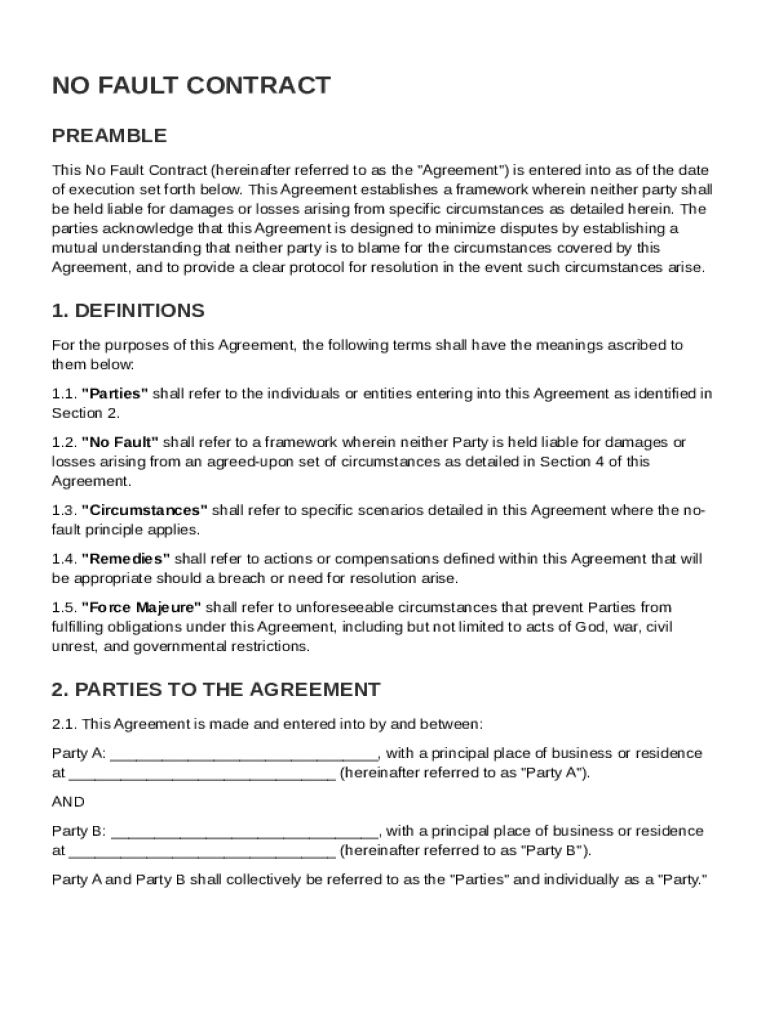







Definition and Meaning of the No Fault Contract
The No Fault Contract is a legal agreement designed to minimize liability and disputes between parties by specifying scenarios in which neither party is held responsible for damages or losses. This type of contract emphasizes mutual understanding and proactive resolution strategies. It typically includes detailed definitions of terms, responsibilities, remedies for breaches, dispute resolution processes, and conditions for termination. An essential feature is the focus on good faith actions and confidentiality, ensuring that all involved parties operate fairly and transparently under the guidelines of U.S. law.
Key Elements of the No Fault Contract Template
When creating or reviewing a No Fault Contract Template, several core elements must be included to ensure its effectiveness and enforceability:
- Definitions of Terms: Clearly defining each term used in the contract to avoid ambiguity.
- Responsibilities of Each Party: Outlining the duties and expectations for all parties involved.
- Remedies for Breaches: Specifying the consequences and remedies in case of contract violations.
- Dispute Resolution Processes: Providing a systematic approach for resolving conflicts.
- Termination Conditions: Detailing the conditions under which the contract can be terminated.
- Confidentiality Provisions: Establishing measures to protect sensitive information.
How to Use the No Fault Contract Template
Using the No Fault Contract Template effectively involves several steps to ensure that it accurately reflects the intentions and agreements of all parties:
- Review the Template: Begin by thoroughly examining the template to understand its components.
- Customize the Contract: Adjust the document to suit the specific relationship and circumstances of the parties involved.
- Include All Necessary Information: Ensure all relevant details, such as names, dates, and specific terms, are included.
- Seek Legal Advice if Necessary: Consult with a legal professional to confirm that the contract complies with applicable laws and adequately protects all parties.
- Obtain Signatures: After reviewing the final draft, each party should sign the contract, preferably utilizing a legally binding electronic signature tool like DocHub.
Steps to Complete the No Fault Contract Template
Completing a No Fault Contract Template requires careful attention to detail and collaboration with all relevant parties:
- Gather Relevant Information: Collect all necessary details related to the parties and the agreement terms.
- Enter Information into the Template: Fill in the template with the gathered information, ensuring accuracy and completeness.
- Review for Clarity and Compliance: Check the document for clarity, ensuring it adheres to U.S. legal standards.
- Consult with Stakeholders: Engage with all stakeholders to confirm mutual understanding and agreement on the terms.
- Finalize and Sign: Once everyone agrees, finalize the document and proceed with the signature process.
Who Typically Uses the No Fault Contract Template
The No Fault Contract Template is versatile and can be used by various individuals and entities, including:
- Businesses: Companies looking to mitigate risk and avoid lengthy disputes over specific circumstances.
- Partnerships: Business partners seeking clear terms regarding mutual obligations and potential disputes.
- Freelancers and Independent Contractors: Individuals engaging in client work where terms need to be clear and liability limited.
- Leaseholders and Tenants: In some instances, no-fault clauses can be included in rental agreements to specify liability in certain conditions.

Important Terms Related to the No Fault Contract Template
Understanding the terminology within a No Fault Contract Template is crucial for proper usage:
- Liability: The state of being legally responsible for something.
- Breach: An act of failing to observe or reach the required standard or obligation in a contract.
- Good Faith: Act with honesty and integrity in all dealings under the contract.
- Confidentiality: A clause that requires keeping certain information private.
Legal Use of the No Fault Contract Template
The legal use of the No Fault Contract Template is primarily governed by principles of contract law within the United States, ensuring:
- Enforceability: The contract must meet all legal requirements to be recognized as valid.
- Compliance: Adhering to state and federal regulations applicable to the contract's subject matter.
- Good Faith: Conducting negotiations and executing the contract with honesty and fairness.
- Confidentiality: Enforcing clauses that protect the privacy and confidentiality of the parties involved.
State-Specific Rules for the No Fault Contract Template
While No Fault Contracts have a general framework, variations may exist due to state-specific regulations:
- Jurisdictional Variations: Recognize differences in how terms may be interpreted based on state jurisdiction.
- State Laws: Understand that each state may have specific laws that affect contract enforceability or limit certain clauses.
- Consult with Legal Experts: Due to potential complexities, working with an attorney familiar with state-specific laws is advisable.
Examples of Using the No Fault Contract Template
Practical scenarios where a No Fault Contract Template can be beneficial include:
- Business Collaborations: To delineate responsibilities and limit liability between partnering businesses.
- Service Agreements: When service providers and clients need clear terms to prevent disputes.
- Event Planning: Outlining no-fault scenarios in contracts with vendors or venue providers, limiting liability for uncontrollable events.
Versions or Alternatives to the No Fault Contract Template
There are various templates and alternatives that serve similar purposes:
- Standard Liability Waivers: While different in scope, can cover certain no-fault scenarios.
- Mutual Indemnification Agreements: Versions in which each party agrees to protect the other from losses.
- Custom Contracts: Tailor-made agreements that incorporate elements of a No Fault contract to meet specific needs.




